After recent events, Nepal is back to normal and ready to share its cultural and natural wonders with you.


Annapurna Circuit Trek
Your 16-day adventure begins in Besi Shahar, where you’ll start your journey towards the stunning Annapurna Circuit. As you trek through Pisang and Kagbeni, you’ll enjoy incredible views of the Himalayas and visit the sacred Muktinath Temple. Finally, reach the peaceful city of Pokhara, where you can relax by Phewa Lake and reflect on your journey through the magnificent Annapurna region. This trek offers a perfect blend of culture, natural beauty, and unforgettable mountain views.
per person
USD 1,628
Duration
16 Days
Difficulty
Moderate
Requires some level of experience in trekking with basic physical ability.
Best Season
March- April- May- Aug- Sep- Oct- Nov
Max. elevation
5,416m/ 17,764ft
Trip Code
CT-10034
Meals
Included
Included
Breakfast at the hotel in cities (Kathmandu and Pokhara). Breakfast, Lunch, Dinner during trek days and a farewell dinner on the last day in Kathmandu
Destination
Nepal
Region
Annapurna Region Treks
Activity
Trekking
Start / End Point
Kathmandu / Kathmandu
Accommodation
Guest House | Hotel
Activity Per Day
5-8 hours
Transportation
Tourist Bus | Private Vehicle
Route
Besi Shahar - Chyamje - Dharapani - Chame - Pisang - Manang - Yak Kharka - Thorong Phedi - Thorong La Pass - Muktinath - Kagbeni - Tatopani - Ghorepani - Hile - Pokhara
Annapurna Circuit Major Highlights
- Travel into the Annapurna region for a challenging yet rewarding adventure.
- Traverse into the scenic trails of Annapurna Conservation Area.
- Trek from the luscious sub-tropical forest to the highland alpine meadows.
- Cross one of the high mountain passes, the Thorong La Pass, at 5,416 meters.
- Witness the gorgeous mountain views of Annapurna, Dhaulagiri, Machhapuchhre, Manaslu, and more.
- Visit several ancient monasteries and the holy temple of Muktinath.
- Watch the sunrise from Poon Hill View Tower (3,210 meters).
- Dip into the natural hot spring of Tatopani and rejuvenate yourself.
- Discover and experience the unique culture of Gurung, Thakali, and Tibetan communities.
Annapurna Circuit Trek Overview
Annapurna Circuit Trek is the total trekking package in the Annapurna region. The trek has excellent variety and distinctiveness, making the whole trip entertaining. Numerous travel magazines and guidebooks have enlisted Annapurna Circuit among the top ten adventure destinations in the world. Due to its amazing climate change variation, dramatic landscapes and vegetation, and cultures, it is a magnificent journey.
Trekkers will certainly enjoy the delightful moments that the Annapurna Circuit trek offers, including the warm hospitality of the local villagers. You will walk from sub-tropical farm areas to cooler green hills, then reach the arctic cold terrain.
There will be vast changes and differences during the trek. You will reach the highest point on top of Thorong-La Pass, at a height of 5,416 m. During the trek, the route goes through beautiful coniferous and deodar forests. Then, it will take you to upper Manang's dry, windswept, scenic valley. The high-altitude villages greatly influence Tibetan Buddhism and the ancient Tibetan Heritage of Buddhist cultures.
The trek is a great adventure from Lamjung, Manang, to the Mustang region, with the backdrop of the Annapurna and Dhaulagiri Himalayas. It also takes you to the sacred Muktinath temple premises, the holiest of holy pilgrimage sites for all Hindu and Buddhist followers.
On leaving Manang Valley, you will cross the high mountain pass, Thorong-La, towards Mustang region, past Muktinath and Jomsom. The walk follows the ancient Trans-Himalaya Salt Trade route of Nepal and Tibet through the charming villages of Marpha and Tukuche.
The adventure heads down to the low, warmer country of Kali Gandaki Valley and walks through the world’s deepest gorge. Sandwiched between the great giant peaks of Annapurna-I and Dhaulagiri Himalayas, you will reach the charming village of Tatopani.
Enjoy tour time at Tatopani with a dip at a natural hot spring and a refreshing bath. The adventure continues, heading for a big climb towards cooler forested hills and Ghorepani village, a popular and scenic spot. Located amidst a beautiful rhododendron forest surrounding, where an early morning hike takes you Poon Hill for stunning sunrise views.
It also has a 360° wide panorama of the world’s three high mountain ranges, from Dhaulagiri and Annapurna to Manaslu. The snow peaks extend from the far west to the eastern horizon, and our great adventure ends slowly. From Ghorepani, we will head towards a road-head around low, terrace farm villages, then drive to beautiful scenic Pokhara. This is where our most overwhelming and mesmerizing adventure and experience on Annapurna Circuit concludes.
History of Annapurna Circuit
The Annapurna Circuit Trek was opened for trekkers for the first time in 1977. Due to its scenic beauty, captivating landscapes, and mesmerizing mountain views, the trek route soon became popular among national and international trekkers. Since then, it has become one of the most sought-after trek destinations among adventure seekers and enthusiasts.
The original starting route of Annapurna Circuit was at Dumre, which sits at an elevation of 605 meters. Meanwhile, its ending point was Beni. Trekkers could also do it, and vice versa. It used to take 18 to 22 days to complete the entire journey. However, with the recent construction of roads, one can complete the trip in less than a week.
The Annapurna Circuit Trek has several starting and ending points, including Besi Shahar. Moreover, several New Annapurna Trekking Trails (NATT) have come into operation after the recent construction of the Annapurna Circuit road.
Annapurna Circuit Trek terrain
The Annapurna Circuit Trek terrain is highly diverse. It begins in the lowland subtropical valleys and moves to the middle hills and high alpine regions. The trails in the lowland subtropical valleys go through luscious green and dense forests with terrace farms. Meanwhile, the high alpine region has desert-like and rough terrain with sparse vegetation.

The trail requires you to cross the high mountain, Thorong La Pass, en route. You will pass by rivers, valleys, gorges, and glacial lakes. The terrain varies as you go from the lower region to the higher region. There are steep ascents and descents with rocky and uneven terrains.
What is special about the Annapurna Circuit Trek?
Scenic Landscapes
The scenic landscapes you will witness during the trek are a special factor of the Annapurna Circuit Trek. You will go from lower regions with subtropical vegetation to semi-arid landscapes. The trekking trails pass through varied landscapes, including traditional villages, terrace farms, rivers, waterfalls, and icy paths. You will also come across the world’s deepest gorge, the Kali Gandaki Gorge, and one of the world’s highest passes, the Thorong La Pass.
Enchanting Mountain Views
The mountain views during the Annapurna Circuit Trek will leave you enchanted and awestruck. The trekking trails go around the Annapurna Massif. Hence, you get to witness the towering mountains up close. Similarly, you will see the gorgeous mountain views of the Annapurna range, Machhapuchhre, Dhaulagiri, Nilgiri, Gangapurna, and several others.
Diverse Biodiversity
The Annapurna Circuit Trek route falls within the Annapurna Conservation Area, the country's largest protected area. The trek offers an excellent opportunity to witness the diverse flora and fauna of the Annapurna region. The conservation area is home to 105 mammals, 1226 flowering plants, 40 orchids, 518 birds, 40 reptiles, and 23 amphibians. If you are lucky, you can encounter some rare wildlife.
Muktinath Temple
Another specialty of the Annapurna Circuit Trek is visiting the holy Muktinath, a sacred pilgrimage site for Hindus and Buddhists. The temple sits at an elevation of 3,710 meters. The main temple complex houses Lord Vishnu, and a small monastery is next to the temple. The Buddhists call the temple Chumig Gyastsa. There are 108 water spouts where pilgrims take holy baths. The architecture of the Muktinath temple is pagoda-style. It has profound cultural and religious significance to the region, Hindus, and Buddhists.
Cultural Immersion
The Annapurna Circuit Trek is also a unique cultural experience. The region has a rich and diverse cultural and traditional tapestry, which you will experience and get a closer look at during the journey. Most locals in the Annapurna region belong to the Gurung, Magar, and Thakali ethnic groups. Each ethnic group has its unique culture, attire, language, and lifestyle. Likewise, you can visit the local monasteries and temples to connect with the religious aspect of the Annapurna region.
Annapurna Circuit Trek Itinerary
Arrival in Kathmandu
Highest Altitude
1,350 m
Our staff from CoreTreks will receive you at the airport on arrival for a short transfer to your hotel. We will arrange your hotel accommodation to be three-star standard or above per your preference. In the evening, we will have a short briefing session at our office or in the hotel lobby and meeting rooms regarding the trip and travel details. Please feel free to ask questions during the briefing session. After a bit of walking around the streets of Thamel, we will wrap up for the day.
Hotel


Kathmandu to Besi Shahar
Drive Hours
6 hours
Highest Altitude
1,350 m
After having breakfast, prepare for your trek departure, where our guide and trekking staff will accompany you. The drive leads beyond Kathmandu Valley and is an exciting journey on the main busy highway in Nepal. From the junction town of Mugling Bazaar, our route diverts and then leaves the main Pokhara / Kathmandu highway.
After an incredible overland journey, we will head north to Besi Sahar, one of the major headquarters towns of the Lamjung district. We will check into a lovely lodge or guest house for the day. In the evening, you can explore Besi Sahar.
Breakfast, Lunch & Dinner
Guesthouse


Besi Shahar to Chyamje to Dharapani
Trek Distance
16 km
Trek Duration
3-4 hours
Drive Hours
2-3 hours
Highest Altitude
1,810 m
We will take a morning drive for nearly 2 to 3 hours towards Syange, Jagat, and Chamje villages. We will begin our trekking from Chamje. On reaching Chamje, a small village next to the Masrsyangdi River, we will follow the old trekking trail. We will reach Tal Besi, which is an entrance to Manang District, for lunch.
After lunch, we will take a pleasant walk of a few hours to Dharapani village for an overnight stop. Dharapani is a beautiful village where the routes of Manaslu and Annapurna Circuit join.
Breakfast, Lunch & Dinner
Guesthouse
Dharapani to Chame
Trek Distance
10-12 km
Trek Duration
5 hours
Highest Altitude
2,725 m
Today’s walk is an exciting journey around the Manang area. The morning walk follows through a lovely forest of pines and rhododendrons. We are reaching a charming village, Bagarchap. You can see the influence of Tibetan Buddhism culture. From here, we will head past Danque with an apple orchard. Then, we will climb steeply to Timang village for lunch stops, facing wonderful views of Annapurna, Lamjung, and Manaslu Himalayan peaks.
The afternoon walk leads close to the Masrsyangdi River, reaching Kodo village. The route branches to the Chame and Nar-Phu areas. From Kodo, we will head west and briefly climb to Chame, a large town and headquarters district of Manang. Chame provides many good lodges, guest houses, and good shops and restaurants with views of Lamjung Himal towards the south.
Breakfast, Lunch & Dinner
Guesthouse


Chame to Pisang
Trek Distance
5-6 km
Trek Duration
5 hours
Highest Altitude
3,190m
From Chame town, we will cross a bridge over the Masrsyangdi River. Then, we will follow the river upstream through dense woods. The trails go right through the rhododendron, pine, and fir forests. After a short rest walk, we will reach Bhratang village and cross another bridge. After crossing the bridge, we will slowly climb within forest lines and reach a high ridge at Dukure Pokhari.
En route, we will pass a small settlement with a few tea shops and lodges, which offers grand views of Pisang Peak and the Chulu range of peaks. Similarly, we will witness Annapurna-II, III, and IV. After lunch, we will head downhill to a flat area and reach Pisang village for an overnight halt.
Breakfast, Lunch & Dinner
Guesthouse


Pisang to Manang
Trek Distance
10-11 km
Trek Duration
5 hours
Highest Altitude
3,500 m
A short day walk of a few hours or more from Pisang leads to a high ridge. After a climb for an hour, we get a scenic Manang Valley view along with an array of peaks from the top. We overlook Chulu’s Pisang Peaks with Annapurna range, Tilicho Peak, Gangapurna Himal, and a grand view downhill from Hongde. Hongde is a beautiful village with a small airstrip.
From Hongde, we will head towards Braga, a village with an old monastery. We will briefly visit the monastery, which sits on a high ridge above the main trail of Manang. It is an ancient monastery, rich with ancient religious precious artifacts. You can also enjoy grand views of the Annapurna Himalayas.
After an impressive monastery tour, we will take a short walk to the main Manang village for two overnight stops. The rest of the day will be spent exploring the village, which is rich in culture, and enjoying views of the surrounding peaks.
Breakfast, Lunch & Dinner
Guesthouse


Acclimatization Day at Manang
Highest Altitude
3,500 m
We will take a rest day today. You can enjoy and immerse yourself in the beautiful surroundings of Manang’s scenic landscapes and traditional village. It is a perfect place for rest and acclimatization before heading towards the high Thorang-La Pass. Manang offers various scenic places for good short hikes to support the acclimatization procedure. The best option is to walk down to Masrsyangdi River and cross a bridge.
Then, after a short climb, we witness the Gangapurna Himal Ice fall and glaciers with close views of Annapurna III and II. Similarly, we can view the gorgeous Gangapurna Himal and Manang’s small glacial pond. After taking in the mountain scenery, we return to Manang. The afternoons can get windy, so it’s best to rest and enjoy the views.
Breakfast, Lunch & Dinner
Guesthouse


Manang to Yak Kharkha
Trek Distance
10 km
Trek Duration
4-5 hours
Highest Altitude
4,090 m
From Manang village, we will take a short walk to Yak Kharka. It lies to the west of Manang Valley. We will set off after breakfast on the gradual trail past. Along the way, we will pass by a few smaller settlements and then towards windswept dry terrain. We will continue on a gradual uphill climb with close views of Gangapurna and Chulu West Peak. After a while, we will reach Yak Kharka. We will arrive at the village by lunchtime and stop there overnight. In the afternoon, you are free to take short walks or rest.
Breakfast, Lunch & Dinner
Guesthouse
Yak Kharka to Thorong Phedi
Trek Distance
5-6 km
Trek Duration
3 hours
Highest Altitude
4,441 m
Today, we will take another short walk of a few hours towards Thorong Phedi. However, it can be strenuous due to the rise in altitude and dry, arid terrain. After leaving Yak Kharka, the trail will lead us further west past Ledar, a place with a few lodges. Ledar is also en route to Chulu West base camp.
The walk will lead us further northwest and down to Jarsang Khola / stream. After crossing a small wooden bridge, we have to take a short steep climb. Then, after hiking on the gradual rocky gravel path, we will reach Thorong Phedi. Thorong Phedi is a small settlement with several lodges on a corner at the end of Manang Valley. We will rest overnight in the village.
Breakfast, Lunch & Dinner
Guesthouse
Thorong Phedi to Muktinath via Thorong-La pass
Trek Distance
14-16 km
Trek Duration
8 hours
Highest Altitude
5,416 m
Today is the main highlight of our adventure on the Annapurna Circuit Trek. It is a long and strenuous climb to the Thorong La Pass at 5,416 meters. However, the view is worth the arduous climb.
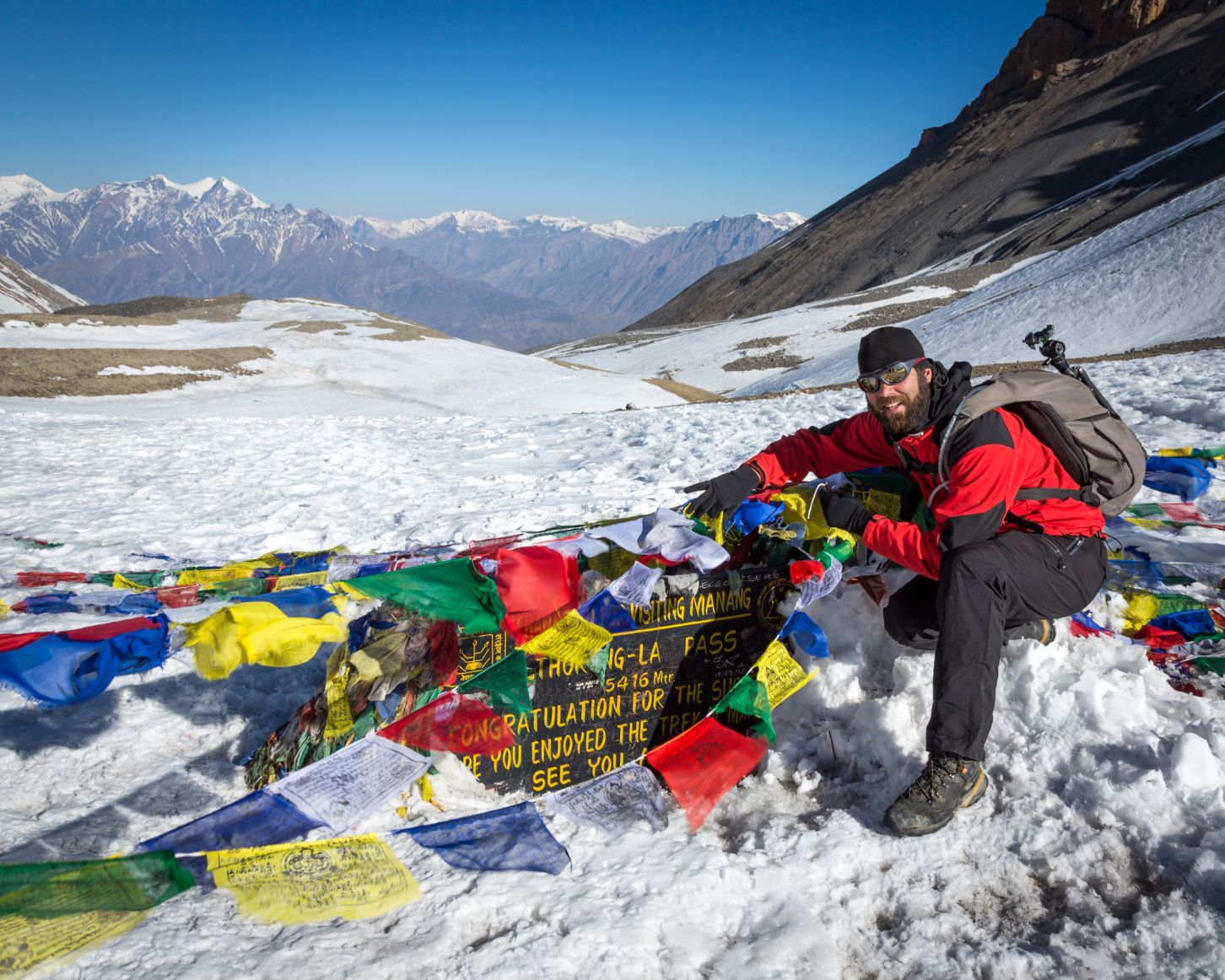
The walk is not challenging but can be in snow-deep conditions. So, you must follow the guide and take slow stride. We will take rests between our climb as we make our way to the top of Thorong La Pass. Thousands of prayer flags adorn the top of the pass. Similarly, there are stone cairns for the mountain spirits phase of the whole trek. You can enjoy the spectacular panorama of the snow mountain range of Annapurna, Dhaulagiri, Damodar Himal, and the Manaslu range at the distance.
After enjoying the fantastic scenery of towering snow peaks, we will slowly trek downhill towards Mustang areas. It is a comparatively nice gradual walk that leads you to Muktinath, an important pilgrimage destination for Hindu and Buddhist followers.
We will stay overnight in a cozy lodge at Rani Pawa village. It is close to Muktinath temple premises and offers grand views of Dhaulagiri Himal.
Breakfast, Lunch & Dinner
Guesthouse


Muktinath to Kagbeni
Trek Distance
10 km
Trek Duration
5 hours
Highest Altitude
3,710 m
The previous day’s challenging long walk to Thorong La Pass and swift descent to Muktinath will tire your muscles. Thus, today, we will take a short and easy walk downhill to the old village of Kagbeni. The village serves as the entrance to the Upper Mustang area. Likewise, the village lies close to the border of Nepal / Tibet-China, where the old Trans Himalaya Salt Trade follows through Kali Gandaki valley.
We will start the morning with a downhill trek to a small windswept village. Then, we will avoid the motorable road and head down towards Kagbeni. There is a vast influence of Tibetan Buddhism in the area, so we can see traditional-style mud and stone houses. Kagbeni also provides several good lodges and a magnificent Gompa / Monastery around the village. We will check into nice lodges for the day and explore the interesting Kagbeni village, full of ancient cultures.
Breakfast, Lunch & Dinner
Guesthouse


Kagbeni to Tatopani
Trek Distance
22 km
Trek Duration
6-7 hours
Highest Altitude
2,800 m
Walking can be disturbing since the motor road has reached all over Mustang areas.
So, after breakfast, we will drive to Tatopani village, around the low, warm farm country of Myagdi district. We will board a four-wheeler for an exciting drive. The name Tatopani means hot water. The town is famous for its natural hot springs.
We will drive past Jomsom, the headquarters of the Mustang district. Then, we will ride past the villages of Marpha and Tukuche. Marpha village is famous as Apple country and its products. Then, we will reach the world’s deepest gorge, Kali Gandaki Gorge. It lies between the giant peaks of Annapurna-I and Dhaulagiri Himal, forming a deep river gorge.
The drive leads past the beautiful waterfall of Rupse Chhara next to the road and then reaches Tatopani village. After some refreshments in the best lodge, we will enjoy a dip in natural hot water pools in the afternoon. Natural hot springs have healing properties, and they relax our muscles.
Breakfast, Lunch & Dinner
Guesthouse


Tatopani to Ghorepani
Trek Distance
17 km
Trek Duration
7 hours
Highest Altitude
2,834 m
After a refreshing time at Tatopani village, we will start a long climb as soon as possible, heading towards Ghorepani village. Leaving the low, warm areas of Tatopani, we will cross a bridge. Then, our route diverts, heading for a steep climb. After an hour’s trek, we will reach a ridge around farm areas and, from the top, take a gradual uphill walk to Sikha.
Following the trail within a lovely subtropical forest, we will reach Chitra village. Then, after a few hours of the steep climb, we will reach Ghorepani village. We will stay overnight at a lodge in this Magar village. Ghorepani lies amidst a beautiful rhododendron forest at the base of scenic Poon Hill.
Breakfast, Lunch & Dinner
Guesthouse


Ghorepani to Hille to Pokhara
Trek Distance
13-15 km
Trek Duration
6-7 hours
Drive Hours
2-3 hours
Highest Altitude
3,210 m
Rising early at the break of dawn, we will start an hour’s climb to the top of Poon Hill. The Poon Hill View Tower is known for its sunrises, where the first light falls on the snow peaks.
We can enjoy the spectacular panorama of the world’s three highest peaks with a series of snow-mountain ranges at one glance. We can see numerous peaks from Dhaulagiri, Annapurna to Manaslu with majestic Machhapuchare Himal (Fishtail). After a fantastic morning with alluring views, head to Ghorepani for breakfast and pack our gear.
For the last day trek of the adventure, we will leave Ghorepani walking amidst beautiful rhododendrons and pine forests. Slowly, we will walk downhill past the large village of Ulleri and then to Tirkhedhunga. Upon reaching Hille, a small farm village, our trek will close. From Hille, we will take a few hours on a scenic drive to the beautiful city of Pokhara by the serene Phewa Lake. Pokhara is a tourist hub and a great place to complete the overwhelming adventure of Annapurna Circuit.
Breakfast & Lunch
Hotel


Pokhara To Kathmandu
Drive Hours
7 hours
Highest Altitude
1,350 m
After breakfast, we will return to Kathmandu on the same scenic Prithvi highway. After around 7 hours of driving, we will reach Kathmandu and return to your hotel. After some refreshments, CoreTreks will host a farewell dinner party for our fellow guests in nice traditional Nepalese restaurants.
Breakfast & Farewell dinner
Hotel


Departure
Highest Altitude
1,350 m
The day has come to bid farewell to our guides and staff. Core Treks staff will transfer you to Tribhuvan International Airport at least three hours before your international flight home. Thank you for choosing Core Treks. We hope you had a memorable time with us!
Breakfast
Not satisfied with this itinerary?
CoreTreks offers a customized itinerary option that allows you to personalize your trek according to your preferences and requirements.

Temperature by Month During Annapurna Circuit Trek
Annapurna Circuit Trek cost includes
- Airport transfers by Private Vehicles.
- Standard twin-sharing accommodation in three-star hotels in Kathmandu & Pokhara, breakfast included. (3 Nights).
- Twin-sharing accommodation during the trek. (12 Nights).
- Kathmandu – Besi Shahar & Pokhara – Kathmandu by Luxury tourist bus (If you want both ways private vehicles & flights are also available at additional cost).
- Besi Shahar to Chymje (Trekking Start Point) & Kegbani to Tatopani by local transport.
- Hile to Pokhara by private vehicle.
- Three daily meals with tea/coffee (breakfast, lunch, and dinner) during the trek.
- TIMS Fee- Trekkers’ Information Management System & Annapurna Conservation area permit (Please bring 2 passport-size photos).
- One highly experienced, helpful, and friendly guide. Porters (1 porter for 2 people) and their food, accommodation, salary, and equipment. Accident insurance for all staff
- Farewell dinner in a traditional Nepali restaurant with cultural performances.
- Personal care & attention.
- Local and government taxes.
Complimentary Services
Available after complete booking
- Down jacket and four seasonal sleeping bags (to be returned after completion of the trip).
- Core Trek duffle bag, T-shirt, and a trekking map.
- A self-sufficient medical first aid kit containing vital medications.
- Company-branded water bottle with purification tablets
- Warm woolen hat
- Solar panel for battery charging in the mountain
- Oximeter
Annapurna Circuit Trek cos excludes
- All kinds of beverages including mineral water, Phone calls, laundry, and hot shower during Trek
- Travel and Rescue Insurance
- Tipping to the crew.
- Personal mountaineering gears
- Optional trips and sightseeing if extended
- International airfare and airport departure tax
- Visa fee, you obtain a visa easily upon your arrival at Tribhuwan International Airport Kathmandu
- Do not mention the services apart from the services mentioned in “Cost Included services”
Essential info for Annapurna Circuit Trek
Essential Permits for Trekking the Annapurna Circuit
To trek the Annapurna Circuit, you will need two permits:
- Annapurna Conservation Area Permit (ACAP): This mandatory permit grants access to the Annapurna Conservation Area, a protected region rich in biodiversity. The cost is approximately USD 30 per person.
- Trekkers’ Information Management System (TIMS) Card: This compulsory permit, costing USD 10-20 depending on your nationality, helps track trekkers throughout Nepal. It applies to both foreign and SAARC (South Asian Association for Regional Cooperation) nation citizens.
Convenient Permit Acquisition:
You can obtain both permits from the Nepal Tourism Board offices in Kathmandu or Pokhara. Authorized trekking agencies can also handle the permit application process for you.
Keep Them Handy:
Always carry your ACAP and TIMS card throughout your trek. Officials at checkpoints along the route may request them for verification.
Unveiling the Enchanting Annapurna Circuit Trek Route
Begin the Annapurna Circuit Trek, a journey through mountains and valleys.
The Annapurna Circuit Trek is a dream adventure for many, offering a chance to explore the majestic Annapurna region. This well-maintained route, supported by the government, local authorities, and the Annapurna Conservation Area Project (ACAP), offers views of Annapurna (8,091m), Dhaulagiri (8,167m), and Manaslu (8,163m).
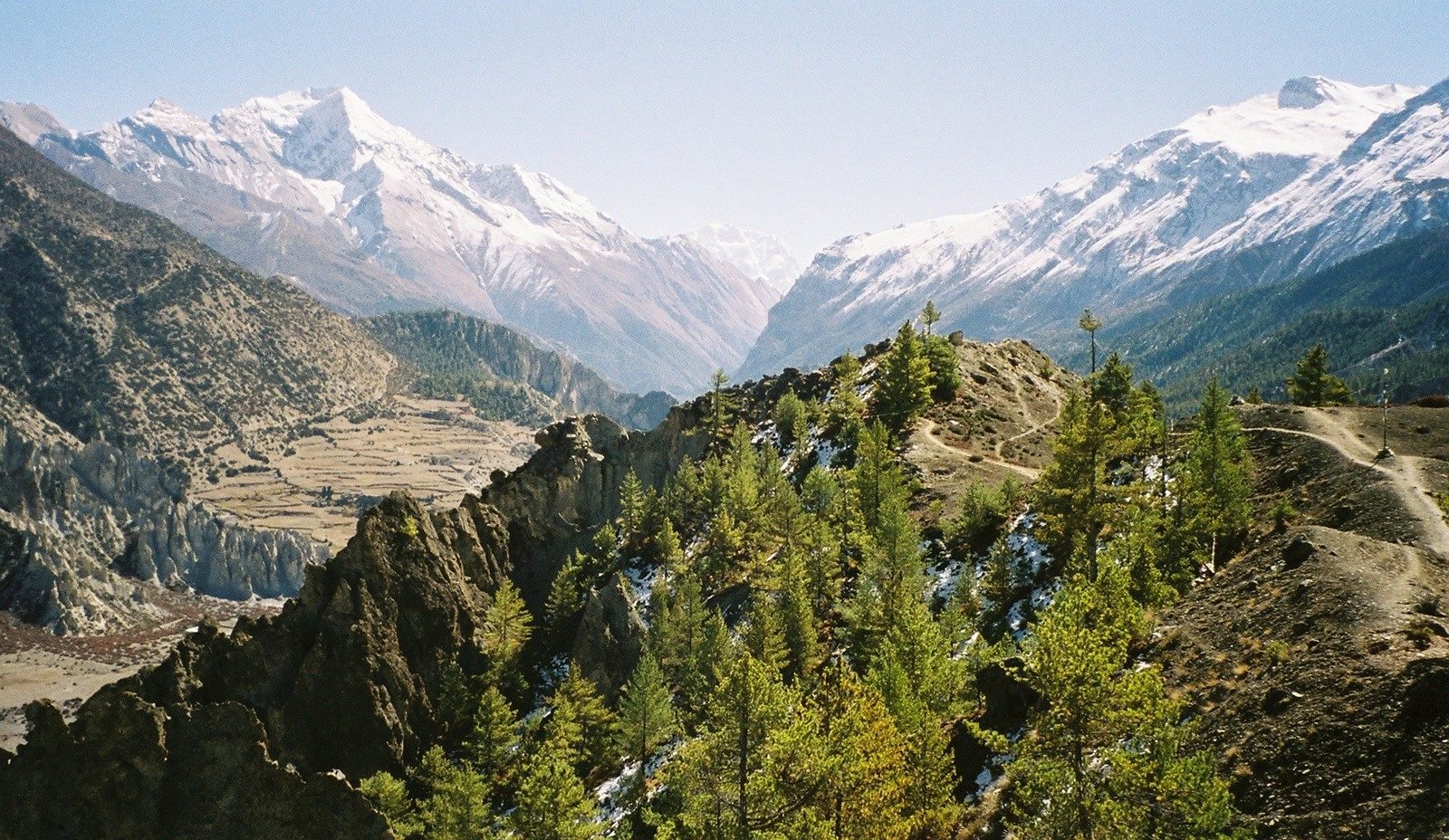
The Journey Unfolds:
- The Starting Point: The adventure begins in Besisahar, Lamjung district, a scenic 6-7 hour drive from Kathmandu. The initial trail winds through charming villages, farmlands, rivers, and hydropower projects before entering the enchanting Annapurna forests. As you ascend, the majestic Himalayas come into view, leaving you awestruck.
- Gradual Ascend and Changing Landscape: The early sections of the trek are easier, leading to Manang (3,540m), where the road ends and the path becomes more challenging but rewarding.
- Overcoming the High Pass: Beyond Yak Kharka (4018m), the challenge intensifies due to increasing altitude and harsher weather. Sparse vegetation, heavy winter snowfall, and strong winds during dry seasons test your determination. This section requires proper acclimatization and preparation.
Reaching the Peak of the Journey:
- Conquering Thorung La Pass: After acclimatizing at Thorung Phedi or High Camp (4,925m), set out before dawn to cross Thorong La Pass (5,416m), the highest trekking pass in the world outside mountaineering routes.. The early start helps avoid strong winds. From the pass, descend to Muktinath (3800m) on the same day, a holy pilgrimage site revered by Hindus and Buddhists.
- Descent and Diverse Exit Options: The route from Muktinath to Jomsom is a well-paved blacktop road. Here, your adventure can take different turns:
- Extend Your Exploration: Opt for additional trekking adventures in the area for a few days.
- Return to Civilization: Take buses or jeeps from Jomsom to Pokhara for a relaxing conclusion.
- Scenic Flight Option: Take a flight from Jomsom directly to Pokhara.
Planning Your Annapurna Circuit Trek:
This detailed breakdown provides a glimpse into the diverse landscapes and experiences that await on the Annapurna Circuit Trek. Remember to thoroughly research and plan your trek, considering factors like permits, acclimatization, weather conditions, and gear requirements.
Understanding Annapurna Circuit Difficulty
The Allure and Challenge of the Annapurna Circuit
The Annapurna Circuit Trek attracts adventurers with its mountain views and diverse landscapes. However, conquering this majestic route requires preparation and an understanding of the physical demands. Here’s a breakdown of the trek’s difficulty:
- High Altitude Challenge: The trek reaches Thorung La Pass, a formidable peak at 5416m. This high altitude necessitates a good level of physical fitness and proper acclimatization to avoid altitude sickness.
- Distance and Terrain: Be prepared for a long journey! The total distance can range from 160-230 km depending on the chosen route and starting/ending points. The trail includes sections with steep climbs and rocky terrain, demanding careful navigation.
Planning for Success:
While challenging, the Annapurna Circuit Trek can be a rewarding experience with proper planning and preparation:
- Physical Fitness: Regular exercise and building endurance are crucial for tackling the long distances and climbs.
- Altitude Acclimatization: Gradual ascent and proper rest are essential to adapt to the decreasing oxygen levels at higher altitudes.
- Experience and Guidance: Consider hiring a guide or porter, especially if you’re new to high-altitude trekking. Their expertise can ensure your safety and provide valuable local knowledge.

Reward Beyond the Challenge:
Despite its demanding nature, the Annapurna Circuit Trek offers unparalleled rewards.
- Majestic Himalayas: Witness the awe-inspiring beauty of the Annapurna Massif and other Himalayan giants.
- Cultural Immersion: Experience the warmth and hospitality of local villages and immerse yourself in the rich cultural tapestry of the region.

The trek is physically demanding, but the scenery and cultural experiences make it memorable.
FAQs For Annapurna Circuit Trek
General
Is the Annapurna Circuit Trek in Nepal safe for beginners?
What can I expect during the trek to the Annapurna Circuit?
What kind of accommodation is available on the Annapurna Circuit trek?
How do I book the Annapurna Circuit Trek in Nepal?
How difficult is the Annapurna Circuit Trek?
What is the difference between the Annapurna Circuit Trek and the Annapurna Base Camp Trek?
When is the ideal time for Annapurna Circuit Trek?
Do I have to hire a trekking guide for the Annapurna Circuit Trek?
What permits do I need for Annapurna Circuit Trek?
What is the highest point of the Annapurna Circuit Trek?
Is there a risk of altitude sickness? How can I prevent it?
What should I pack for the Annapurna Circuit Trek?
Are there ATM facilities along the Annapurna Circuit Trek?
How can I prepare for the Annapurna Circuit Trek?
Annapurna Circuit Trek Additional Information
The weather on the Annapurna Circuit trek depends on when you go
The most favorable times are spring (March–May) and autumn (September–November).
In spring, expect pleasant and dry weather with clear skies and forests ablaze with rhododendrons. Daytime temperatures hover around 15-20°C (59-68°F) at lower elevations, dropping below freezing at higher altitudes.
Autumn brings clear and dry weather with warm days and cool nights. Skies are typically clear, offering excellent visibility of the surrounding mountains.
The hot season (June-August) sees frequent rain and cloudiness, with thunderstorms changing the weather regularly. Trails can become slippery and muddy, with an increased risk of landslides and floods.
Winter brings dry and cold weather to the Annapurna Circuit, with occasional snowfall and icy conditions at higher elevations. Temperatures can plummet below zero degrees, making hiking in the highlands quite difficult.
To ensure a safe and enjoyable trek, it’s always advisable to check the latest weather forecast before you go.
Equipment And Gears
To prepare for your trek in Nepal, it’s essential to consider both the specific route and the time of year. Here is a Nepal trekking packing list to help you pack wisely. Here’s our Nepal Trekking packing list.
Should I Have A Guide To trek Annapurna Circuit?
While permits mandate hiring a guide for the Annapurna Circuit, having one offers significant advantages. A guide can be invaluable in navigation, ensuring you select the best route, avoid hazards, and enjoy stunning viewpoints.
Guides can also assist with administrative tasks like organizing lodging, meals, and permits, freeing up your time to focus on the trek. Additionally, their knowledge of local culture and traditions can enrich your experience.

Perhaps most importantly, a guide can significantly enhance your safety on the hike. They can monitor your health, assist in case of altitude sickness or injuries, and provide peace of mind. Hiring a guide also contributes to the local economy and creates jobs for Nepalis.
Overall, a guide can make your Annapurna Circuit trek safer, smoother, and more informative and enjoyable. However, experienced trekkers with excellent navigation skills may be comfortable attempting the trek solo.
Continuing Your Annapurna Circuit Trek from Manang
Manang marks a pivotal point on the Annapurna Circuit Trek. Along the way, the Himalayan scenery unfolds, giving you choices about how to continue your journey. These decisions will depend on your remaining time and physical condition.
Thrilling Options Await:
- Conquer Thorong La Pass and Descend to Muktinath: This is the most demanding section of the trek, reaching the circuit’s highest point at Thorong La Pass (5,416m). After conquering the pass, descend to the sacred town of Muktinath, revered by Hindus and Buddhists alike.
- Detour to Tilicho Lake: For adventure seekers with extra time, a detour to Tilicho Lake beckons. At 4,919 meters, this is one of the world’s highest lakes, surrounded by snow-covered peaks. Be prepared for a more challenging trek compared to the main Annapurna Circuit trail.
- Explore Upper Mustang: A separate permit unlocks the culturally rich and remote region of Upper Mustang. This challenging trek diverges from the main circuit and requires careful planning.
- Return to Besisahar: For those short on time or seeking a rest, retrace your steps back to Besisahar via the same route used while ascending.
Planning is Key:
A thoughtfully crafted itinerary is crucial. Consider your available time, fitness level, and interests. Ensure you have the necessary permits, especially if Upper Mustang is your chosen path. Hiring a guide can provide invaluable assistance with route selection and safety throughout your trek.
When to Hike the Annapurna Circuit
Highs and Lows of the Annapurna Circuit
The Annapurna Circuit is a high-altitude adventure, culminating at the majestic Thorong La Pass, which pierces the sky at a staggering 5,416 meters. This isn’t the only point that will test your legs – the trek boasts other high-altitude sections like the climb to Tilicho Lake (4,919 meters) and the Mesokanto La Pass (5,099 meters).
Altitude: A Gradual Climb with Big Rewards
The trek starts at a relatively low elevation of around 800 meters, gradually ascending towards the mighty Thorong La Pass. This significant change in altitude can lead to altitude sickness, so proper acclimatization is crucial.
Be Prepared for the Climb:
To ensure a safe and enjoyable journey, trekkers should be aware of the symptoms of altitude sickness and know when to seek medical attention. Staying hydrated and following acclimatization schedules will help you manage the altitude and enjoy the trek.
The Annapurna Circuit's Altitude Challenge
Highs and Lows of the Annapurna Circuit
The Annapurna Circuit is a high-altitude adventure, culminating at the majestic Thorong La Pass, which pierces the sky at a staggering 5,416 meters. This isn’t the only point that will test your legs – the trek boasts other high-altitude sections like the climb to Tilicho Lake (4,919 meters) and the Mesokanto La Pass (5,099 meters).

Altitude: A Gradual Climb with Big Rewards
The trek starts at a relatively low elevation of around 800 meters, gradually ascending towards the mighty Thorong La Pass. This significant change in altitude can lead to altitude sickness, so proper acclimatization is crucial.
Be Prepared for the Climb:
To ensure a safe and enjoyable journey, trekkers should be aware of the symptoms of altitude sickness and know when to seek medical attention. Taking the necessary precautions like proper hydration and acclimatization schedules will help you conquer the heights and experience the immense reward of traversing this breathtaking Himalayan circuit.
Is the Full Classic Annapurna Circuit Trek Suitable for You?
The Annapurna Circuit is an undeniably stunning trek, but it’s important to consider the challenges before you lace up your boots. Here’s a breakdown to help you decide:
High Altitude & Remoteness:
- Be prepared for high-altitude conditions. Most nights are spent in high-altitude villages, some reaching up to 5,000 meters.
- This trek ventures into remote regions of Nepal. Expect basic amenities in teahouses, offering a unique cultural experience.
Distance & Difficulty:
- The full circuit spans a significant distance, ranging from 160 km to 230 km (depending on the route).
- Some days involve long stretches of trekking, up to 9-10 hours.
Unique Features:
- Unlike other treks, the Annapurna Circuit offers a constantly changing landscape with a distinct descent route. Each day brings a new adventure.
- The trek’s highest point, Thorong La Pass (5416m), can be occasionally closed during winter due to snow. Be flexible with your itinerary.
- Variable weather conditions are the norm. Your guide may adjust the route slightly for your safety, ensuring an enjoyable experience.
Overall:
The Classic Annapurna Circuit Trek requires a good level of fitness, a sense of adventure, and the ability to adapt to high altitudes and remote locations. For those who accept the challenge, it promises an unforgettable adventure in the Himalayas.
What kind of food can I expect on the Annapurna Circuit trek?
Fueling Your Annapurna Circuit Adventure: Delicious Eats on the Trail
The trek also offers local food experiences that add to the journey. Teahouses, your accommodation haven, double as restaurants catering primarily to trekkers’ needs. Here’s what you can expect:
- Hearty Staples: Dal Bhat, a comforting combination of lentil soup and rice, reigns supreme as a staple dish. It provides essential carbohydrates and protein to keep you energized for long hikes.
- Variety for All Tastes: Don’t worry about monotony! Many teahouses offer a diverse menu including fried noodles, fried rice, momos (steamed dumplings with savory fillings), and a selection of vegetable and meat curries.
- Catered to Dietary Needs: Many teahouses cater to diverse preferences, offering breakfast choices like omelets, pancakes, and porridge for those seeking a lighter start to the day.
Snacking on the Trail: Chocolate and tea are readily available for quick energy boosts in between meals.
Remember: While some higher-altitude teahouses might have limited options, most offer a satisfying variety to keep you fueled throughout your trek.
Luggage
We provide a porter to carry your luggage for the trek. One porter will carry two trekkers’ luggage. The luggage weight limit for a porter is 18 to 20 kg. Therefore, please limit your luggage weight to 9 kg per person. You should carry a small backpack to put all your valuables and documents for the trek. You can store your excess luggage at your hotel or our office for free.
Typical Day
During our Annapurna Circuit Trek, you must walk 5 to 6 hours daily. We will have to ascend and descend trails on varied terrains. While we tackle the challenging terrains, we can also witness scenic beauty, pass by charming villages, glimpse local culture, and take photos.
Our day will begin early, and we will set off on our journey around 7 to 8 AM, depending on our destination. The guide will provide us with local information, history, and insights. The porter will carry your luggage, but you should carry your valuables. We usually take a break around midday and have lunch.
After we reach our overnight accommodation, you can explore the area. We will have dinner around 6 to 7 PM, after which we will have a short briefing about the following day’s trek. You can spend your evening reading books, playing games, or having friendly chats.
Electricity and Water
The accommodations along the Annapurna Circuit Trek trails offer charging facilities for an extra charge. You can charge any of your electronic devices. Carrying a universal adapter and power bank for the trek is best. You will mostly find Type C, D, and M plugs in Nepal, which may differ from yours.
You can buy bottled water from the local shops and accommodations. However, plastic bottles are not eco-friendly, so we suggest our trekkers bring water bottles. You can fill the bottles with boiled or filtered water from the teahouses.
Core Treks provides trekkers with a company-branded water bottle and purification tablets. We also offer a solar panel for battery charging in the mountains.
Communication
Most accommodations along the Annapurna Circuit Trek route provide internet services for an extra charge. The connection is not suitable for heavy data work. But it is enough to contact your family and friends back home. It costs around USD 2 for the internet service. The service can get limited as you move to the higher region.
Another option for communication during the Annapurna Circuit Trek is to buy a local SIM card. You can buy a SIM card at the airport. There are various mobile network operators. Nepal Telecom (NTC) provides better coverage in rural areas. However, phone signals can also get poorer in higher regions.
Tipping
Tipping your guide and porter is highly appreciated and culturally accepted in Nepal. It is not compulsory, but it shows your appreciation for their services and assistance during the trek. You can tip your guide and porter as a group after the completion of the trek.
Visa
All foreign travelers except Indian citizens need a Nepal visa to travel and trek in Nepal. Travelers can get the visa on arrival at the Tribhuvan International Airport, Kathmandu. Those traveling by land can get their visas at the immigration checkposts at the Nepal borders.
Children under age 10 are eligible for free visas. Your passport must have at least 6 months of valid date before expiry, and you will also need a passport-size photo for the visa. The visa fees are as follows:
- 15 days: USD 30
- 30 days: USD 50
- 90 days: USD 125
You can apply for a single or multiple-entry visa. If you want to extend your stay, apply for it before your visa expires. The maximum number of days you can extend your visa is 150 days. You can apply for a visa extension at the Department of Immigration in Kathmandu or Pokhara.
Note: Citizens from Nigeria, Ghana, Swaziland, Somalia, Zimbabwe, Cameroon, Ethiopia, Iraq, Palestine, Afghanistan, and Liberia are not eligible for an on-arrival visa. They must contact the Nepal Embassy in their home country for visa processing.
Trip Safety
Core Treks guarantees reliable tourism services with 100% attention to safety. Your safety is our top priority and concern. Our guides have proper licenses, experience, and intensive first-aid training. Similarly, they will carry high-quality equipment, gear, and first aid kits for the trek. At high altitudes, they will constantly monitor your oxygen level and check for early symptoms of altitude sickness.
We arrange safe and comfortable accommodations and check food hygiene. If you have any dietary restrictions, we diligently follow them. In case of accidents, injuries, or sickness, our guides have the authority to make the decision that best ensures your and the group’s safety. In emergencies, they will call for a helicopter rescue operation.
Our trek guides and leaders have experience and training in high-altitude treks and terrains of the Himalayas. Hence, you can rest assured and focus on enjoying the trek.
Extra personal expenses
Core Treks ‘ Annapurna Circuit Trek package includes transportation, accommodations, meals, permits, and fees for guides and porters. The trekkers must cover all other expenses themselves.
Our package cost does not include visa and travel insurance fees. The expenses for all beverages, such as soft drinks, alcoholic beverages, and coffee, are personal. Similarly, the extra costs for internet, phone calls, hot showers/ water, electronic device charging, etc., are also personal expenses for trekkers. We advise trekkers to bring sufficient cash as no ATM or credit card facilities are available during the Annapurna Circuit Trek.
Travel Insurance
Travel insurance is mandatory for the Annapurna Circuit Trek. It is a challenging high-altitude trek with some risks. The routes are in good condition but get uneven and rougher as you reach higher elevations. Additionally, the unpredictable weather at higher elevations adds to the challenges of the trek. Travel insurance provides financial backing and peace of mind during the trek.
The Annapurna Circuit’s route takes you to remote areas that lack proper infrastructure and medical facilities. Therefore, helicopter rescue is the only option, and it is not cheap. Travel insurance must cover high altitudes of up to 6000 meters and medical and emergency expenses. Likewise, it should cover altitude-related sickness and helicopter rescue and evacuation. We also suggest you get insurance that covers trip postponement, cancellation, luggage/ device loss or damage, and theft.
Group & private trek
Core Treks can organize group or private treks. For group treks, we offer discounts; the larger the group, the discount you will get. We provide one licensed guide with local expertise in the trek region for each group or individual trekkers. Similarly, we also provide one porter for each of the two trekkers. Whether it’s a group or a private trek, we take personal care of our clients.
Responsible travel
At CoreTreks, we follow development practices that support local communities and focus on responsible trekking and travel. We aim to preserve the Himalayas’ natural habitat and beauty. Thus, we maintain a limit of 15 or fewer trekkers at a time while trekking and touring. We also organize treks and tours that benefit our clients and local communities.
Travellers Reviews
66 Reviews in TripAdvisor
Advisor linkBest 16 Days Of My Life
This was honestly the best trip I’ve ever had. I’ve loved Nepal and its people from the start. I had been planning to trek to Annapurna Base Camp for almost a year, and I finally got to do it.
Huge thanks to CoreTreks and the whole team. The guides were patient and explained everything so well. I had no complaints at all. If you’re thinking about trekking in Nepal, I truly recommend CoreTreks.
Aileen
Swaziland
Loved Trekking Around Annapurna
Annapurna was really beautiful. As someone who loves to travel, I think Nepal is a great place for trekking and hiking. I couldn’t try all the adventure things Nepal has, but that’s okay I’ll come back again for sure.
Thank you to Nepal and the CoreTreks team for guiding us on the trails, helping with our bags, and even booking our hotels and meals. I’m really thankful for everything.
Michael
United States
Delicious Meal With Luxury Stay
The Annapurna Base Camp trek was easier than I expected, and being so close to the Himalayas is something I’ll always remember.
I love trying new food, and Nepalese cuisine was really tasty. I also didn’t think our stay would be so comfortable thanks to CoreTreks and the guiding team for that.
One small idea would be to add more extras to the package, like spa or pool options. But overall, it was a great experience. Thanks again!
lauren
Australia
Plan your private Trip
If these dates do not suit your plans, please contact us to request alternative dates. We are more than happy to customise the itinerary and schedule to better fit your needs.
There is no additional cost on the private trip. Group discount will be applied on checkout.









Popular Trips
Lets do a great journey.

$USD 1,520 per person
6 Nights 7 Days Bhutan Tour
Reach 4,000m in 7 Days


