The Everest region is arguably the most popular trekking spot in Nepal. It has become widespread simply because it is home to the highest mountain in the world, Mount Everest: the Everest region or the Khumbu region. Apart from Mount Everest, trekkers can enjoy more fantastic mountain views, such as yak fields, peaks, valleys, rivers, waterfalls, glacial moraines, and snowy mountains.
Other than the beautiful natural beauty of the Everest region, another region for trekking is where you can immerse yourself in the culture and tradition of the Sherpa people. Sherpas have lived for a long time in the Khumbu region, and they are very kind and welcoming and respect all the visitors visiting the area. However, they also have respect for their culture and tradition. Many Sherpa villages in the Everest region, like Namche, Dingboche, Pengboche, Tengboche, Pheriche, Lobuche, etc., serve the trekkers and tourists with meals, accommodation, etc.
Some of the significant trekking attractions in the Everest region are Lukla Airport, Namche Bazaar, Tengboche Monastery, Hotel Everest View, Gorakhstep, Kala Patthar, Everest Base Camp, Gokyo Valley, Hidden Valley, and Gokyo Lakes. So, let’s get to know some of the popular trekking packages that trekkers can enjoy in the Everest region.
Highlights of the Everest Region
Stroll around the Sherpa village and learn the new culture and tradition of Sherpa along with delicious delicacies,
Visit Sagarmatha National Park and see some rare and endangered species of animals, birds, vegetation, forests, etc.
Explore the majestic glacial moraines of Khumbu Icefall and Gokyo Lakes.
Acclimate to Namche Bazaar and visit side treks like Hotel Everest View, Sherpa View, and others.
Why to Trek in the Everest Region?
The Everest region is an extraordinary place for many trekkers and tourists worldwide. It is among the most trekked destinations in Nepal due to the many areas and sites that adventure lovers can explore. However, if you still need clarification about why you should explore the Everest region, here are some reasons to try it.
Stunning Mountain Views
One of the significant reasons for trekking in the Everest region is the majestic views of the mountain. This region is the home of the tallest mountain in the world at 8849m. In this region, besides Mount Everest, there are mountains like Ama Dablam Cho Oyu, where you will get majestic views. The magnificent views of the mountains, skies, and valleys provide you with unique opportunities to click some stunning photos.
Cultural Immersion
The Everest region is fantastic for several cultural and ethnic people living together happily and in diversity. Trekkers will pass through villages inhabited by Brahmins, Chettri, Magars, Newars, and Tharu caste people in the lower area. In contrast, in the higher altitudes, Sherpas, Bhotes, and Tibetans inhabit the region. During this trek, the trekkers can meet these people and learn their culture, traditions, and rituals.
Sense of Accomplishment
The Everest region trek is not for ordinary travelers who love to travel but for those who want to test themselves in the vast wilderness, high altitude adventure. The trek is challenging but rewarding, so when any trekker completes it, they feel a sense of success and accomplishment. So, if you want to feel the same sense of becoming successful, train hard, raise your physical level, and head for the Everest region.
Popular Everest Region Trek
19 Days Everest Three Passes Trek
The Everest Three Passes Trek is Nepal’s best and most beautiful destination. In this trek, trekkers visit the Everest region and explore Everest Base Camp and three passes in the same area. The trekkers will explore three passes during this trekking: Renjo La Pass (5,388m), Cho La Pass (5,420m), and Kong La Ma Pass (5,535 m). One of the major attractions of the ETP Trek is the stunning views of mountains, valleys, rivers, and glacial moraines from the top of these passes.
Trekking at an altitude of over 5000m will be challenging, so make sure you are physically fit and have the mentality to conquer these treks.
14 Days Gokyo And Renjo La Pass Trek
There are many high-altitude trekking options in the Everest region, and the Gokyo And Renjo La Pass Trek is one of the most challenging ones. In this trek, trekkers climb one of the passes in Renjo La Pass and explore the Gokyo Ri Peak and Gokyo Lakes.
Some of the major attractions of this trek are Sagarmatha National Park, Gokyo Ri, Renjo La Pass, Kala Patthar, Everest Base Camp Trek, etc. In this trek, you will combine one of the most adventurous treks with the majestic views of the skies, mountains, Khumbu Glaciers, and Gokyo Lakes.
9 Days Pikey Peak Trek
Among many high-altitude long, and arduous treks in the Everest region, the Pikey Peak Trek comes as a breath of fresh air. It is a short and comparatively easy trek in the area compared to other trekking destinations.
This trek takes about 7 to 8 days to complete, but the trekkers still have to climb the altitude of 4,065m. Some of the major attractions of the Pikey Peak trek are the beautiful trails surrounded by rhododendrons, and magnolias, majestic views of the mountains like Everest, Ama Dablam, etc., ancient monasteries like Thupte Choling monastery, take rest under the barren wildlands and participate in stargazing with your trekking crew.
17 Days Everest Base Camp Trek Without Lukla Flight
Not taking the traditional way of Everest Base Camp is a fun way to experience the familiar trek in this region. Lukla is the landing spot for all the trekkers, but in this package, trekkers will not take the Lukla flight. Instead, you can start from Kathmandu and go to Jiri by car before heading to Everest Base Camp Trek Without Lukla Flight. This way of trekking helps you get used to the high altitude and lets you better experience the local culture and environment.
You don’t have to worry about weather affecting flights. You start with a bus ride from Kathmandu to Salleri or Jiri. This route is safer than flying to Lukla and suits people scared of flying there. You also have a lower risk of getting sick from the high altitude. Along the way, you can visit Sherpa Villages and meet the friendly local people. This is the classical way of exploring the Everest region and visiting Everest Base Camp Trek, which even Sir Edmund Hillary and Tenzing Norgay followed during their first quest to hike Mount Everest.
22 Days Everest Three Passes Trek With Island Peak Climb
If you are unsatisfied with the Everest Three Passes Trek, you can go for the Everest Three Passes Trek With Island Peak Climb. This is arguably the most challenging trekking destination in the Everest region, but the more adventure you will face, the more fun it will bring to your adventure.
This trek is one of the longest in the Everest region, with the total days ranging from 21 to 25 days, whereas if you decide to complete them separately and don’t miss out on side treks, it can take up to 40 days to complete. Some of the major attractions of this trek are the three passes in Kong La Ma, Cho La, and Renjo La Pass, along with the majestic Island Peak, which is at an elevation of 6189m. Some of the major attractions of this trek are Lukla, Namche Bazaar, Three Passes, Gokyo Lakes, Kala Patthar, etc. So, when visiting the trek, ensure you have spared several days to enjoy your trek.
1 Day Everest Base Camp Helicopter Tour
Everest Base Camp Helicopter Tour is among the most popular tours in the Khumbu region. During the helicopter tour, you can see panoramic views of mountains such as Everest, Ama Dablam, Cho-Oyu, Lhotse, and Nuptse.
This tour package is perfect for those who don’t have enough time for trekking or are not physically able to experience the arduous trek from trail to trail of the teahouse. Remember that the tour with Helicopter will cost more than other regular treks in the region. The Everest Base Camp helicopter tour will only take one to two days so you will be back home in no time.
30 Days Three Peaks Climbing Nepal
Another trendy trekking spot destination in Nepal is climbing at the Three Peaks Climbing. In this trek, the trekkers will explore three of the highest but easily climbable peaks in the Khumbu region: Lobuche Peak(6119m), Island Peak (6189m), and Mera Peak (6461m) since the trekkers have to climb altitudes over 6000m, which makes the trek quite tricky.
Furthermore, above the high altitude of 4000m, the chance of altitude sickness is high, so make sure you are taking the proper acclimatization method and keeping yourself hydrated all the time.
17 Days Mera Peak Climbing
Mera Peak Climbing is one of the most underrated trekking destinations in the Everest region. During this trek, trekkers will have the opportunity to climb the majestic peak of Mera Peak, which is at an elevation of 6,476m—those trekkers who want to experience the adventure of peak climb as well.
During this trek, every trekker will pass through some of the major attractions of the Everest region, like Lukla, Phakding, Ramailo Danda, Thaknak, Khare and High Camp, and then Mera Peak Base Camp before climbing the elevation.
14 Days Luxury Everest Base Camp Trek
The Luxury Everest Base Camp Trek is one of the best trekking destinations, where you can explore the region in complete luxury. You’ll take a short and exciting flight from Kathmandu to Lukla.
You’ll meet the “mountain people” and see their homes, visit Buddhist monasteries, and see unique natural sights like the Khumbu Glacier and Everest Base Camp. Plus, you’ll see Mount Everest and other mountains from a high spot in Kalapatthar. In this luxury trek, you will be trekking on remote trails, but you will be staying in luxurious hotels and getting all the fantastic luxurious services.
19 Days Lobuche Peak Climbing
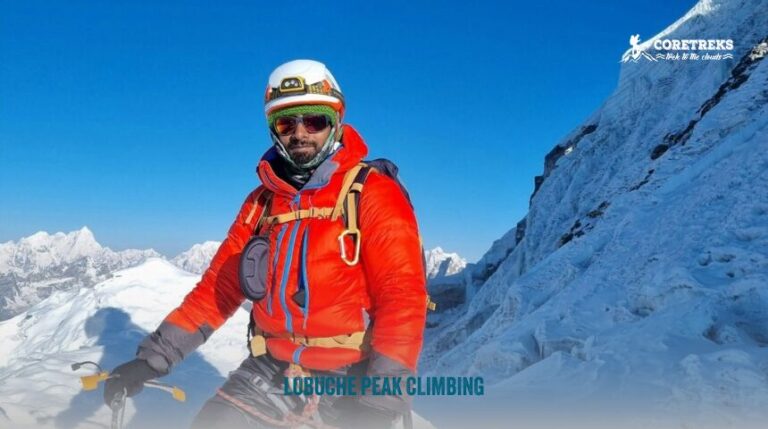
Along the route to the EBC Trek, the trekkers reach Lobuche and often explore the surrounding areas. After the popularity of the Lobuche and its peak, the Lobuche Peak Climbing became the trekking region itself. The elevation of the Lobuche Peak climbing is 6,119m, so for this trek, ensure you are physically fit to gain maximum satisfaction and adventure. During this trek, you will follow the same path as the Everest Base Camp Trek, like Lukla, Phakding, Namche Bazaar, Tengboche Monastery, Dingboche, and finally Lobuche. Mount Everest, Cho-Oyu, Lhotse, Baruntse, and Thamserku peaks are visible from the top of Lobuche peaks.
22 Days Jiri to Everest Base Camp Trek
Jiri to Everest Base Camp Trek is the classical trekking route in Nepal, which the trekkers used to follow even before the Lukla airport. In this trekking package, instead of boarding the flight to Lukla from Kathmandu, the trekkers will drive from Kathmandu to Jiri instead of going into Lukla.
You will visit different villages like Bhandar, Sete, Junbesi, Nunthala, Bupsa, and Surkhe before reaching Phakding. After Phakding, the regular route of the Everest Base Camp continues,
18 Days Island Peak Climbing
The Island Peak Climbing is one of the underrated treks in Nepal. In this trek as well, you will be taking a flight to Lukla in which you will be able to see some of the majestic peaks of the mountains as the bird’s eye views.
Visit some of the major attractions in the Everest region, like Sagarmatha National Park, Hotel Everest View, Sagarmatha Museum, and Tengboche Monastery. After arriving at the Everest Base Camp trek, you will return to Gorakhstep and hike Kala Patthar. Then, you will move forward to Chukung and back to Island Peak.
10 Days Everest Panorama Trek
Everest Panorama Trek is one of the most beautiful treks. You will see majestic views of mountains like Everest, Ama Dablam, Cho-Oyu, Lhotse, Nuptse, and others. The trek starts from Lukla and passes through several Sherpa villages and settlements before Tengboche. Trekkers can climb to the Tengboche Monastery, where they’ll see majestic panoramic views of the surrounding peaks.
13 Days Everest Gokyo Lake Trek
Another excellent trekking package for trekkers in the Everest region is the Everest Gokyo Lake Trek. As the name suggests, this trek involves trekking through the Everest region, visiting Everest Base Camp, and continuing their journey until they reach Gokyo Lakes and climb Gokyo Ri, which is at an elevation of 5,357 m. From this point, you can enjoy grand panoramic views of several Himalayan mountains.
14 Days Everest Base Camp Yoga Trek Nepal
The Everest Base Camp Yoga Trek in Nepal offers a unique mix of adventure and wellness. It takes you through the majestic Himalayas while doing daily yoga activities. This trek is best for those looking for physical and spiritual enrichment.
The route follows the classic Everest Base Camp trail and offers amazing views of some of the world’s highest peaks, like Everest, Lhotse, and Ama Dablam. While this trek wasn’t top-rated before, the interest in yoga has led more people to try this unique combination. You can see stunning snow-capped peaks, glaciers, and vast valleys while doing yoga in a natural setting. Each day starts and ends with yoga and meditation. The Everest region also has many monasteries where you can meditate, giving you a combination of adventure and a chance to purify your mind and soul.
14 Days Everest Base Camp Trek
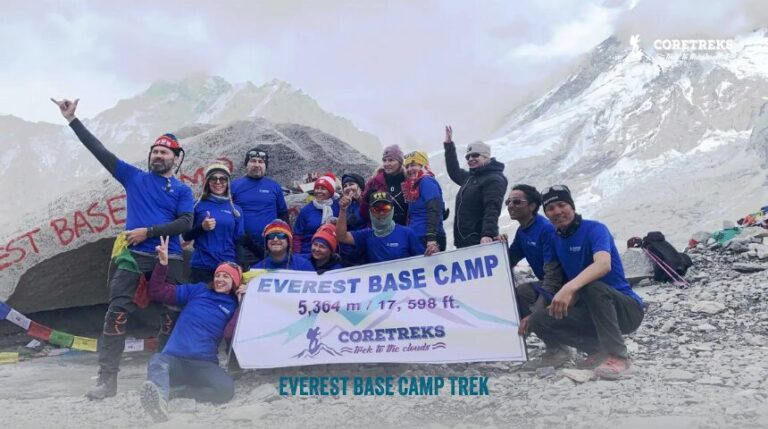
The Everest Base Camp Trek is the most popular and commercialized Khumbu region. It is accessible for veteran trekkers who have been trekking for several years. Still, even if you are a beginner, you only need to be physically fit and trek in the ideal trekking months, like April or October.
This trek has many unique places to visit, like Namche Bazaar, Sagarmatha National Park, Khumbu Icefall, Kala Patthar, etc. This trek is also appropriate with family members or friends.
12 Days Everest Base Camp Helicopter Return Trek
There are numerous ways to explore the Everest Base Camp Trek and on Everest Base Camp Helicopter Return Trek, the return from the base camp will be luxurious on a helicopter.
After trekking throughout the Khumbu region, you will reach EBC, return to Gorakhstep, and climb Kala Patthar. From Kala Patthar trekkers will board the helicopter and return back to Lukla.
20 Days Everest Base Camp Classic Trek
As mentioned, multiple ways exist to explore the Khumbu region and reach the Everest Base Camp Trek. Trekkers can quickly board a flight to Lukla and then begin trekking. However, if they are looking for an Everest Base Camp Classic Trek, it starts with a drive to Bandar from Kathmandu.
From Bandar, the trek begins as you reach Sete and then Junbesi. After that, the trekkers will reach Nunthala, Bupsa Danda, and Phakding, from which the regular trek begins. This trekking route is longer than the Lukla trek and will take from 18 to 20 days.
11 Days Everest Base Camp Luxury Trek With Helicopter Return
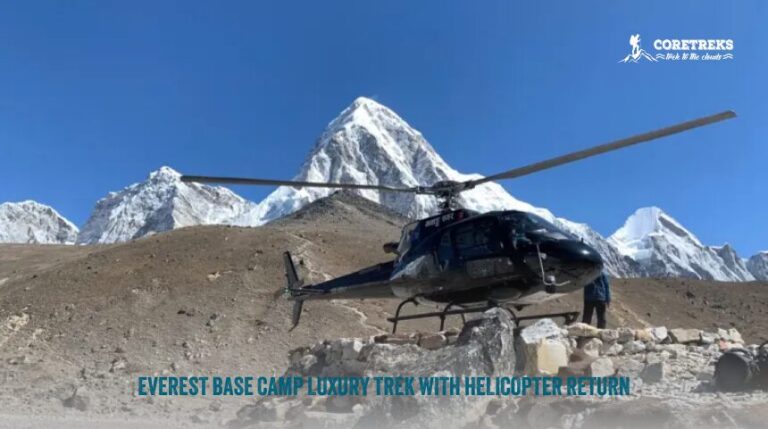
Everest Base Camp Luxury Trek With Helicopter Return is one of the most expensive treks in the Everest region. Each service trekker receives luxury and gets a helicopter return from Kala Patthar. This trek is ideal for those not looking for a budget-friendly trek and those who are trekking with young children and don’t want them to suffer the grueling difficulties of the Himalayas.
When to trek the Everest Region Trek?
The Everest Region trek is one of Nepal’s most popular and commercial destinations. Although many trekkers think this region is easy to slightly challenging, specific difficulties will significantly affect the trek. So, to get the most fun and least challenging trek, it is wise to trek in the ideal trekking seasons like Spring and Autumn.
Spring season
Spring (March to May) is the best time to trek to Everest Base Camp. The weather is mild, with the beautiful rhododendron forests blooming with colorful flowers. In the daytime, the temperature is warm when hiking, but it gets freezing at night. There is less chance of rain, and you can expect clear weather, fully functional teahouses, and plenty of daylight, which is ideal for trekking to Everest.
Autumn season
The weather in autumn (September to November) is usually clear and dry, making it a great time to enjoy the beautiful mountain scenery. Trekking during autumn is generally more accessible and less challenging than in rainy or snowy seasons. However, experienced trekkers can still opt for off-season trekking in Nepal. Planning carefully and bringing any necessary medication when attempting the 14-day Everest Base Camp Trek at any time of the year is essential.
FAQs
Which permits do you need for trekking in the Everest region?
During your trek in the Everest region, you will be trekking through the Sagarmatha National Park, for which you need to issue a Sagarmatha National Park permit. But even before that, you will need the Khumbu Pasang Lhamu Municipality permit. If you are trekking from Jiri, you must issue the Gaurishankar Conservation Area Permit.
Which is the most minor ideal season for trekking in the Everest region?
The least ideal seasons for trekking in the Everest region are the monsoon and winter. In the monsoon season, the trekking trails are wet and slippery, and natural disasters like floods and landslides occur. In contrast, winter brings cold weather, and sometimes blizzards or avalanches can occur.
What is the duration of the Jiri Everest Base Camp Trek?
The Jiri Everest Base Camp Trek is among Nepal’s most extended trekking durations, ranging from 15 to 20 days. In this trek, the trekkers will not travel to Lukla via flight from Kathmandu. Instead, they wish to drive to Bandar and trek to Sete, Junbesi, etc., before reaching Phakding.
Which seasons are the ideal for trekking in the Everest region?
Monsoon and winter seasons are the ideal miniature for trekking in the Everest region of Nepal. In some seasons, the weather becomes unpredictable, with frequent rain or snow. Furthermore, the chances of natural disasters like floods, landslides, blizzards, and avalanches are common in these seasons, so make sure you are trekking in ideal conditions.
What is the highest elevation of the Everest Base Camp Gokyo Lake Trek?
The highest elevation of the Everest Base Camp Gokyo Lake is the Gokyo Ri, at 5,357m. From the top of the Gokyo Ri, you can see majestic views of mountains like Mt. Everest, Ama Dablam, Cho-Oyu, Lhotse, Nuptse, etc, along with stunning views of the entire Gokyo Valley and Gokyo Lakes.
Boudhanath Stupa is one of the most sacred Buddhist sites in the world. It is a religious site and a cultural hub for pilgrims, especially Tibetan Buddhists. Similarly, it is one of Nepal's largest, 36-meter-high, and 100-meter-wide stupas in the capital city of Kathmandu. The stupa is located just 7 km northeast of central Kathmandu,…
The Everest Base Camp Trek in February is a one-of-a-kind experience that trek enthusiasts must take once. Contrary to many trekkers who believe winter months are unsuitable for Himalayan ventures, trekking in February is doable. It is just the time when the cold winter slowly transitions into the warm spring season. Therefore, trekking on the…
Many of you might be curious about the Manaslu Circuit Trek after earthquake in Nepal and whether it is safe for trekking. Fortunately, yes. The trail that was heavily damaged by the 2015 Nepal earthquake has re-opened. So what are the conditions of the trails, accommodation availability, and risks of Manaslu Circuit Trek after the…
This site uses cookies to optimize your user experience. By using this site, you are consenting to our use of these cookies. Check out our Privacy Policy.