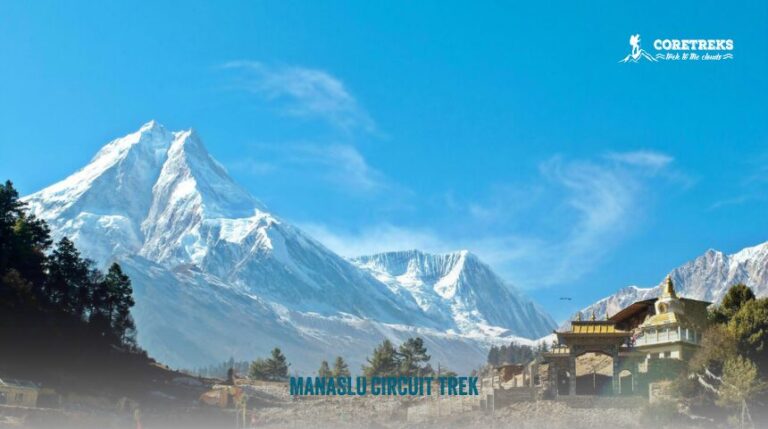
Manaslu region is among the pristine trekking destinations in Nepal. It is mainly attractive to trekkers due to being the off-beaten treks. From the first day to the last, the trekkers will face the adventure in the natural wilderness. The Manaslu region is home to majestic peaks and valleys and, most notably, the eighth-highest mountain in the world, Mount Manaslu. The height of Mount Manaslu is 8163m, and it is still one of the major attractions for the trekkers visiting this region.
Trekking to the Manaslu region is more challenging than most people think. They must pass through different landscapes, from barren wildlands lush jungles, rocky hills, valleys, and snowy mountains. Furthermore, the trekkers will also explore the Manaslu Conservation Area, which is home to regular and rare species of flora and fauna. In the Manaslu Conservation area, 11 species of butterflies, three species of reptiles, 33 species of mammals, and 110 species of birds are preserved.
In the Manaslu region, in addition to Mount Manaslu, trekkers can see other mountains, including snowy peaks like Bauda, Himalchuli, and Ngadichuli. The major attractions of the Manaslu region are the majestic views of the mountains and the chance to explore the remote villages. During this trek, you will also meet different castes of people, such as Magars, Gurungs, Tharus, and even Sherpas. You can find and learn about new cultures and traditions in this trek. In this blog, we will share with you some of the major attractions of the Manaslu region.
Why Should We Trek the Manaslu Region?
Manaslu region is quite an underrated region in Nepal. It is less famous than the Everest or Annapurna region, where many trekking destinations exist. The Manaslu region takes you closer to the eighth-tallest mountain in the world, Mount Manaslu. Apart from the mountain views, there are many other major attractions, so we should trek to the Manaslu region. So, let’s learn some of the reasons for hiking the beautiful Manaslu trekking area.
Less Crowded Trails
One significant reason for trekking the Manaslu religion is the peaceful atmosphere, trails, and trekking conditions. Compared to the extremely popular Everest and Annapurna regions, where hundreds of thousands of trekkers visit yearly, the Manaslu region is relatively peaceful as it contains less crowded trails. Since the trails are less crowded in the trails and teahouses, you will be able to get the proper services of food, accommodation, and, most importantly, peaceful exploration.
Manaslu Conservation Area
One of the significant reasons for exploring the Manaslu Circuit Trek is the Manaslu Conservation Area. The circuit passes through the Conservation Area, which falls under the conservation area as it has been conserving the rare flora and fauna for a long time. In this conservation area, 11 species of butterflies, three species of reptiles, 33 species of mammals, and 110 species of birds are preserved. The Manaslu Conservation Area spreads from 1400 to 8156m and consists of landscapes from the lower Terai to the high Himalayas.
Budget Friendly
Trekking is often divided into two categories: budget-friendly and luxurious treks. Compared to the other trekking regions in Nepal, this region is less commercialized, so in some essence, the trek cost is cheap and budget-friendly. Furthermore, most treks pass through remote settlements, small villages, teahouses, etc., which provide little luxurious services. Hence, the cost of all these factors becomes basic. Due to the remoteness, isolation, and budget-friendly nature of the region, adventure junkies from all over the world prefer to trek in the Manaslu region.
Explore the Holy Spirit Mountains
The Manaslu Region Trek is an opportunity to experience Nepal’s natural beauty and explore its spiritual and religious significance. Manaslu is derived from the Sanskrit word “The one with the Spirit.” The name does not highlight Manaslu’s holy spirit mountains, the spiritual leaders, or the Buddhist Gurus. Throughout the trek of the mountains, the trekkers will find different caves, mani walls, and places for meditation. The region is peaceful, and trekkers feel a strong sense of calm. Manaslu Circuit Trek combines stunning views, majestic peaks, and cultural richness, which is why it is the holy spirit of mountains.
Eco-Tourism
The Manaslu region is clean and quiet, with beautiful views of the mountains, landscapes, and valleys. Hence, the Government of Nepal and local authorities have encouraged eco-tourism. This region is perfect for trekkers looking for authentic trekking experiences in the wilderness. From a single day, the trekkers can connect with nature; day to day, they will get the perfect blend of natural beauty with a unique adventure experience. Trekkers are also motivated to support the environment and wildlife during their expeditions, so Manaslu is flourishing as the best place for eco-tourism.
Cultural Experience
The Manaslu region is the epitome of cultural diversity. At lower altitudes, you can integrate with different ethnic groups, such as Magars, Gurungs, Tharus, and others. When you climb the altitude, you will meet other ethnic people like Sherpas, Bhotes, and Tibetan Buddhist culture. During this trek, the trekkers can visit local villages, interact with local people, and visit local temples, monasteries, etc. These interactions let you learn about the new rituals, cultures, and traditions. The Manaslu region is also on the border of the Buddhi Gandaki and Marshanyangdi, which separates two cultural landmarks in Mankamana temple and Gorkha.
It is a less crowded, off-beaten path, and research more on this.
When to Trek Manaslu Region?
The Manaslu region is undoubtedly one of the most beautiful regions for trekking; however, it is equally challenging. High altitude, changing weather, rough trails, freezing temperatures, and possible natural disasters make the trek difficult. However, there is a way to minimize these factors to make your trek more fun and less complicated: trek during the ideal trekking season. So, let’s discuss when to trek the Manaslu region.
Spring
The spring season is one of the best trekking seasons in Nepal. It begins in March and ends in May, with the peak in April. Trekkers love this season mainly because it possesses the ideal conditions for trekking, like stable weather, mild temperatures, stunning views of skies and mountains, and clear and easy-to-scale trekking trails. The primary reason for trekking in the Spring is the beautiful flowering trails of magnolias and rhododendrons.
Autumn
Like the Spring season, Autumn offers ideal trekking conditions. This season begins in mid-September and ends in November. The initial portion of September still receives heavy to mild rainfall, but as September progresses, the rainfall decreases, and clear views of the skies and mountains are visible. The best time to do the Manaslu Circuit Trek is in the fall when the weather is excellent, and the trail is easy to walk on. There are many people, so booking your rooms in advance is essential. You can see beautiful mountains, hills, and valleys during the trek. The highest point of the trek has excellent views of colorful trees.
Off Season
Just like there are ideal trekking seasons, there are also off-seasons: Winter and Monsoon. The monsoon season falls in June, July, and August, whereas the Winter season falls in December to February. In the monsoon season, the rainfall is continuous from mild to heavy, making climbing ascent difficult. The trails are covered with mosses and are infested with insects. Furthermore, natural disasters like floods, landslides, and soil erosion can occur during the monsoon season. In winter, the snowy mountain views are stunning, but the changing weather and freezing temperatures make the trek challenging. Other natural disasters like snowstorms, blizzards, and avalanches are also possible.
Popular Manaslu Region Packages
13 Days Tsum Valley Trekking in Nepal
The Tsum Valley Trekking in Nepal is among Manaslu’s most beautiful and remote destinations. The Tsum Valley falls off the beaten path and falls among the moderate to challenging trek difficulty. This trek is relatively new to the Himalayas and was among the restricted areas until 2007.
The primary reason for Tsum Valley Trekking being one of the most complicated is that the trek revolves around an altitude of over 3000m. When trekkers trek above that altitude, they are more susceptible to altitude sickness. Tsum Valley Trekking provides tons of memories for the trekkers as there are many attractions to explore. During your trek, you can visit different types of monasteries, like Rachen Gumba, Mu Gumba, and Lungdang Gumba. See majestic mountain views like Ganesh Himal, Mt Manaslu, Churke Himal, Hiunchuli, etc., and immerse yourself in Tibetanian customs, traditions, and rituals.
22 Days Tsum Valley Trek with Manaslu Circuit Trek
Another excellent trekking destination in the Manaslu region, besides the Tsum Valley trek, is the Tsum Valley Trek with Manaslu Circuit Trek. This trek combines two majestic trekking circuits in the Manaslu region. In this trek, the trekkers will pass through remote and isolated off-beaten paths and reach the highly remote and mysterious Tsum Valley. It is also among Nepal’s most extended treks, as the duration of the natural trek ranges from two to three weeks.
The combination of Tsum Valley with Manaslu Circuit Trek is one of the newest in Nepal because, for a long time, this region was not open to the public. Only Kings, Queens, and soldiers could freely roam in the Manaslu region—the Tsum Valley Trek with Annapurna Circuit Trek is a fantastical adventure in Nepal. You gee rivers, waterfalls, bridges, villages, and old buildings. You also see the Rocky Mountains, such as Ganesh Himal and Mount Manaslu. The trek shows Nepal’s way of life and lets you see animals and plants in the area.
15 Days Manaslu Circuit Trek
The primary trekking destination in the Manaslu region is the Manaslu Circuit Trek. It is one of the most underrated treks in Nepal, but lately, it has started to gain attention. It is also among the best-restricted treks in Nepal, so trekkers have to issue a restricted area permit for this trek as well. Any trekkers who want a challenging trek and have no problem facing the region’s wilderness from the first day to the last will prefer the Manaslu Circuit Trek.
Some of the major attractions of the Manaslu Circuit Trek are the stunning views of the mountains like Manaslu, Annapurna, Himlungum, Fishtail, Nilgiri, cultural immersion with Tamangs, Gurungs, and Tibetian Buddhist people, exploration of Manaslu Conservation Area, ultimate teahouse trekking.
FAQs
What is Manaslu famous for?
The Manaslu Region is particularly famous for Mount Manaslu, the eighth-highest mountain in the world. Furthermore, this region is equally renowned for its off-the-beaten trails, remote settlements, Tibetan culture, religion, and monasteries. Among many trekking destinations in Nepal, the Manaslu region is also the best teahouse-to-teahouse trek in Nepal.
How difficult is the Manaslu Trek?
Manaslu Trek is among the most moderate to challenging treks in Nepal. Trekking in the Manaslu region doesn’t require fantastic mountain climbing skills or more than ten years of trekking experience; it requires physical stamina and endurance. Even months before trekking, trekkers must participate in cardiovascular and strength training exercises.
How many days is the Tsum Valley trek?
The average length of the Tsum Valley trek is 11 to 15 days. At higher altitudes, it is among Nepal’s most remote and challenging treks, and altitude sickness is possible. So, for this trek, at least one day of acclimatization is essential, affecting the duration of the curated trek in the itinerary.
Which Permits are needed for the Manaslu Circuit Trek?
Suppose you plan a trek in the Mt. Manaslu (8163m) region. In that case, you will need three permits: the Manaslu Restricted Area Permit (MRAP), the Manaslu Conservation Area Permit (MCAP), and the Annapurna Conservation Area Permit (ACAP). Since Manaslu Circuit Trek falls in a restricted area, the trekkers have to issue one restricted area permit.
What can I expect during the Tsum Valley Trekking in Nepal?
During the Tsum Valley Trekking in Nepal, you can trek through the Himalayan wilderness and experience the beauty of Tsum Valley, various Goempa and chortens, as well as the stunning Himalayan ranges, such as Manaslu, Ganesh Himal, and Hiuchuli. You will also be able to immerse yourself in the beautiful, isolated Himalayan culture.
Boudhanath Stupa is one of the most sacred Buddhist sites in the world. It is a religious site and a cultural hub for pilgrims, especially Tibetan Buddhists. Similarly, it is one of Nepal's largest, 36-meter-high, and 100-meter-wide stupas in the capital city of Kathmandu. The stupa is located just 7 km northeast of central Kathmandu,…
The Everest Base Camp Trek in February is a one-of-a-kind experience that trek enthusiasts must take once. Contrary to many trekkers who believe winter months are unsuitable for Himalayan ventures, trekking in February is doable. It is just the time when the cold winter slowly transitions into the warm spring season. Therefore, trekking on the…
Many of you might be curious about the Manaslu Circuit Trek after earthquake in Nepal and whether it is safe for trekking. Fortunately, yes. The trail that was heavily damaged by the 2015 Nepal earthquake has re-opened. So what are the conditions of the trails, accommodation availability, and risks of Manaslu Circuit Trek after the…
This site uses cookies to optimize your user experience. By using this site, you are consenting to our use of these cookies. Check out our Privacy Policy.