If you’re an adventurous soul with a passion for trekking, then there’s no better place to test your limits than the world-renowned Everest Base Camp. Everest Base Camp sits at 5,364 meters. The climb is tough, but it gives amazing views and unforgettable moments. But when is the best time to visit Everest Base Camp? The answer to that question can make all the difference in your journey. With unpredictable weather and treacherous terrain, it’s essential to plan your trip carefully.
In this article, we will look at the best time to visit Everest Base Camp and the things you should think about before starting this big adventure. Whether you’re a seasoned trekker or a first-time visitor, our expert insights will help you climb to new heights and make the most of your Everest Base Camp experience. So get ready to pack your bags, tie your boots, and start the adventure of a lifetime!
Table of Contents
Weather and Climatic Conditions at Everest Base Camp
Before we talk about the best time to visit Everest Base Camp, it’s important to know what the weather is like at this height. The weather can be highly unpredictable, and conditions can change rapidly, making it challenging to predict the best time to visit. However, there are certain trends that can help you decide when to plan your trek.
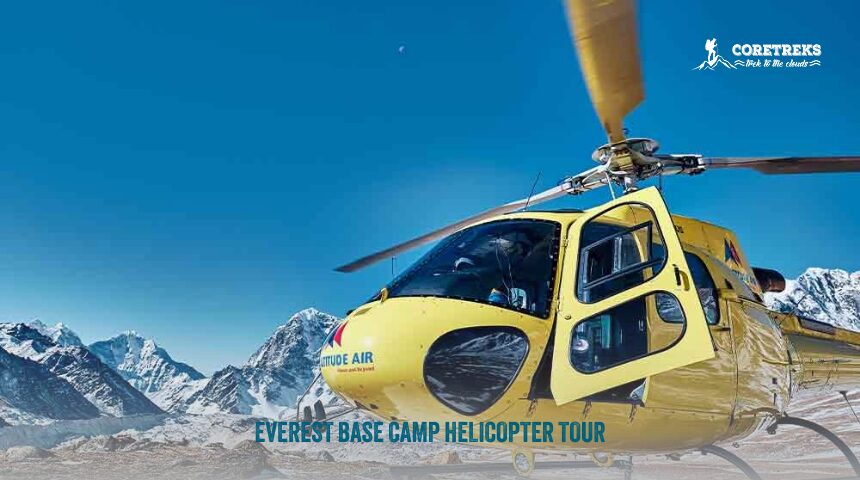
Everest Base Camp Helicopter Tour
The best time to visit Everest Base Camp is during the spring and autumn seasons. From March to May, the temperatures are relatively mild, and the skies are clear, making it the perfect time to enjoy the stunning views of the Himalayas. The spring season also brings with it the blossoming of rhododendrons, which are scattered throughout the trekking route, adding a touch of color to the landscape.
A Dream Come True With CoreTreks
CoreTreks really impressed me from the start. They were quick to reply, professional, and had everything well organized. When I arrived in Kathmandu, all the plans were ready and smooth.
Our guide and porters were amazing. The guide knew so much and made sure we were always safe and comfortable. The whole team was not only professional but also kind and fun to be around.
I highly recommend CoreTreks for a great trekking experience and reliable service.
CoreTreks really impressed me from the start. They were quick to reply, professional, and had everything well organized. When I arrived in Kathmandu, all the plans were ready and smooth.
Our guide and porters were amazing. The guide knew so much and made sure we were always safe and comfortable. The whole team was not only professional but also kind and fun to be around.
I highly recommend CoreTreks for a great trekking experience and reliable service.
Charlotte
Germany
Similarly, from September to November, the autumn season offers excellent weather conditions, with mild temperatures and clear skies. The autumn season is also the busiest time of year, with the most significant number of trekkers. The trekking route is crowded, and the lodges along the way can be full, so it’s essential to book well in advance.
Off-Season Trekking at Everest Base Camp
If you’re looking for a more secluded and peaceful trekking experience, then visiting Everest Base Camp during the off-season might be the right choice for you. The off-season months are from December to February and June to August. During the winter months, the temperatures drop significantly, making it challenging to trek. The trekking route can be covered in snow, and the lodges may not be operational. However, if you’re an experienced trekker and looking for a new challenge, then winter trekking can be a memorable experience.
Everest Base Camp
Similarly, trekking during the monsoon season from June to August can be a unique experience. The landscapes are lush and green, and the mountain views are spectacular. However, trekking during the monsoon season can be challenging due to the heavy rainfall, which can cause landslides and floods. It’s essential to check the weather forecast and plan your trek carefully if you choose to visit during the off-season.
As mentioned earlier, the best time to visit Everest Base Camp is during the spring and autumn seasons. However, it’s also the busiest time of the year, with the most significant number of trekkers. The peak season brings with it a flurry of activity, and the trekking route can be crowded. The lodges along the way can be full, and it’s essential to book well in advance.
Despite the crowds, peak-season trekking has its advantages. The weather conditions are excellent, and the skies are clear, providing stunning views of the Himalayas. Trekking during the peak season also means that you’ll meet more fellow trekkers, making it a social and fun experience.
Everest Base Camp
Pros and Cons of Trekking during Peak Season and Off-Season
Trekking during the peak season and off-season both have their pros and cons. Peak-season trekking offers excellent weather conditions and a bustling trekking route, but the lodges can be full, and the trekking route can be crowded. Off-season trekking, on the other hand, offers a more peaceful and secluded trekking experience, but the weather conditions can be unpredictable, and the trekking route can be challenging to navigate.
It’s essential to choose the right time to visit Everest Base Camp, depending on your trekking experience, fitness level, and preferences. It’s also crucial to plan your trek carefully, regardless of the season you choose to visit. Proper planning can ensure that you have a safe and enjoyable trekking experience.
When it comes to the best time for Everest Base Camp Trek, spring comes to the top. The weather is clear and moderate with warm temperatures. Similarly, the days are bright and sunny. Another best thing about trekking to EBC in spring is to witness the entire forests of rhododendrons and magnolias in full bloom. The vegetation is lush and green, and the colorful wildflowers adorn the whole trail in the hilly areas. It is also the best time to enjoy clear and unobstructed views of the Himalayas.
Pros of trekking in the spring:
The days are bright, sunny, and the trails are dry.
Spring skies are clear, and the visibility is excellent.
Entire rhododendron forests are in full bloom in red, pink, and white.
The temperature is moderate, making for a comfortable trekking experience.
Spring is the peak climbing season, so you can meet Everest climbers on the EBC Trek route.
Cons of trekking in the spring:
The trails are busy, and accommodations are packed during April and May.
Prices for flights and accommodations are higher.
Flights and accommodations can get booked fast, so you need to book everything in advance.
Post-Monsoon or Autumn (September to November)
Autumn is the peak trekking season and an ideal time for the Everest Base Camp Trek. The monsoon effect can influence the weather in early September, but it quickly ends. The weather is the most stable in autumn. Similarly, the temperature is mild and comfortable for trekking. Autumn skies are crisp and clear. Hence, the visibility is excellent. It is the best time to enjoy the crystal-clear views of snow-capped mountain vistas. Moreover, autumn foliage
Pros of trekking in the autumn:
Autumn offers the best and stable weather conditions.
The temperature is mild and cool, so you can enjoy a comfortable EBC Trek.
The monsoon cleanses the landscape, and the vegetation is clean and vibrant.
You can enjoy the crystal-clear mountain views as the skies are crisp and clear.
It is the best time to enjoy the stunning autumn foliage of the EBC region.
Cons of trekking in the autumn:
The trail to the Everest Base Camp is crowded and busy.
The cost of accommodations and flights is higher.
Days are shorter in autumn, so you need to trek early.
The temperature gradually begins to drop, and the nights can get colder.
Off-Season Trekking
Winter (December to February)
The winter season is for true adventurers. It begins to snow in higher-altitude areas, and as the snow piles up, it covers the entire landscape of the Everest region. The snow can make the trail icy and slippery. The temperature also gradually drops and reaches below the freezing point. These factors further add challenges and make it more demanding. However, the days are warm and sunny. Trekkers can enjoy spectacular mountain views without obstruction. There are very few trekkers on the trail, making winter the ideal time to enjoy quiet trekking and take in the snow-covered scenery.
Pros of trekking in the winter:
There are very few crowds, and the trails are quiet.
Days are warm, so the skies are clear.
The visibility is great, so you can enjoy crystal-clear views of the snow-capped mountain vistas.
Winter is a great time to see the Everest region covered in beautiful snow.
There are special deals and discounts on flight tickets and accommodations.
Cons of trekking in the winter:
The temperature can drop to extremely low levels at high altitudes, and the weather becomes increasingly unpredictable.
Unpredictable weather can cause Lukla flight delays or cancellations.
The snowy and icy trail makes it more challenging to trek. You may need the help of snow gear.
Some teahouses at higher altitudes may close for the winter, so it’s recommended to book in advance.
Monsoon or Summer (June to August)
The least favorable time for the Everest Base Camp Trek is the monsoon or summer season. It rains heavily in hilly areas, and the trails become wet, muddy, and slippery. However, the rain cleanses the dust and pollution in the atmosphere. So, you can enjoy the lush and vibrant scenery of the Everest region. Despite this, very few trekkers are on the trail. Visibility is poor, and the forest trails are infested with leeches. It is also hot and humid, which makes you sweaty and uncomfortable. There is also a high risk of floods and landslides. It is best to avoid trekking during the summer or monsoon season.
Pros of trekking in the summer:
The trails are quiet as there are very few trekkers.
The entire landscape and vegetation look vibrant, lush, and green.
You can get discounts and deals on accommodations and flights.
Cons of trekking in the summer:
There is heavy rain across the lower hilly regions, so the trails are wet and muddy.
Leeches and bugs infest the forest trail.
Visibility is extremely poor, and heavy rain clouds obstruct the views.
Flights often get delayed or cancelled.
There is a high risk of flooding and landslides during the summer.
Month-by-Month Breakdown Of Everest Base Camp Temperature
Take a look at the monthly temperature of the Everest Base Camp:
Month
Daytime Temperature
Nighttime Temperature
January
-20°C to -10°C
-25°C
February
-15°C to -5°C
-20°C
March
-10°C to 0°C
-15°C
April
-5°C to 5°C
-10°C
May
0°C to 10°C
-5°C
June
5°C to 15°C
0°C
July
10°C to 20°C
5°C
August
10°C to 20°C
5°C
September
5°C to 15°C
0°C
October
-5°C to 5°C
-10°C
November
-10°Cto 0°C
-15°C
December
-20°C to -10°C
-25°C or lower
Preparing for the Everest Base Camp Trek
Trekking to Everest Base Camp is a challenging and demanding journey that requires careful preparation. Proper preparation can help you tackle the challenges of trekking at high altitudes and ensure that you have a safe and enjoyable experience.
Physical and Mental Preparation for Trekking at High Altitude
Trekking to Everest Base Camp involves trekking at high altitudes, which can be physically and mentally demanding. It’s essential to prepare your body and mind for the challenges of trekking. Physical preparation can include regular exercise, cardiovascular training, and strength training. Mental preparation can include meditation, visualization, and mental toughness training.
Essential Gear and Equipment for Trekking
One of the most critical aspects of preparing for the Everest Base Camp trek is ensuring that you have the right gear and equipment. Proper gear can help you stay warm, dry, and comfortable during your trek. Some essential gear includes warm clothing, a sleeping bag, a sturdy backpack, trekking poles, and a good pair of trekking boots. It’s also essential to carry a first-aid kit, water purification tablets, and snacks. read more about Everest Base Camp Trek Packing List.
Equipment List For Peak Climbing
Conclusion and Final Thoughts
In conclusion, the best time to visit Everest Base Camp is during the spring and autumn seasons. However, trekking during the peak season and off-season both have their advantages and disadvantages. It’s essential to choose the right time to visit based on your trekking experience, fitness level, and preferences. Proper preparation can ensure that you have a safe and enjoyable trekking experience. So, pack your bags, tie your boots, and begin your once-in-a-lifetime journey to the famous Everest Base Camp!
Mr. Bhatta started as trekking guide and is now a successful travel operator in Nepal. He is an environmentalist, committed to promote Ecotourism in Nepal. Mr. Bhatta has been engaged in improving the livelihood of residence of The Himalayas through Helping Hands for Himalayan People (HHHP Nepal) a non-profit organization built to improve living standard of the local community.
Boudhanath Stupa is one of the most sacred Buddhist sites in the world. It is a religious site and a cultural hub for pilgrims, especially Tibetan Buddhists. Similarly, it is one of Nepal's largest, 36-meter-high, and 100-meter-wide stupas in the capital city of Kathmandu. The stupa is located just 7 km northeast of central Kathmandu,…
The Everest Base Camp Trek in February is a one-of-a-kind experience that trek enthusiasts must take once. Contrary to many trekkers who believe winter months are unsuitable for Himalayan ventures, trekking in February is doable. It is just the time when the cold winter slowly transitions into the warm spring season. Therefore, trekking on the…
Many of you might be curious about the Manaslu Circuit Trek after earthquake in Nepal and whether it is safe for trekking. Fortunately, yes. The trail that was heavily damaged by the 2015 Nepal earthquake has re-opened. So what are the conditions of the trails, accommodation availability, and risks of Manaslu Circuit Trek after the…
This site uses cookies to optimize your user experience. By using this site, you are consenting to our use of these cookies. Check out our Privacy Policy.