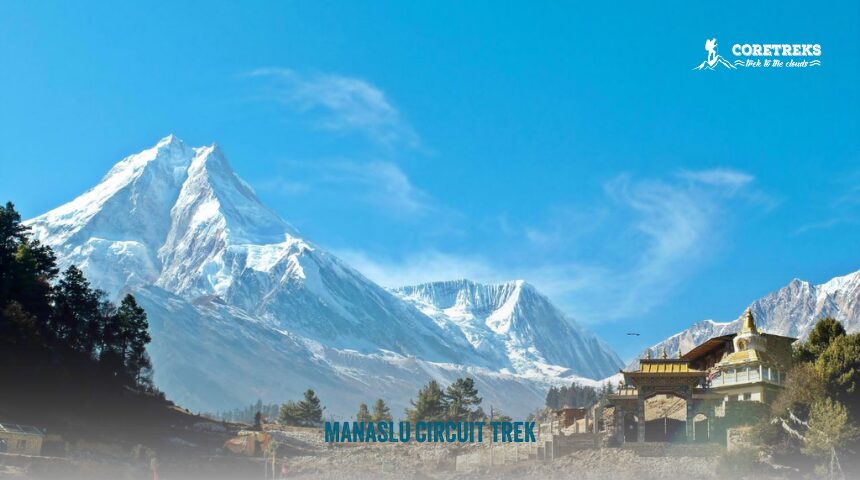
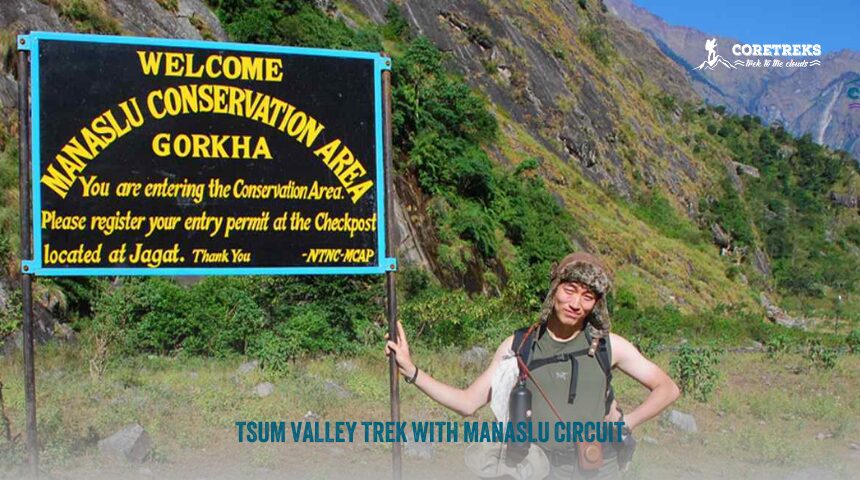
Many of you might be curious about the Manaslu Circuit Trek after earthquake in Nepal and whether it is safe for trekking. Fortunately, yes. The trail that was heavily damaged by the 2015 Nepal earthquake has re-opened. So what are the conditions of the trails, accommodation availability, and risks of Manaslu Circuit Trek after the 2015 earthquake?
The epicenter of the 2015 earthquake that shook the entire nation was Barpak, Gorkha. As a result, the Manaslu Circuit Trekking route, which lies close to Barpak, also received heavy damage. Houses, accommodations, and schools collapsed, and landslides swept away many areas of the trekking trails. Luckily, the trail beyond Jagat was intact and received significantly little impact from the quake.
Manaslu Trek
Not long ago, the government opened the Manaslu Circuit route for trekkers. It had just started gaining national and international attention when the 2015 earthquake changed everything. It has been over four years since the devastating event, and the Manaslu Circuit trekking trail face has changed from its original state. For those wondering whether the change is good, do not worry. It has become better and has again started garnering the attention of trek enthusiasts. Let us explore more about the Manaslu Circuit Trek after the earthquake in Nepal!
Table of Contents
Is the Manaslu Circuit Trek After Earthquake In Nepal Safe?
Yes, Manaslu Circuit Trek is completely safe for trekking after the earthquake. There are no more impacts of the 2015 earthquake. You may come across some ruins and remnants of houses and structures that got destroyed due to the events. Here are the briefs on various changes that the Manaslu Circuit trek went through after the earthquake:
Worth Every Step
I started the Manaslu Circuit trek with CoreTreks in October, and it turned into an amazing adventure. It was a tough trek, but also really rewarding and full of great moments.
Before the trip, CoreTreks made sure we were confident and ready. They handled every small detail so we didn’t have to worry. Our guide, Sai, had over ten years of experience and knew exactly how to manage anything that came up during the trek.
I’m already looking forward to visiting Nepal again, and I’ll definitely choose CoreTreks for my next trip too.
I started the Manaslu Circuit trek with CoreTreks in October, and it turned into an amazing adventure. It was a tough trek, but also really rewarding and full of great moments.
Before the trip, CoreTreks made sure we were confident and ready. They handled every small detail so we didn’t have to worry. Our guide, Sai, had over ten years of experience and knew exactly how to manage anything that came up during the trek.
I’m already looking forward to visiting Nepal again, and I’ll definitely choose CoreTreks for my next trip too.
Matthew
United Kingdom
Current Trail Conditions
The trekking trails of the higher regions received quite a massive damage. Many villages were wiped out by landslides and turned into debris. Similarly, huge boulders swept the trekking trails of the Manaslu Circuit. Trekkers had to take alternative routes to bypass the damaged trails and land-slide-prone areas. As a result, the region received very few trekkers for a year. Although the restoration efforts began almost immediately, the remote location and the massive damage caused by the quake made the rebuilding process challenging.
The restoration efforts took some time to complete. Aside from the damaged trails and the risk of landslides, there were also funding issues. Many local support groups and authorities joined with the locals to return the trail to its former glory. They took the initiative to make the trail even better. Therefore, it took a full three years to complete the restoration process. Until 2018, the route-clearing process continued with the help of locals and various support groups. Finally, the damaged villages were resettled, the trails, bridges, and accommodations were restored, and the trail was again opened for trekkers.
Manaslu Region
There has been a significant change in the Manaslu Circuit trekking trails since the quake. The trail between Sotikhola and Jagat has undergone quite some changes.The old route required trekkers to walk on the western side of the Budhi Gandaki River and go from Soti Khola to Machha Khola. Then, they will have to trek from Machha Khola to Jagat. The new trail goes along the eastern side of the Budhi Gandaki River.
Currently, there is an ongoing road construction in the Manaslu Circuit route.The road that previously was only up to Arughat to Soti Khola has now extended to Machha Khola. It is continuing towards Jagat and Philim. To ensure that the trekking trail maintains its authentic charm, there are no roads beyond Jagat. Some sections have high landslide risks, which are under regular government monitoring. Likewise, there has been improvement in high-risk areas monitoring efforts to ensure safety.
Are the Tea Houses and Accommodations Functional?
Yes, the tea houses and accommodations along the Manaslu Circuit trekking route are entirely functional. Since the 2015 earthquake, most have been rebuilt, and some have even improved.
The lower regions of the trekking route have good-quality accommodations. Trekkers can find rooms with attached private bathrooms. However, as you move to the higher area, the facilities become more basic due to the remote locations. The new tea houses and lodges in areas like Lho, Samagaun, Samdo, etc., have rooms with better insulation and attached bathrooms. The areas like Larkya Phedi and Dharamshala still lack proper accommodations. The tea houses are still basic in these areas, with shared rooms and communal bathrooms.
Most tea houses and accommodations provide internet/ WiFi facilities. But, the connectivity in higher areas is usually poor and unsuitable for heavy data-intensive work. They also provide hot water/ shower services. Similarly, trekkers do not have to worry about safe drinking water. Trekkers can easily buy bottled water or refill their water bottles with boiled or filtered water in the tea houses. Trekkers will come across various water sources along the trail, such as taps, streams, rivers, etc. Do not drink directly from them despite looking clean, as they may carry water-borne illnesses.
Usually, these accommodations cost around USD 3 to 5 per night in lower regions. The cost is around USD 7 to 10 per night in higher areas. The charges for additional services like hot water, hot shower, internet, charging devices, etc., is around USD 2 per service. Bottled water costs around USD 2 but can vary depending on the region.
Are There Any Risks of Landslides or Avalanches?
Manaslu Circuit Trek
Some areas of the Manaslu Circuit Trek route are prone to landslides and avalanches. The lower sections from Soti Khola to Jagat, Deng to Namrung, and Jagat to Ghap are particularly prone to landslides. These areas have steep, narrow landscapes with loose rocks and are especially prone to landslides during monsoon season.
The avalanche-prone areas are primarily in the higher regions of the Manaslu Circuit route. During winter, heavy snow accumulates between Sama Gaun and Samdo, Dharmasala to Larkya La Pass, and Larkya La to Bimthang. Avalanches are highly likely during melting cycles, and steep slopes increase the risks of injuries and accidents. Thus, trekkers must take proper precautions.
Here are a few safety tips for crossing the landslide and avalanche-prone areas during the Manaslu Circuit Trek:
Choose on-seasons, i.e., spring (March, April, May) and autumn (September, October, November), for trekking. These seasons have the best weather conditions and moderate temperatures. Moreover, the trails are dry, and there is a minimum risk of landslides and avalanches.
Check the weather forecast to avoid heavy rain or snowfall during the Manaslu trek.
Hire a licensed and experienced guide through a reputed trekking agency. They will ensure your safety and guide you through safe routes.
Start early as the landslides and avalanches are more likely to occur during the afternoon.
Carry all the essential gear and equipment for the trek.
How Has the Manaslu Circuit Trek Changed After the Earthquake?
Trail Rebuilding Efforts
As we mentioned above, the government and local authorities teamed up with various support groups and locals to rebuild the trails of the Manaslu Circuit. The District Development Committee (DDC) sought help from various NGOs to restore the trails. In 2016, the National Reconstruction Authority (NRA) developed the Post-Diaster Recovery Framework. The framework created a plan to restore the trekking trails and rehabilitate the communities affected by the 2015 earthquake. Their joint effort helped improve the infrastructure and safety of the Manaslu Circuit Trekking route.
Impact on Local Communities
The 2015 earthquake undoubtedly had a devastating impact on the local communities. Villages like Sama Gaun and Deng received massive effects as they were close to the quake epicenter, Barpak. Houses, teahouses, lodges, and monasteries were destroyed. Many residents also lost their lives, and many were left injured. Similarly, families were displaced, and infrastructures like trails, bridges, etc., were heavily damaged.
Despite everything, the communities stood together in these challenging times. Their resilience and effort were one of the cornerstones that helped restore the Manaslu region. Along with the local authorities and NGOs, they reconstructed their villages, homes, monasteries, and accommodations with earthquake-resistant techniques. Likewise, new schools and health posts were constructed with national and international aid. New, stronger bridges were constructed, and safer trails were opened for trekkers. Thanks to the local communities, the Manaslu Circuit trail was able to open its doors to its visitors.
Changes in Trekking Routes
There have been a few changes in the trekking routes of the Manaslu Circuit since the 2015 earthquake. The old trekking route went from the western side of the Budhi Gandki River, which now goes from the eastern side. There has also been road construction connecting Kathmandu with Machha Khola. Before the quake, the road only connected to Arughat. It has shortened the trek duration by one to two days.
Some sections of the Machha Khola and Jagat have been re-routed due to the risk of landslides and unstable terrain left by the earthquake. The bridges and pathways destroyed by the quake have been fully restored. Despite a few changes in the trekking route of the lower region, the core trail of the Manaslu Circuit Trek has remained intact.
What Should Trekkers Expect on the Manaslu Circuit Trek Now?
Permits and Regulations
There have been no significant changes in the permit regulation for the Manaslu Circuit Trek since the 2015 earthquake in Nepal. Currently, trekkers must obtain the following permits for the trek:
Special Restricted Area Permit (RAP)
The Manaslu region lies in one of the restricted areas of the country, so trekkers must obtain a special restricted area permit to access the region. You must show this permit to access the area from Jagat before crossing the Sama Gaun village. Solo trekkers cannot get the restricted area permit individually. Trekkers can only obtain it through a local registered trekking agency. Also, note that a group must have a minimum of two trekkers.
The special restricted area permit costs the same for SAARC and Non-SAARC nationals. However, the fees vary depending on the season. They are as follows:
Month
Costs
September to November
USD 100 per person for the first seven days. Additional USD 15 per person, then afterward.
December to August
USD 75 per person for the first seven days. Additional USD 10 per person, then afterward.
Manaslu Conservation Area Permit (MCAP)
The Manaslu Circuit trekking trails pass through the Manaslu Conservation Area from Philim. The conservation area is home to diverse flora and fauna, including rare and endangered species. Hence, the permit regulates access to the area. The fees collected from the permit also contribute to the development and preservation of the region. Trekkers can obtain a permit in Kathmandu through a local trekking agency.
Nationality
Costs (per person)
Nepalese
Free
SAARC residents
NPR 600
Non-SAARC residents
NPR 3000
Annapurna Conservation Area Permit (ACAP)
You will also access the Annapurna Conservation Area from Bhimthang and Dharapani during the Manaslu Circuit Trek. Therefore, trekkers must also obtain the Annapurna Conservation Area Permit (ACAP). You can get the permits via a local trekking agency in Kathmandu.
Nationality
Costs (per person)
Nepalese
Free
SAARC residents
NPR 600
Non-SAARC residents
NPR 3000
Facilities and Services
There have been improvements in facilities, such as internet and mobile network coverage, since the 2015 earthquake in the Manaslu region. However, due to the remote nature of the location, facilities like hospitals and medical posts are still limited. In the lower areas, there are small health posts available that provide only first-aid and basic treatments. In case of emergency, helicopter evacuation is the only way to provide immediate medical attention.
The WiFi/ internet is available, but the connectivity is rather weak in higher regions. For better connectivity, it is best to get a local SIM card. However, there can be no coverage in areas like Samdo, Dharmasala, and Larkya La Pass. So, during the Manaslu Circuit Trek, manage your expectations. The medical facilities are limited, while the internet and mobile coverage can be unreliable. So, prepare adequately and carry all the necessary equipment and gear for a comfortable Manaslu Circuit Trek. Check our beginners’ guide for Manaslu CircuitTrek!
What Are the Highlights of the Manaslu Circuit Trek Today?
Take a look at the highlights of the Manaslu Circuit Trek:
Get a chance to trek on the off-the-beaten and remote trails of Nepal within the restricted area.
Walk through different and colorful landscapes, passing villages, forests, rivers, valleys, waterfalls, and gorges.
Trek right through the Manaslu Conservation Area and Annapurna Conservation Area while witnessing the rare biodiversity.
Climb the high Larkya La Pass (5,106 m) and see the beautiful Birendra Tal.
Witness stunning views of some of the world’s highest peaks, like Mount Everest, Manaslu, Ganesh Himal, Lamjung Himal, Annapurna, and more.
Immerse yourself in Nepalese and Tibetan culture and traditions.
Why is Nepal Vulnerable to so many Earthquakes?
Nepal is a small, landlocked country between India and China. It is also at the boundary of two major tectonic plates: the Indian Plate and the Eurasian Plate. The Indian tectonic plates move about 2 cm per year towards the north. Meanwhile, the Eurasian plate is fixed in its place. The Indian Plate pushes the Eurasian Plate underneath, and the continuous movement builds up tremendous stress. This stress is released through earthquakes, so Nepal is vulnerable to many Earthquakes.
The country lies in a highly active seismic region with several active fault lines, making Nepal vulnerable to earthquakes. The three major tectonic faults are the Main Himalayan Thrust (MHT), the Main Boundary Thrust (MBT), and the Main Central Thrust (MCT). Similarly, the country’s landscape primarily consists of loose sediments, erodible rocks, and steep slopes. The fragile landscape has a high risk of landslides and avalanches during earthquakes. Moreover, Kathmandu Valley was an ancient lakebed sediments, and the seismic waves amplify during quakes.
Nepal is prone to earthquakes because it lies between two massive tectonic plates. Multiple seismic faults exist in different regions, and the country’s weak geology increases the risk of earthquakes.
Mr. Bhatta is one of our licensed trekkers (issued by Ministry of Culture, Tourism and Civil Aviation, Nepal) and has years of experience with trekking in the Himalayan region. He belongs to the Gorkha region, and trekking with him is interesting, enriching and engaging. He has been working with CoreTreks since 2015.
Guiding trekkers for 11 years now, he is fully knowledgeable of the areas in the Himalayan region. He guides trekkers through the trails of Everest Base Camp, Annapurna Circuit, Ghorepani Poon Hill and many more. Mr. Bhatta always keeps safety first which is why many trekkers enjoyed his company in their journey.
Boudhanath Stupa is one of the most sacred Buddhist sites in the world. It is a religious site and a cultural hub for pilgrims, especially Tibetan Buddhists. Similarly, it is one of Nepal's largest, 36-meter-high, and 100-meter-wide stupas in the capital city of Kathmandu. The stupa is located just 7 km northeast of central Kathmandu,…
The Everest Base Camp Trek in February is a one-of-a-kind experience that trek enthusiasts must take once. Contrary to many trekkers who believe winter months are unsuitable for Himalayan ventures, trekking in February is doable. It is just the time when the cold winter slowly transitions into the warm spring season. Therefore, trekking on the…
The beginner guide for the Manaslu Circuit trek contains all the information, including the itinerary, the best time to visit, challenges, preparation tips, permit details, and other information that is necessary for first-time travelers. Manaslu Circuit is located in the Manaslu Conservation Area on the northern side of the Gorkha District of Nepal. The trek…
This site uses cookies to optimize your user experience. By using this site, you are consenting to our use of these cookies. Check out our Privacy Policy.