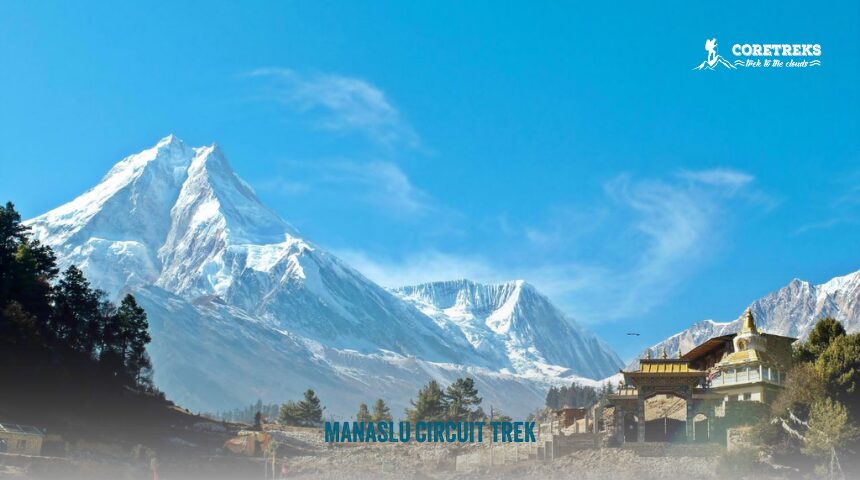
The beginner guide for the Manaslu Circuit trek contains all the information, including the itinerary, the best time to visit, challenges, preparation tips, permit details, and other information that is necessary for first-time travelers. Manaslu Circuit is located in the Manaslu Conservation Area on the northern side of the Gorkha District of Nepal. The trek is less discovered and less traveled, and it has great adventure, which is a great alternative for popular treks like Everest Base Camp and the Annapurna Circuit trek.
It is an excellent choice for beginners to trek the Manaslu Circuit because it will take you to the base of the 8th highest mountain in the world, Mount Manaslu (8,163m). Furthermore, the less crowded trails, rich cultural heritage, beautiful scenery, highest mountain vistas, and many more make the Manaslu trek a must-visit trek for Beginners. Continue reading this guide about the Manaslu Circuit trek for beginners to learn more about the trek.
Table of Contents
Is the Manaslu Circuit Trek Suitable for Beginners?
Yes, the Manaslu Circuit trek is suitable for beginners with the proper preparation beforehand. Though the trek is considered a moderately difficult trek, it does not require technical climbing and prior experience. The trek takes you to varied terrain, suspension bridges, a river crossing, steep ascents, and an uneven path descent. Thus, you need proper leg strength and stamina to walk for longer days in difficult terrain.
A Personalized Adventure
Our Manaslu Circuit trek was a real adventure. Nim, our guide, and the porters helped us every step of the way. We visited small villages and stayed with local families, which gave us a closer look at Nepali culture.
Thakur made sure we felt safe and relaxed throughout the trip. Sai handled our emails and helped us plan everything, even after the trek. The whole team was professional and cared about our experience.
We truly recommend CoreTreks to anyone who wants a cultural and unforgettable journey through the beautiful parts of Nepal.
Our Manaslu Circuit trek was a real adventure. Nim, our guide, and the porters helped us every step of the way. We visited small villages and stayed with local families, which gave us a closer look at Nepali culture.
Thakur made sure we felt safe and relaxed throughout the trip. Sai handled our emails and helped us plan everything, even after the trek. The whole team was professional and cared about our experience.
We truly recommend CoreTreks to anyone who wants a cultural and unforgettable journey through the beautiful parts of Nepal.
Elora
Canada
With the proper preparation, physical fitness, and mental resilience, first-time travelers can complete the Manaslu Circuit trek. The Manaslu trek gives beginners less crowded trails, colorful landscapes, thick forests, rich Tibetan-influenced culture, and amazing views of snow-covered mountains. Therefore, it can be said that the Manaslu Circuit trek is suitable for beginners, despite its challenges, with adequate preparedness.
Detailed Itinerary of Manaslu Circuit Trek for Beginners
Day
Itinerary
Altitude (max)
Elevation Gain
Distance Covered(km)
Walking Hours
1
Drive from Kathmandu to Soti Khola
700
–
138 (drive)
8-9 (drive)
2
Trek from Soti Khola to Machha Khola
900
200
14
6-7
3
Machha Khola to Jagat
1340
440
22
6-7
4
Jagat to Deng
1860
520
20
6-7
5
Deng to Namrung
2630
770
19
6-7
6
Namrung to Lho
3180
550
10
4-5
7
Lho to Samagaon
3520
340
8
4-5
8
Acclimatization Day in Samagaon
3870(Base Camp)
350
7-10
4-6
9
Samagaon to Samdo
3875
355
8
4-5
10
Samdo to Dharamsala
4460
585
7
4-5
11
Dharamsala to Larkye La Pass to Bhimthang
5106
646
24
8-9
12
Bhimthang to Tilije
2300
-1530
20
6-7
13
Tilije to Dharapani
1860
-440
6
4-5
14
Dharapani to Besi Sahar
760
-1100
45(drive)
5-6 (drive)
15
Besisahar to Kathmandu
1400
640
175(drive)
6-7 (drive)
What are the Challenges for Beginners during the Manaslu Circuit Trek
The trek lies in the Manaslu region, a restricted area for trekking in Nepal. It is a high-altitude trek taking you to the highest point, Larkye La Pass, at an elevation of 5106 meters, which increases the difficulties for beginners. Likewise, the trek is challenging, and beginners face several challenges, as discussed below.
Altitude
One of the major challenges for beginners in the Manaslu Circuit trek is the Altitude. The trek begins from the Machha Khola(900m) and goes up to the Larkya La Pass(5106m); the high elevation gain throughout the trek can make beginners uncomfortable. Moreover, you will suffer from altitude sickness at higher altitudes after 3000m.
It can worsen if you neglect the symptoms and lead to life-threatening altitude-related diseases like HAPE and HACE. However, the risk of altitude sickness can be minimized if proper acclimatization is done and rest days are taken when needed. Further, drinking plenty of water and keeping hydrated could be even more helpful.
Long Trek
No doubt, the Manaslu Circuit trek is long, and it takes about 13-15 days to complete the trek based on your itinerary and the trek route. The CoreTreks 15-day Manaslu Circuit trek starts at Soti Khola and ends at Besi Sahar with a drive from Kathmandu, where you will cover about 177km total distance throughout the trek.
Thus, you will walk for 6-8 hours daily, covering 6-15km to reach that day’s destination. The rugged terrain and uneven paths make it even more difficult. Therefore, trekking in the Manaslu region is challenging because of the longer trek duration and distance. Nevertheless, beginners can endure this difficulty with proper physical fitness.
Cold Weather
Another challenge beginners will face is cold weather in the Manaslu Circuit trek. It is not that the weather will be chilly throughout the year, but it will be extremely cold during the Winter season. Generally, the lower region of the trek is warm and pleasant, but in the higher region of the trek, it is cold and chilly.
Manaslu Circuit Trek
Even strong winds and freezing temperatures exist, especially at the Larkey La Pass. Thus, you need to trek with layered clothing, and there is a risk of frostbite in higher altitude areas. For beginners, you can choose to trek in seasons like Spring and Autumn, with pleasant and warm weather conditions.
Required Permits For Manaslu Circuit Trek
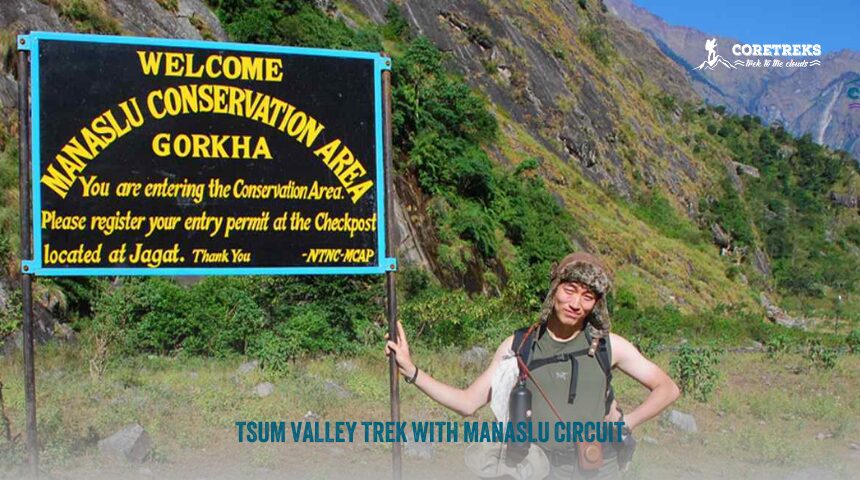
You need to get three permits to trek in the Manaslu Circuit. These permits are the Manaslu Restricted Area Permit(MRAP), the Manaslu Conservation Area Permit(MCAP), and the Annapurna Conservation Area Permit(ACAP). These permits are required in specific places like Jagat before crossing Samagaun, Philim, and beyond Bhimthang and Dharapani. Getting the permits will cost a certain amount; the cost varies among foreigners and SAARC nationals besides MRAP.
Let’s have the breakdown for the permit cost needed for the Manaslu Circuit trek.
Manaslu Restricted Area Permit (RAP)
The region from Jagat to Sama Gaun falls in the restricted area, so you will require a Restricted Area Permit. The Manaslu Restricted Area Permit cost depends on the number of days you spend and the season you are trekking.
Time
Costs
September to November
USD 100 per person for the first week. Additional USD 15 per person per day after a week.
December to August
USD 75 per person for the first week. Additional USD 10 per person per day after a week.
Manaslu Conservation Area Project Permit (MCAP)
The trekking trails of the Manaslu Circuit Trek go through the Manaslu Conservation Area. So, you will require an entry permit for the conservation area. The costs are as follows:
Nationals
Costs
SAARC Nationals
NPR 1000 per person
Non-SAARC Nationals
NPR 3000 per person
Annapurna Conservation Area Permit (ACAP)
The Manaslu Circuit Trek also goes through the Annapurna Conservation Area. Hence, you must also obtain an Annapurna Conservation Area Entry Permit. The costs of ACAP are as follows:
Nationals
Costs
SAARC Nationals
NPR 1000 per person
Non-SAARC Nationals
NPR 3000 per person
How to Train and Prepare for the Manaslu Circuit Trek
Physical Fitness
The Manaslu Circuit Trek is a strenuous venture that requires reasonable health and fitness. It is a high-altitude venture that will test your physical limits. During the journey, you must trek for 4 to 6 hours each day on varied terrains. The trails are rugged and rough, with steep uphill and downhill sections. The high altitude further makes the trek more demanding and physically arduous. It requires reasonable stamina, strength, and endurance.
Building your physical fitness is essential for preparing for the Manaslu Circuit trek. You will walk for several days in challenging terrain with a weighted backpack and steep ascents and descents. You need a good level of physical fitness, especially focusing on cardiovascular exercise, strength, and upper body building. You can go cycling, running, swimming, and take short hikes to get used to trekking. Additionally, exercises such as squats, lunges, push-ups, pull-ups, deadlifts, planks, etc., are also excellent for building the strength necessary for the Manaslu Circuit Trek. You can also practice hiking with a backpack to simulate real trekking conditions.
Here are some tips for avoiding injuries and fatigue during the Manaslu Circuit Trek:
Trek at your own pace and slowly. Do not push yourself too hard, as you may overexert yourself.
Before you start our trek, you should do a light warm-up and stretch. You should do a light stretch after trekking to prevent muscle stiffness.
Keep yourself hydrated throughout the trek. Drink 3 to 4 liters of water each day to minimize fatigue, cramps, and altitude sickness.
Eat a high-carb, high-protein diet to keep yourself energized throughout the trek.
Take regular breaks while trekking to avoid physical exhaustion.
Wear comfortable trekking shoes with good ankle support and use trekking poles. It allows you to trek stably on uneven terrains and avoid injuries.
Listen to your body and be aware of any unusual pain or discomfort.
Mental Preparation
You need strong mental resilience and physical fitness to complete the Manaslu trek. You have to build the mental endurance to face the challenges that will occur during the trek. Instead of stressing over and worrying about the difficulties, you need to be confident that you can complete the trek and meet the expectations. Further, being motivated during tough days, such as long walking hours and being in higher altitude areas, will be helpful.
Acclimatization
Acclimatization is the key point to remember during the Manaslu Circuit trek. While preparing for the trek, you must know about the common symptoms of altitude sickness, such as headaches, shortness of breath, nausea, vomiting, difficulty walking, etc. If these symptoms are seen, you need to acclimate properly. To prevent altitude sickness, you should slow your pace and gradually ascend in the higher altitude region. Moreover, drinking adequate water, about 3-4 liters a day, and taking rest whenever necessary is a great way to minimize altitude sickness.
Best Time for Manaslu Circuit Trek in Nepal
Ideal Seasons:
The best time for the beginner to trek to the Manaslu Circuit is the Spring and Autumn seasons because of the most favorable weather conditions. Also, the well-maintained and dry trails reduce the challenges and make hiking easier and more comfortable in difficult terrain. Similarly, winter and monsoon seasons are less favorable seasons for first-time travelers to trek in the Manaslu region. This is because of the harsh weather and temperature this season provides. Heavy rainfall and snowfall may hinder the journey for successful trekking in the Himalayas. Let’s discuss why spring and autumn are the best times for the Manaslu Circuit trek.
Spring (March-May)
The best time for the Manaslu Circuit trek is Spring, which falls between March and May. This is because this season offers the most favorable temperature and weather conditions. The average temperature ranges from 8 to 25 degrees Celsius in the Manaslu region of Nepal. The weather is pleasant and warm, and there are dry and well-maintained trekking trails, which makes trekking comfortable and safer. Likewise, the daylight is longer, so trekkers can enjoy trekking at their own pace. Spring is an active season for flora and fauna. You can also spot wildlife while trekking through the conservation area. Moreover, the blooming rhododendron along the trail makes the landscape vibrant, adding charm to the journey.
Autumn (September-November)
Autumn is another most favorable trekking season that falls from September to November, offering stable weather and moderate temperatures. The weather is warm during the day and cool at night. During early autumn, there can be slight rainfall in hilly areas due to the monsoon effect. However, the monsoon soon exits the country, and the trail becomes dry. The average temperature ranges from 5 to 20 degrees Celsius during the Manaslu trek. Moreover, the crystal clear skies offer the best view of the Himalayan ranges, making the Autumn season the best for trekking in the Manaslu Circuit. The fall foliage further enhances the beauty of the Manaslu region. Furthermore, many festivals fall in this season; you can witness the rich culture of the Himalayas and be part of their celebration.
Weather Conditions by Season
Take a look at the weather conditions of each season for the Manaslu Trek:
Season
Temperature at lower altitudes
Temperature at higher altitudes
Conditions
Spring (March to May)
10°C to 20°C
-6°C to 10°C
Warm, clear skies, low precipitation
Summer (June to August)
15°C to 25°C
5°C to 15°C
Frequent rain, hot & humid, risk of floods & landslides
Autumn (September to November)
10°C to 20°C
-8°C to 8°C
Clear skies, cool, excellent visibility
Winter (December to February)
5°C to 15°C
-15°C to 0°C
Cold, heavy snow, poor visibility
Pros and Cons of Off-season Trekking
As we mentioned earlier, summer (monsoon) and winter are considered off-seasons for trekking. However, it does not mean that it is not possible to take the Manaslu Trek at these times of the year. With proper preparation and the right gear, you can take summer and winter treks. Let us explore the pros and cons of off-season trekking!
Pros of off-season trekking:
There are very few trekkers on the trails, so you can enjoy a serene trekking experience.
Accommodations are emptier and services are better.
There are special deals and discounts on flight tickets and accommodations.
These times are ideal to witness the unique beauty of the Manaslu Trek.
You have the flexibility to trek at your own pace.
Cons of off-season trekking:
The weather can get unpredictable.
Rain and snow make trekking more challenging and demanding.
There are often visibility problems, and flights are likely to get delayed or canceled.
There is a risk of landslides in the summer and a risk of frostbite in the winter.
Regulations For Manaslu Circuit Trek
There are certain regulations that every trekker must follow for the Manaslu Circuit Trek. First, trekkers must book the trip through a registered trek agency. The area falls within a restricted zone, so you must trek in a group of at least two. Solo or independent trekking is banned. Similarly, the group must be accompanied by a licensed trek guide.
Trekkers must also obtain all the required permits and carry them throughout the journey. They must also carry a copy of their passport, passport-sized photo, trek itinerary, and travel insurance. While trekking through the conservation areas, trekkers must adhere to the rules and regulations.
Culture And Etiquette During The Manaslu Circuit Trek
There is a huge influence of Tibetan Buddhism in the Manaslu region. During the Manaslu Circuit Trek, you will encounter numerous monasteries, gompas, stupas, mani walls, chortens, prayer flags, and prayer wheels. The locals are warm and friendly. However, you should also be aware that the locals still live in a conservative society. Be respectful to the local customs and traditions. When they offer tea or food, accept with a thankful gesture. You should also learn a few Nepalese and Tibetan greetings to connect with the locals.
When visiting religious sites, be silent and respectful. You should also dress modestly. Avoid wearing revealing clothes and cover your shoulders and knees. Also, remove your shoes before entering monasteries and gompas. Always ask for permission before taking photos of the religious sites and locals. When spinning the prayer wheels, always do so in a clockwise direction. Learning the local culture and manners will make your trekking experience more special and meaningful.
Altitude Sickness And Safety For Manaslu Circuit Trek
Manaslu Circuit Trek is a high-altitude trek that takes you to an elevation of 5160 meters. It means there is a risk of altitude sickness. As you start climbing to an elevation above 2500 meters, the altitude-related sickness risks begin. It is because the higher you go, the thinner the oxygen in the atmosphere gets. As a result, trekkers start to experience various symptoms of altitude sickness.
Its symptoms can range from mild to severe and can differ from person to person. The most common ones include fatigue, nausea, headache, dizziness, insomnia, rapid heart rate, and shortness of breath. Meanwhile, the severe symptoms include chest tightness, disorientation, loss of coordination, swelling, extreme tiredness, blurred vision, cyanosis, etc. Based on the symptoms, altitude sickness is categorized into Acute Mountain Sickness (AMS), High Altitude Pulmonary Edema (HAPE), and High Altitude Cerebral Edema (HACE).
The prevention measures for altitude sickness are as follows:
Ascend to a higher elevation gradually.
Take acclimatization days between the treks. It allows your body to adapt to the high altitude and surroundings.
Drink plenty of fluids, at least 3 to 4 liters each day. Keep yourself hydrated, even if you don’t feel thirsty.
Climb high and sleep low. You should descend to a slightly lower elevation to sleep than during the day.
Eat light and often. A high-carb, high-protein diet is crucial to keep yourself energized.
Avoid excessive intake of caffeine, alcohol, and excessive smoking of tobacco.
Travel Insurance And Emergency Evacuation
It is mandatory to have travel insurance for the Manaslu Circuit Trek. The trek is a high-altitude journey with some risks, and travel insurance offers financial safety and peace of mind. The travel insurance must cover high-altitude up to 5200 meters, medical expenses, and emergency evacuation. Similarly, the insurance must also cover trip cancellation or postponement, as well as loss or damage to luggage.
In areas like the Manaslu region, there is a lack of proper infrastructure and medical facilities. During severe medical or other emergencies, helicopter evacuation is the only way to provide immediate assistance. Your guide will use your travel insurance to call for emergency evacuation. So, you must provide a copy of the insurance before departure.
Why Choose the Manaslu Circuit Trek?
Manaslu Region
Stunning Scenery
The Manaslu trek offers beautiful scenery with wide views of tall mountains like Mount Manaslu, Ganesh Himal, Sringi Himal, the Boudha Himal range, and the Annapurna range. Further, the landscape changes throughout the trek, from subtropical forests to valley glaciers to desert-like high meadows. The green hills, waterfalls, rivers, and unique wildlife in the Manaslu Conservation Area make nature more beautiful. Thus, beginners should choose the Manaslu Circuit trek to be rewarded with this hidden gem of the Himalayas.
Cultural Richness
Another major thing you would experience is the cultural richness of the Tibetan-influenced communities. Most of the people are Sherpa and Bhutias, known for their warm hospitality and welcoming nature in the Himalayas. You can witness the rich cultural heritage of the locals through their daily rituals and the festivals they celebrate. Moreover, they are mostly rooted in their Buddhist religion, and you can find many ancient monasteries and gompas where monks are doing rituals.
Fewer Crowds
Manaslu Circuit is a remote trek and is a less-traveled trekking route in the Himalayas. It is a plus point for beginners to explore the untouched beauty in the serene environment. You can witness the unobstructed surrounding views of the landscapes and the Mountain vistas with fewer crowds. You can also enjoy the journey in peace and quiet.
Trekking to the Manaslu Circuit requires proper preparation for beginners. The following are some tips for a successful Manaslu Circuit trek that first-time travelers should follow.
Choose the favorable trekking season for a comfortable journey.
Get necessary permits like the Manaslu Restricted Area Permit, Manaslu Conservation Area Permit, and Annapurna Conservation Area Permit.
Get physical fitness training, and be mentally prepared.
Acclimate properly and get rest days whenever needed.
Carry layered clothing, gear, equipment, and necessary medication required for this trek.
Eat a balanced diet and drink plenty of water to maintain your energy level for trekking.
Respect local cultures and learn basic etiquette before visiting religious and historical places like monasteries and gompas.
Carry enough cash because you cannot find the ATMs in the higher regions of the trek.
Keep updated about the weather conditions before planning your trip.
Hiring a guide is mandatory, and hiring a porter for comfortable trekking is also important.
Kapil is one of the highly experienced guides from CoreTreks. With over 10 years of touring and travelling, he is a humble and highly driven individual. He began climbing mountains at a very early age and has continued to pursue his passion ever since. He is certified by Nepal Mountaineering Association for the completion of advanced mountaineering training.
He has been guiding with us since 2015 and has been active ever since. He is able to lead a trek, being mindful from both the trekker’s and the guide’s perspective. Being highly experienced, he can handle emergency situations and performs well under pressure.
Boudhanath Stupa is one of the most sacred Buddhist sites in the world. It is a religious site and a cultural hub for pilgrims, especially Tibetan Buddhists. Similarly, it is one of Nepal's largest, 36-meter-high, and 100-meter-wide stupas in the capital city of Kathmandu. The stupa is located just 7 km northeast of central Kathmandu,…
The Everest Base Camp Trek in February is a one-of-a-kind experience that trek enthusiasts must take once. Contrary to many trekkers who believe winter months are unsuitable for Himalayan ventures, trekking in February is doable. It is just the time when the cold winter slowly transitions into the warm spring season. Therefore, trekking on the…
Many of you might be curious about the Manaslu Circuit Trek after earthquake in Nepal and whether it is safe for trekking. Fortunately, yes. The trail that was heavily damaged by the 2015 Nepal earthquake has re-opened. So what are the conditions of the trails, accommodation availability, and risks of Manaslu Circuit Trek after the…
This site uses cookies to optimize your user experience. By using this site, you are consenting to our use of these cookies. Check out our Privacy Policy.