Nepal is a paradise for trekking as there are many trekking spots from the Terai to the Himalayas. However, if you want some thrill and adventure, there are some challenging treks in Nepal. In high-altitude trekking in Nepal, the trekkers will face different kinds of challenges, including high altitude, long distance, duration, rough terrain, remoteness, isolation, and much more. So, preparation before and during the trek is necessary to make your trek more fun and less challenging.
Trekking in Nepal over the years has grown into a reputation. There are many amazing treks, and there are treks for everyone, whether you are a beginner or an experienced trekker. Some treks are more manageable, but if you want some real challenges in terms of trek, then you can choose a few of them. Adventure lovers love the challenging trek to develop their mentality and also make them strong physically. So let’s get into it.
Table of Contents
Top 8 Challenging Treks in Nepal
Makalu Base Camp Trek
Best time: March to May, September to November
Maximum altitude: 4870 meters/ 15,977 feet
Trek duration: 18 to 22 days
Permits: TIMS Card and Makalu Barun National Park Entry Permit
Accommodation: Teahouses, lodges, tented camp
Difficulty: Moderate to challenging
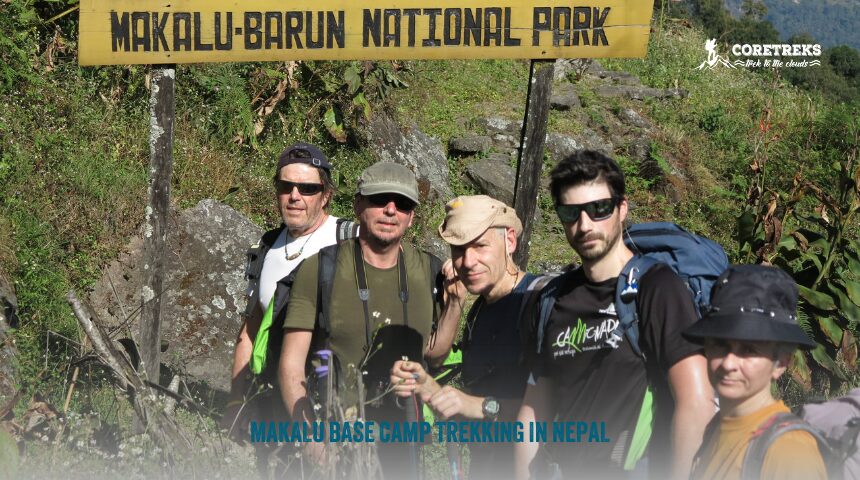
The Makalu Base Camp Trektakes you to the base of Mount Makalu, the fifth-highest mountain in the world. The trek is located in the eastern part of Nepal. One of the significant aspects of the Makalu Base Camp Trek is that it offers cultural and natural beauty. This trek is challenging and requires good physical fitness, especially at high elevations. The best times to do this trek are spring (April-May) and autumn (September-November) when the weather is mild and the skies are clear.
Yaks At Makalu Base Camp
Despite its remote location, the trail has lodges and tea houses, offering basic accommodation and food services. Due to its easy accessibility, the trek is suitable for beginners and even for trekkers with families and children. The high altitude of this trek is about 4870m, which means there is a chance of altitude sickness, also called acute mountain sickness.
Worth The Effort
It was a really long trip but on accomplishing it, I feel really happy. The country is as beautiful as they explained in the magazines. I had been planning for this trip for like two and a half years and now that I have finally experienced by myself, I can say that this is the best travel destination in the world for travelers.
Our trek to Nar Phu along with the Annapurna Circuit was worth the effort. We trekked for like 21 days and had a really fun time in Nepal. The people are so humble and down to earth. It makes your whole day better.
CoreTreks helped us with all the management of our trip. We are really thankful that we get to experience such wonderland. Thanks to the professional guides for helping us through the trials of the mountain. Highly recommended if you’re looking for trekking in Nepal.
It was a really long trip but on accomplishing it, I feel really happy. The country is as beautiful as they explained in the magazines. I had been planning for this trip for like two and a half years and now that I have finally experienced by myself, I can say that this is the best travel destination in the world for travelers.
Our trek to Nar Phu along with the Annapurna Circuit was worth the effort. We trekked for like 21 days and had a really fun time in Nepal. The people are so humble and down to earth. It makes your whole day better.
CoreTreks helped us with all the management of our trip. We are really thankful that we get to experience such wonderland. Thanks to the professional guides for helping us through the trials of the mountain. Highly recommended if you’re looking for trekking in Nepal.
Gustav
United States
Everest Three High Pass Trek
Best time: March to May, August to November
Maximum altitude: 5545 meters/ 18,192 feet
Trek duration: 17 to 21 days
Permits: Khumbu Pasang Lhamu Rural Municipality Entrance Permit and Sagarmatha National Park Entry Permit
Accommodation: Teahouses and lodges
Difficulty: Strenuous
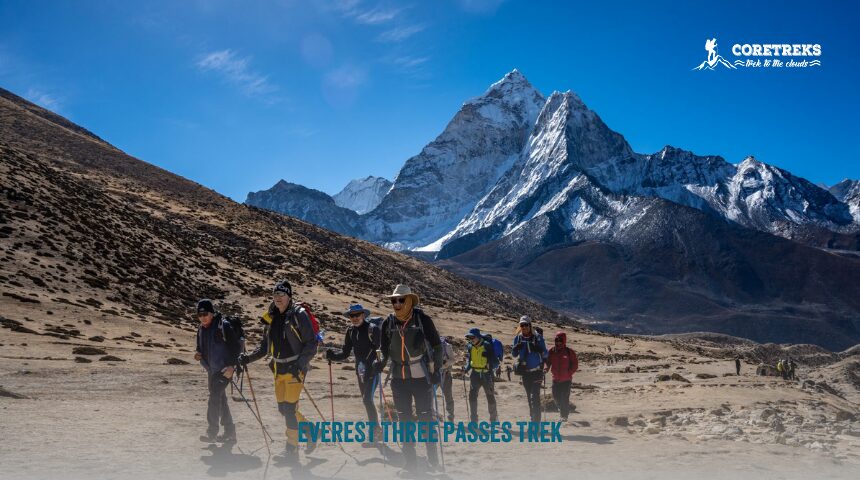
Another Challenging trek in Nepal is the Everest Three High Pass Trek. This trek takes you deeper into the Khumbu region beyond the Everest Base Camp Trek, where you will also explore the three highest passes in the Everest region. These passes are Renjo La (5,388m), KongLa Ma (5,535m), and Cho La Pass (5,380m), which are among the highest passes in Nepal, with each pass being over 5300m. The trek starts with the majestic flight from Kathmandu to Lukla.
Some of the prominent places that the trekkers will explore during this trek are Lukla Airport, Namche Bazaar, Tengboche Monastery, Hotel Everest View, Kala Patthar, Gorakhshep, Everest Base Camp, Gokyo Valley, Gokyo Lakes, and all three passes of the Everest region. In the Everest Three Passes trek, the trekkers must pass through high altitudes. The challenges they might face are altitude sickness, long distances and duration, isolation, lack of food and drinking water, and others.
Kanchenjunga Base Camp Trek
Best time: March to May, September to November
Maximum altitude: 5143 meters/ 16,873 feet
Trek duration: 20 to 24 days
Permits: Restricted Area Permit (RAP) and Kanchenjunga Conservation Area Permit (KCAP)
Accommodation: Teahouses
Difficulty: Strenuous
One of the most challenging treks in Nepal is the Kanchenjunga Base Camp Trek. The main reason the Kanchenjunga Trek is so difficult is that it is at a high altitude and is one of the most remote locations for trekking. The average duration of the Kanchenjunga Trek is 20 to 24 days. The Kanchenjunga North Base Camp Trek lies at an altitude of 5143 meters. As the trekkers start climbing and reach an altitude of over 4000m, the location becomes so remote that there are no teahouses, so trekkers have to stay in tents in the camping area.
Kanchenjunga Base Camp
Hence, to make the Kanchenjunga Trek a bit less challenging and allow you to complete the trek, you must avoid the off seasons like monsoons and winter, especially the cold winter. The winter season brings lots of snowfall and also increases the chance of avalanches, which can stop your trek to a halt and can also damage lives and property. It is also wise to consider hiring guides and porters to make your trek more accessible.
Manaslu Circuit Trek
Best time: March to April, June to November
Maximum altitude: 5160 meters/ 16,924 feet
Trek duration: 12 to 16 days
Permits: Restricted Area Permit (RAP) and Manaslu Conservation Area Permit (MCAP)
Accommodation: Teahouses and lodges
Difficulty: Moderate to challenging
Manaslu Circuit Trek is one of the most popular off-the-beaten treks in Nepal. It is among Nepal’s most underrated treks, which take you in the barren wilderness of the Annapurna and the Manaslu Circuit Trek. After the three most popular treks in Nepal, Everest, Annapurna, and Langtang, the Manaslu region has attracted local trekkers from other countries. The major attractions of the Manaslu Circuit Trek are the Manaslu Conservation Area, Larkya La Pass, Pungyen and Nubern monasteries, and Villages with different ethnic people like Brahmin, Chettri, Gurung, Dalits, Tibetans, and Sherpas. The trekkers have to trek through unexplored, raw, remote areas from the first day to the last, making the trek quite challenging.
Dhaulagiri Circuit Trek
Best time: March to May, September to November
Maximum altitude: 5360 meters/ 17,585 feet
Trek duration: 15 to 27 days
Permits: TIMS Card and Annapurna Conservation Area Permit (ACAP)
Accommodation: Tented camp
Difficulty: Strenuous
Dhaulagiri Circuit Trek is often considered one of Nepal’s most challenging treks. Many trekkers even consider this trek more difficult than the Kanchenjunga Trek. The trekking route of the Dhaulagiri trek passes through tough terrains, rocky ridges, glacial moraines, steep climbs, and snowy mountains, which are challenging to scale all the time. The average trek duration of this particular trek is about 15 to 17 days.
For this region, the trekkers with the ideal experience are the best at completing the Dhaulagiri Circuit Trek compared to beginner trekkers. For this particular trek, the trekkers have to get to the elevation of Hidden Valley (5,200m) or the French Pass, which means trekkers can get altitude sickness. So, for Dhaulagiri Circuit Trek, trekkers must be physically fit and know how to acclimate properly to high altitudes.
Upper Dolpo Trek
Best time: April to May, September to October
Maximum altitude: 5190 meters/ 17,027 feet
Trek duration: 25 to 30 days
Permits: Restricted Area Permit (RAP) and Shey Phoksundo National Park Entry Permit
Accommodation: Teahouses and tented camps
Difficulty: Strenuous
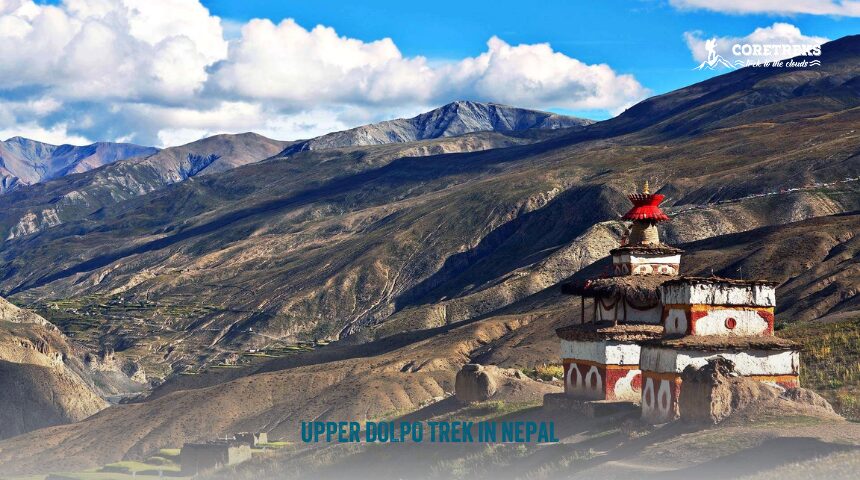
There are many restricted regions in Nepal, including the Upper Dolpo Trek. The combination of the restricted region and being one of the most isolated treks in Nepal makes the Upper Dolpo region quite tough and challenging to explore. The Upper Dolpo region passes through the Shey Phoksundo National Park, so the trekkers must issue multiple permits, such as national and restricted area permits. Some of the major attractions of the Upper Dolpo Trek are Shey Phoksundo National Park, Shey Phoksundo Lakes, Shey Gompa Monastery, Dolpo Bon School, Dolpo Peak, Kanjirowa, Crystal Mountains and others.
Annapurna Three High Pass Trek
Best time: March to May, September to November
Maximum altitude: 5560 meters/ 18,241 feet
Trek duration: 20 to 24 days
Permits: TIMS Card and Annapurna Conservation Area Permit (ACAP)
Accommodation: Teahouses and lodges
Difficulty: Strenuous
The Annapurna Three High Pass Trek is one of the longest treks in the Annapurna region, lasting from 20 to 24 days. In this trek, the trekkers will reach the difficult three passes of the Annapurna region: Namun La Pass, Kang La, and MesoKanto La Pass. The elevation of these passes is 5,560m, 5,306m, and 5,330m, respectively. Since the trekkers have to reach an altitude over 5300m, the chances of high altitude sickness are quite high.
Annapurna Massif
The long distance and duration of the trek can also make the trekkers feel tired, exhausted, and sometimes ill. So, preparation for the Annapurna Three High Pass Trek is highly essential. Other than three passes, some of the major highlights of the Annapurna Three High Pass Trek are Boksi Taal, Dharmasala, Phu Village, Manang Village, Jomsom, Pokhara, and others.
Rolwaling Tashi Lapcha Pass
Best time: March to May, September to November
Maximum altitude: 5755 meters/ 18,882 feet
Trek duration: 18 to 20 days
Permits: Restricted Area Permit (RAP) and Sagarmatha National Park Entry Permit
Accommodation: Teahouses and lodges
Difficulty: Strenuous
The Rolwaling Tashi Lapcha Pass Trek takes you to remote areas where you can appreciate the beautiful Himalayan views and tackle the high-mountain pass of Tashi Lapcha (5755m). The trek is a mix of quiet paths in the Rolwaling region and busier trails in the Khumbu region. It involves steep climbs, patience, and rock climbing, making it a thrilling and adventurous Himalayan journey.
The trek begins with a drive to Gonggar via Dolakha, passing through villages like Simigaon, Bedding, and Na Gaon with amazing views of Mount Gaurishankar (7134m). In Na Gaon, you can explore the Yalung Glacier and climb the training peak of Ramdung Go (5930m). Moving on from Na Gaon, the trail ascends to Tsho Rolpa Lake (4540m), the largest glacial lake in Nepal. In this trekking spot, the trekkers have to pass through challenging terrains that include rocky ridges, glacial moraines, and snowy mountains, so decent preparation and training before the start of the trek is necessary.
Trekking is one of the most fun activities in Nepal if you want to take a break from the day-to-day activities and spend time close to nature. In Nepal, the most popular treks are in the laps of mountains. So, the trekkers have to face challenges like rugged trails, rocky peaks and valleys, and snowy mountains. Furthermore, many other factors make the trek difficult. Some treks, like Nar Phu Valley Trek or Tsum Valley Trek, are challenging and restricted, while others cannot be limited but are complicated. So, let’s look at some factors that make the trek difficult.
High Altitude
The one significant factor that makes the trek difficult, especially in Nepal, is the High altitude. In each challenging trek, the trekkers have to climb at least 4000m and sometimes even reach an altitude of 5000m. The high altitude in these treks can invite more challenges like altitude sickness, creating problems for trekkers and even halting the experience entirely.
Long Distance and Duration
Another factor that makes any trek challenging is if they have long-duration days. The trek, which is over 18 to 20 days, is extremely challenging as the trekkers have to travel long distances every single day as well. The long distance and duration of the trek eventually make the trekkers sleepy and tired. Hence, to reduce the trek’s difficulty, the trekkers must raise their physical endurance and stamina.
Changing Weather
Another factor that makes the trek quite difficult is the constant weather changes. The weather at high altitudes constantly changes from sunny days to rainy weather to extreme snowfall and sometimes even blizzards. These continuous changes in the weather, from sun, rain, and wind to snow, will make planning and decision-making tough.
Remoteness
Another factor that increases the trek’s difficulty and makes the trek more challenging is the remoteness or isolation. When any trekking region is remote, they don’t have regular services, infrastructure, or facilities that improve the quality of life. The trekkers have to stay in the basic teahouses, eat regular foods, and carry water purification tablets since they don’t even have drinking water purification. There are no banks, ATMs, or decent hospitals and health posts. Hence, trekking in these remote locations is risky and increases challenges.
Conclusion
Hence, these are some of the most challenging treks in Nepal. These treks provide a thrill, adventure, fun, and lots of challenges to the trekkers in Nepal. Beginners with no prior experience will undoubtedly face difficulties on this trek, but some experienced veterans might also have trouble exploring most of this trek.
We hope our list of some of Nepal’s best but most challenging treks will motivate you to experience this amazing destination. Furthermore, visiting these regions during the ideal trekking seasons, such as spring and autumn, is wise. Also, make sure to make your trek as easy as possible by improving your physical fitness and mental stability and hiring experienced guides and porters.
FAQs For Challenging Treks in Nepal
FAQs
What is the most challenging trek in Nepal?
The most challenging trek in Nepal is the Dhaulagiri Circuit Trek. Its average duration is about 15 to 20 days, and trekkers have to pass through remote villages and settlements that circle the highly popular Mount Dhaulagiri. The trekkers have to pass through challenging terrains, rocky peaks, valleys, glacial moraines, and snowy, very tough mountains.
What is the most remote trek in Nepal?
The most remote trek in Nepal is the Kanchenjunga Base Camp Trek. The trekkers must pass through unique but remote villages like Sakathum, Amjilosa, Ghunsa, and Pangpema. Before completing the whole Kanchenjunga Base Camp Trek, the trekkers pass through passes like Mirgin La, Sinion La, and Sinelapche Bhanjyang.
Which permits are needed for the Manaslu Circuit Trek?
In order to trek the Manaslu Circuit Trek, the trekkers have to issue essential trekking permits like Restricted Area Permits, TIMS Card, Manaslu Conservation Area Permits, and Annapurna Conservation Area Permits. Before starting your trek, you can issue all these permits in Kathmandu or Pokhara.
Can a beginner climb the Annapurna Circuit Trek?
Yes, Annapurna Circuit Trek is one of the most famous treks in Nepal, and even beginners can climb it successfully. Although it is among the popular off-the-beaten treks and can cause some challenges to beginners, if the trekkers have increased their physical stamina and raised their physical fitness, they can surely climb the ACT successfully.
Which trek is less crowded in Nepal?
<!– wp:acf/simple-review-listings {“name”:”acf/simple-review-listings”,”data”:{“field_67f3a44fa11f3″:””,”field_67f3a496ace04″:”div”,”field_67f3a44fa1207″:[“23102″]},”mode”:”edit”} /–>The less crowded trek in Nepal is the Upper Dolpo trek. The Upper Dolpo trek is located in the Dolpa region of Nepal, which is very remote. During the excursion of the Upper Dolpo region, the trekkers have to pass through several isolated villages like Dunai, Chepka, Samdua village, and Phoksundo Lakes.
Aatma Ram Bhatta has been guiding trekkers with CoreTreks since 2016. Mr. Bhatta is a licensed trekking guide (licensed by Ministry of Culture, Tourism and Civil Aviation, Nepal). He was born and raised in Gorkha District – the native of Gurkha soldiers of Nepal. Overall, he has 8 years of experience and has been rated as one of the top guides in our team.
Mr. Bhatta is known for his knowledge about the trekking areas like Langtang Valley Trek, Upper Mustang Trek & Everest Base Camp Trek in Nepal. He is a planner and always ready for possible emergencies while trekking. Our trekkers reviewed him as a great storyteller and have created a long-lasting bond with him over past years.
Boudhanath Stupa is one of the most sacred Buddhist sites in the world. It is a religious site and a cultural hub for pilgrims, especially Tibetan Buddhists. Similarly, it is one of Nepal's largest, 36-meter-high, and 100-meter-wide stupas in the capital city of Kathmandu. The stupa is located just 7 km northeast of central Kathmandu,…
The Everest Base Camp Trek in February is a one-of-a-kind experience that trek enthusiasts must take once. Contrary to many trekkers who believe winter months are unsuitable for Himalayan ventures, trekking in February is doable. It is just the time when the cold winter slowly transitions into the warm spring season. Therefore, trekking on the…
Many of you might be curious about the Manaslu Circuit Trek after earthquake in Nepal and whether it is safe for trekking. Fortunately, yes. The trail that was heavily damaged by the 2015 Nepal earthquake has re-opened. So what are the conditions of the trails, accommodation availability, and risks of Manaslu Circuit Trek after the…
This site uses cookies to optimize your user experience. By using this site, you are consenting to our use of these cookies. Check out our Privacy Policy.