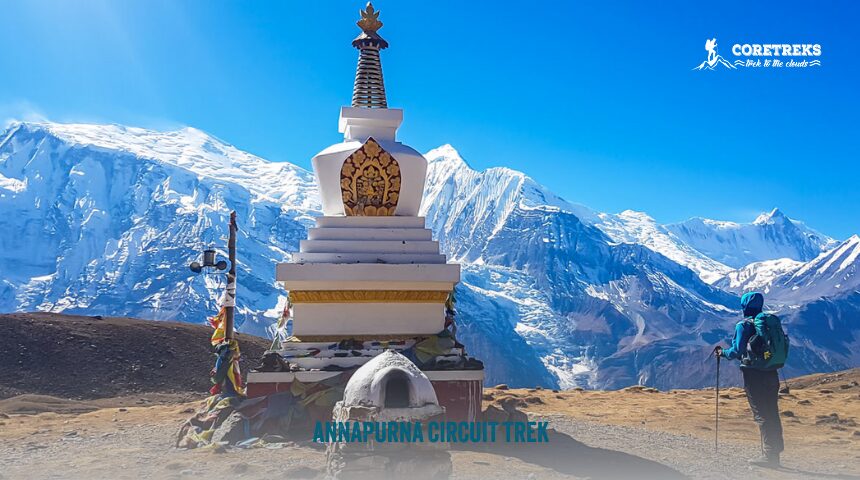
The difficulty level of the Annapurna Circuit Trek is not something to be taken lightly. It’s a journey that tests your physical endurance, mental strength, and the will to push beyond your limits. Despite the challenges, it is one of the most iconic trekking destinations in Nepal.
Annapurna Circuit Trek Map
Whether you’re an experienced hiker seeking a new challenge or a novice looking to conquer your first high-altitude trek, this guide will equip you with all the necessary knowledge to make the most out of your expedition. From the tough mountain paths to the amazing views, we will explore every part of the trek and share helpful tips to keep you safe and happy.
So, tie your boots, grab your backpack, and get ready for an adventure of a lifetime as we discover the beauty of the Annapurna Circuit Trek. This comprehensive guide is here to decode the difficulty level of the trek.
Table of Contents
Highlights and Challenges of the Annapurna Circuit Trek
Before we jump into the difficulty, let us get to know the Annapurna Circuit Trek. The journey offers beautiful scenery, different plants and animals, and a chance to experience local traditions. From lush green forests and cascading waterfalls to barren high-altitude deserts and snow-capped peaks, the trek provides a visual feast at every turn. The warm hospitality of the local communities adds an extra charm to this adventure.
Worth The Effort
It was a really long trip but on accomplishing it, I feel really happy. The country is as beautiful as they explained in the magazines. I had been planning for this trip for like two and a half years and now that I have finally experienced by myself, I can say that this is the best travel destination in the world for travelers.
Our trek to Nar Phu along with the Annapurna Circuit was worth the effort. We trekked for like 21 days and had a really fun time in Nepal. The people are so humble and down to earth. It makes your whole day better.
CoreTreks helped us with all the management of our trip. We are really thankful that we get to experience such wonderland. Thanks to the professional guides for helping us through the trials of the mountain. Highly recommended if you’re looking for trekking in Nepal.
It was a really long trip but on accomplishing it, I feel really happy. The country is as beautiful as they explained in the magazines. I had been planning for this trip for like two and a half years and now that I have finally experienced by myself, I can say that this is the best travel destination in the world for travelers.
Our trek to Nar Phu along with the Annapurna Circuit was worth the effort. We trekked for like 21 days and had a really fun time in Nepal. The people are so humble and down to earth. It makes your whole day better.
CoreTreks helped us with all the management of our trip. We are really thankful that we get to experience such wonderland. Thanks to the professional guides for helping us through the trials of the mountain. Highly recommended if you’re looking for trekking in Nepal.
Gustav
United States
However, the trek also presents several challenges, including long and strenuous hiking days, unpredictable weather conditions, and high altitude. The Thorong La Pass, standing at an elevation of 5,416 meters (17,769 feet), is a highlight and a significant challenge of the trek. Crossing this pass requires physical endurance, mental strength, and proper acclimatization.
A typical itinerary begins in Besisahar, passing through the beautiful villages of Manang and Pisang, then crossing the challenging Thorong La Pass, and finally descending to Muktinath and Jomsom. Research and consult with experienced trekkers or local trekking agencies to determine the most suitable itinerary for you.
Understanding The Difficulty Level Of The Annapurna Circuit Trek
The Annapurna Circuit Trek is graded as a moderate to strenuous venture. Understanding the difficulty level of this trek is crucial for a successful and enjoyable experience. Several factors contribute to the overall difficulty, including the length and duration of the trek, altitude gain, terrain, and exposure to extreme weather. Take a look at these top factors:
High altitude
One of the major factors that contributes to the difficulty level of the Annapurna Circuit Trek is its high altitude. You will begin your journey from Pokhara, at an altitude of 822 meters, and start trekking from Besisahar, from an elevation of 760 meters. Then, over the course of a few days, you will ascend to the maximum altitude of 5416 meters at Thorong La Pass. Higher altitudes also mean a higher risk of altitude sickness.
Altitude sickness is a significant concern on the Annapurna Circuit Trek. As you ascend to higher altitudes, the air becomes thinner, resulting in lower oxygen levels. Your heartbeat begins to get faster as it starts to get harder for your heart to pump oxygen in the body. This can result in symptoms such as headaches, dizziness, nausea, and fatigue. Acclimatization and proper rest are crucial in minimizing the risk of altitude sickness. It’s critical to understand the symptoms, prevention methods, and potential complications associated with altitude sickness for the Annapurna Circuit Trek.
Length and duration
Depending on the itinerary, the duration of the Annapurna Circuit Trek can vary. Usually, the trek takes 10 to 20 days to complete the journey. It spans 160 to 230 km, varying depending on the route. A short duration is only recommended for experienced trekkers who are accustomed to high-altitude treks, as there are no acclimatization days. The lack of acclimatization can be dangerous for beginners. However, the long trek duration of the journey is also physically and mentally demanding.
In addition to the long duration of the trek, the average trekking hours per day are between 5 and 7 hours. Each day, you have to trek for long hours on the diverse terrain, which can push you to your limits. The growing altitude can further overexert you. Therefore, before you think of joining the Annapurna Circuit Trek, make sure that you have the stamina and endurance for it. You must also train for the journey to better prepare for it.
Terrain and trail conditions
Nepal is a country with diverse geography, which makes it a unique country. During the Annapurna Circuit Trek, you will get to explore the diverse landscapes of the Annapurna region. You must be prepared to ascend and descend through dense forest trails to alpine forests and glacial moraines. The trails have several steep and narrow sections. You must also trek on open ridges and cliff edges, and overcome over 3000 steep stone staircases. En route, you will cross several suspension bridges over gushing rivers.
You will walk through many traditional Gurung and Thakali villages with beautiful terrace farms and rice fields. The changing landscapes give amazing views but also make the trek more difficult. The trails are off-beat but well-designated and marked. It makes it easier to stay on route and avoid the risk of getting lost. You can navigate the trails safely. It is strictly advised that the trekkers remain on the designated trail and not deviate from it.
Weather conditions
Annapurna Circuit Trek
Another factor that contributes to the difficulty level of the Annapurna Circuit is the unpredictable weather conditions. Nepal has four seasons: spring, summer, autumn, and winter. Spring and autumn have the most stable weather with mild temperatures. Summer coincides with monsoon, so it is hot and humid. There is heavy rain in the lower, hilly regions of the country. Meanwhile, winter is too cold. Heavy snow in higher areas often blocks mountain passes, such as Thorong La, and the trails become icy and slippery. The temperature also drops below the freezing point.
Despite the season, the weather and temperature vary significantly with altitude. As you go higher, the weather becomes more unpredictable and changes rapidly. Strong winds are common after noon, especially above 3000 meters. The temperature is also slightly colder at nighttime. Due to the unpredictable weather, trekking becomes more difficult, nd the risk of altitude sickness also increases. If the weather takes a turn for the worse, you may have to postpone your journey for safety purposes. So, choosing the right time is crucial for a safe and more comfortable Annapurna Circuit Trek.
Accommodation and facilities
The Annapurna Circuit Trek takes you deep into the remote areas of the Annapurna region. There is a lack of proper infrastructure and modern facilities. Common accommodations available are teahouses and lodges. They are usually basic with limited amenities. The rooms are generally shared, and the bathrooms are communal. These small but cozy teahouses are excellent for a cultural experience. It is a great chance for anyone who wants to escape the noisy city and relax in the calm surroundings of the Himalayas. However, the lack of facilities can take a mental toll on trekkers.
Trekkers may find it uncomfortable, which can increase psychological stress. The rooms are usually poorly insulated, the beds are hard, and the blankets are thin. It leads to poor sleep, and your body cannot recover properly after a long day’s trek. The sanitization and hygiene at some accommodations can be poor. Trekkers must also remember that the stays at higher altitudes often have limited access to the internet and hot water. Hence, one must create realistic expectations and mentally prepare for the trek.
Fitness and experience level
As we mentioned before, the difficulty level of the Annapurna Circuit Trek is moderate to strenuous. It requires a reasonable level of health and fitness. You will need strong legs, stamina, and endurance to overcome the demanding trails. There is no need for prior experience, and with proper preparation, even beginners can be part of the venture. However, intermediate and experienced trekkers will find the trek less demanding than those who are beginners.
Trekking on steep trails and stone steps with a backpack is not an easy task. Especially when ascending at high altitude, it can become physically and mentally exhausting. Despite the difficulty of the trek, there are no technical sections to navigate. Hence, you do not need skills such as using ropes, harnesses, or other mountaineering gear. Exercises such as cardiovascular training, strength training, and endurance building can help improve your fitness for the trek to the Annapurna Circuit.
Psychological And Emotional Challenges
Route To Annapurna Base Camp
Mental fatigue due to physical exhaustion is a real thing during the Annapurna Circuit Trek. The long hours of trekking on diverse terrains and steep trails are challenging even for seasoned trekkers. Moreover, the lack of oxygen as you move to higher elevations can easily exhaust you. It can stress you and make you feel less motivated. Therefore, trekkers must prepare for the psychological and emotional challenges during the trek.
Aside from the demanding trails, the lack of infrastructure and facilities can also trigger trekkers. There are no well-facilitated accommodations along the trail. It may not be to your comfort level, and you may struggle to relax. The remote location can also make you feel isolated from the rest of the world. Many trekkers also suffer from anxiety with the fear of getting AMS and unforeseen circumstances. It can emotionally overwhelm you, making the journey more strenuous.
Therefore, strong psychological and mental fortitude is crucial for trekking to the Annapurna Circuit Trek. The best way to mentally prepare for the journey is to get familiar with the challenges and set realistic expectations. It is also crucial to train your mind and build mental resilience to adapt to any changes. While on a trek, stay positive and calm. If you feel isolated, talk with your guide or fellow trekkers. These are some of the best ways to deal with the psychological and emotional challenges of trekking to the Annapurna Circuit.
Preparing For The Annapurna Circuit Trek
Preparation is key to conquering the Annapurna Circuit Trek. Here’s how you can effectively prepare for the journey:
Begin physical training and conditioning for the trek at least two to three months before the scheduled trip date.
Incorporate cardiovascular exercises, such as hiking, running, jogging, swimming, or cycling, into your routine.
Undertake strength training exercises, particularly for the lower body and core muscles, to build the necessary endurance and stability.
Gradually increase the intensity and duration of your workouts to mimic the demands of the trek.
Packing wisely and what is essential. Ensure you have the necessary gear and equipment to withstand the changing weather conditions and rugged terrain.
Learn about altitude sickness and prepare for acclimatization. It’s crucial to take these rest days and avoid rushing the trek.
Safety Measures And Precautions On The Annapurna Circuit Trek
Safety should always be a top priority during the Annapurna Circuit Trek.
Familiarize yourself with the potential risks and hazards associated with the trek.
Be cautious while crossing suspension bridges, navigating steep ascents and descents, and traversing narrow trails.
Hire a licensed and experienced guide to accompany you for the trek. Also, hire a porter who will relieve you of physical burden and minimize the risk of physical exertion.
It’s essential to stay alert, follow your guide if you have one, and be mindful of your surroundings at all times.
Take adequate acclimation days as you start ascending to higher altitudes. It helps to minimize the risk of altitude sickness.
Stay hydrated and eat nutritious meals.
Trekking Solo VS Group
As of April 2023, the latest trekking rule prohibits solo trekking without a licensed guide accompanying you in Nepal. Hence, it is compulsory to hire a licensed guide through a registered local trek agency for the Annapurna Circuit Trek. It is still possible to take a solo trek with a guide.
Solo trekking is ideal for individuals who crave the freedom to explore the outdoors. Likewise, it is possible to customize the itinerary according to their requirements and preferences. You can plan the schedule and make stops as you need. Your guide and porter also provide more personal attention. Trekking solo in the Himalayas is an opportunity for self-reflection and personal growth. This helps you connect more deeply with the local life and culture. However, solo trekkers can easily feel isolated. It can also be expensive to trek solo.
Trekking in a group is more budget-friendly and perfect for extroverts. It’s great for those who want to share a journey with friends, family, or fellow trekkers. You can make new friends and create memories. Similarly, you can motivate one another during challenging climbs and stay positive. The drawbacks of trekking in a group are that the itinerary is fixed, and you must share all logistics and resources with fellow trekkers.
Whether to trek solo or in a group depends on your personal choice and requirements. Either way, joining the Annapurna Circuit Trek is an unforgettable experience.
The Annapurna Circuit Trek is a journey of a lifetime, offering unparalleled natural beauty, cultural immersion, and personal growth. Remember to respect the mountains, follow the guidelines of responsible trekking, and leave no trace behind. Whether you conquer the entire circuit or opt for a shorter trek, the memories and experiences gained from this adventure will stay with you forever.
By knowing the trek’s challenge level, preparing well, and following safety steps, you can enjoy this adventure with confidence. So, get ready for an adventure and embrace the challenges that lie ahead. Be a part of the extraordinary journey, an experience that will undoubtedly leave an indelible mark on your life.
Mr. Bhatta started as trekking guide and is now a successful travel operator in Nepal. He is an environmentalist, committed to promote Ecotourism in Nepal. Mr. Bhatta has been engaged in improving the livelihood of residence of The Himalayas through Helping Hands for Himalayan People (HHHP Nepal) a non-profit organization built to improve living standard of the local community.
Boudhanath Stupa is one of the most sacred Buddhist sites in the world. It is a religious site and a cultural hub for pilgrims, especially Tibetan Buddhists. Similarly, it is one of Nepal's largest, 36-meter-high, and 100-meter-wide stupas in the capital city of Kathmandu. The stupa is located just 7 km northeast of central Kathmandu,…
The Everest Base Camp Trek in February is a one-of-a-kind experience that trek enthusiasts must take once. Contrary to many trekkers who believe winter months are unsuitable for Himalayan ventures, trekking in February is doable. It is just the time when the cold winter slowly transitions into the warm spring season. Therefore, trekking on the…
Many of you might be curious about the Manaslu Circuit Trek after earthquake in Nepal and whether it is safe for trekking. Fortunately, yes. The trail that was heavily damaged by the 2015 Nepal earthquake has re-opened. So what are the conditions of the trails, accommodation availability, and risks of Manaslu Circuit Trek after the…
This site uses cookies to optimize your user experience. By using this site, you are consenting to our use of these cookies. Check out our Privacy Policy.