Traveling to Upper Mustang feels like stepping into an ancient world filled with old traditions, amazing scenery, and a deep cultural history. Tucked away in the mystical land of Nepal, this remote and restricted region offers a unique experience unrivaled by any other trekking destination. From the moment you set foot on the trails that wind through the rugged Himalayan terrain, you will be captivated by the sheer beauty surrounding you. But getting to Upper Mustang is no easy feat, as it requires careful planning and a sense of adventure.
In this guide, we will share the hidden wonders of Upper Mustang and give you all the key details you need for this special journey. So, fasten your seatbelts and prepare for an unforgettable adventure to Upper Mustang, where ancient traditions blend seamlessly with untouched natural beauty.
Table of Contents
The Cultural and Natural Significance of Upper Mustang
Upper Mustang lies between the tall Annapurna and Dhaulagiri mountain ranges and is rich in both culture and nature. Often referred to as the “Last Forbidden Kingdom” or “Last Shangri-La,” this isolated enclave was opened to foreign visitors only in 1992. As a result, the unique Tibetan-influenced culture and traditions have been remarkably preserved, making it a haven for those seeking an authentic experience.
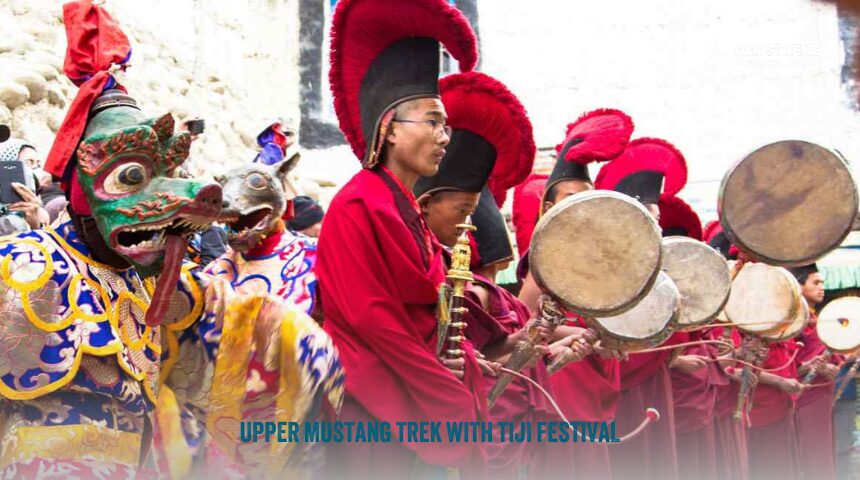
Tiji Festival
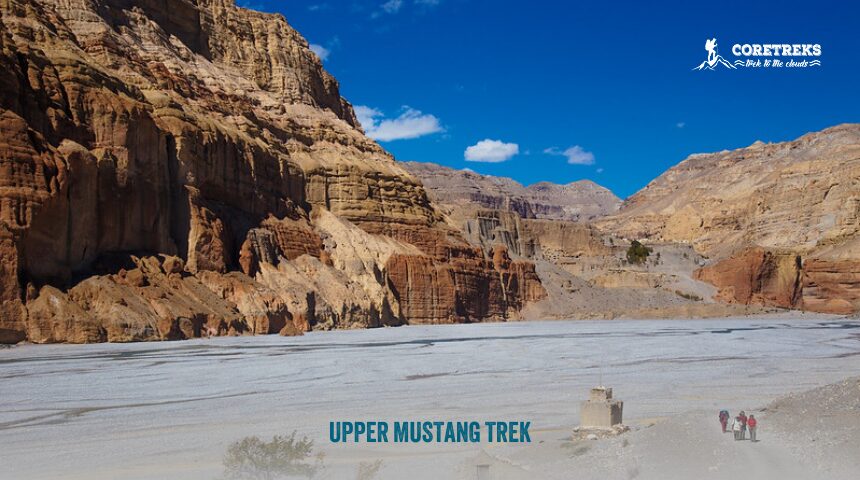
The region is home to ancient monasteries, cave dwellings, and centuries-old palaces, all of which provide a glimpse into the area’s rich history. The landscapes of Upper Mustang are stunning, with dry deserts, high cliffs, and deep valleys that look very different from the green forests found in other parts of Nepal. This combination of cultural and natural wonders makes Upper Mustang a truly extraordinary destination.
A Hidden Gem In The Himalayas
CoreTreks did a great job on our Upper Mustang Trek. The team was careful and made sure we felt safe and happy the whole time. The places we stayed were cozy, and the food was clean and tasty.
I had a really fun time in Upper Mustang with CoreTreks. It’s a trip I’ll always remember.
CoreTreks did a great job on our Upper Mustang Trek. The team was careful and made sure we felt safe and happy the whole time. The places we stayed were cozy, and the food was clean and tasty.
I had a really fun time in Upper Mustang with CoreTreks. It’s a trip I’ll always remember.
Sophia Wilson
United States
The History and Background of Upper Mustang
To truly appreciate the allure of Upper Mustang, it is essential to understand its history and background. The region was once an important trade route between Tibet and India, and it was ruled by a dynasty of Tibetan kings known as the Lo dynasty. This kingdom flourished for centuries, and its influence can be seen in the region’s architecture, language, and religious practices. In the 18th century, Upper Mustang came under the control of the Kingdom of Nepal, and it remained a restricted area until it was opened to tourists.
Upper Mustang
Today, the region is a blend of ancient traditions and modern influences, with the local communities embracing tourism as a means of economic development while striving to preserve their cultural heritage.
Planning your trip to Upper Mustang
Planning the Upper Mustang Trek requires careful consideration and preparation. The region is located in a remote part of Nepal, and access is restricted to a limited number of visitors each year. Therefore, it is important to plan well to secure the necessary permits and make the necessary arrangements.
The best time to visit Upper Mustang is during the spring (March to May) and autumn (September to November) seasons when the weather is favorable and the skies are clear. It is also advisable to engage the services of a reputable trekking agency or guide who can assist with logistics, provide valuable insights into the region, and ensure your safety throughout the journey.
Reaching Upper Mustang is an adventure in itself. The trip starts with a flight from Kathmandu to Pokhara, where you can relax and get used to the altitude before beginning the trek. From Pokhara, you have two options to reach Upper Mustang: by road or by air. The journey takes you through scenic landscapes and remote villages, but it can be long and arduous, taking around 10-12 days.
You can also take a short flight from Pokhara to Jomsom, a town in lower Mustang, and then hike through the beautiful Kali Gandaki Valley to reach Upper Mustang. This option is quicker and offers stunning views of the surrounding mountains.
Permits and regulations for visiting Upper Mustang
As Upper Mustang is a restricted area, certain permits and regulations need to be adhered to. First and foremost, you will need a TIMS (Trekkers’ Information Management System) card, which can be obtained through a registered trekking agency. Additionally, you will require a special permit known as the “Restricted Area Permit” to enter Upper Mustang. This permit is issued by the Department of Immigration in Kathmandu and is valid for a specific duration. It is important to note that the cost of the permits varies depending on the season and duration of your visit.
Lastly, it is essential to abide by the rules and regulations set by the local authorities to ensure the preservation of the cultural and natural heritage of the Upper Mustang.
Trekking routes and itineraries for Upper Mustang
Several trekking routes and itineraries are available for exploring Upper Mustang, each offering a unique experience. The most popular route is the Jomsom to Lo Manthang trek, which takes approximately 10-14 days to complete. This trek begins in Jomsom, which you can reach by flight or drive from Pokhara. The trail passes through lovely villages, old monasteries, and beautiful landscapes. The trail gradually ascends, offering stunning views of the Nilgiri and Annapurna mountain ranges.
Upon reaching Lo Manthang, the capital of Upper Mustang, you will have the opportunity to explore the ancient monasteries, interact with the friendly locals, and immerse yourself in the unique cultural traditions of the region.
Roadways and trek route to Upper Mustang
Motorized roadway has connected Jomsom with Upper Mustang. There are both positive and negative sides to this. The positive aspect of the road to Upper Mustang is that it has provided locals with better access to medical supplies, goods, and services. Those who cannot trek to Upper Mustang can also take a jeep ride to get there. However, there have also been debates about its impact on the pristine nature and potential threat to the well-preserved cultural heritage. The roadway and trek route journey to Upper Mustang is slightly different. Let us discuss the trekking route. Pokhara is the gateway to treks in the Annapurna region, including Upper Mustang. You can either fly or drive to Pokhara (822 m). From Pokhara, you will fly to Jomsom (2720 m), from where you will head to Kagbeni village (2810 m). The trail from Kagbeni goes along the east bank of the Kali Gandaki River. You will trek past traditional villages and terrace farms to reach Chaile (3110 m). The trail goes through a steep canyon, gorges, and settlements before you arrive at Geling village (3500 m). You will climb up and down the Nyi La Pass and cross a bridge over the Tangmar Chu River. Then, you will trek through Mustang’s longest mani wall and pass by monasteries to Charang (3620 m). You will ascend to Lo Manthang (3840 m) via Lo-Gekar Gompa. The trail from Lo Manthang descends to Drakmar (3820 m). You will continue descending through stone walls, settlements, and paddy fields to get to Shyangboche (3810 m). The trail descends to Chhusang (3800 m), from where you will head towards the holy temple of Muktinath (3710 m). You will follow the trail through a desert-like landscape to reach Nepal’s windiest valley of Jomsom. It is also the ending point of the trek. You will take a flight from Jomsom back to Pokhara.
Accommodation and facilities in Upper Mustang
Accommodation in Upper Mustang is limited, but several guesthouses, teahouses, and lodges are available along the trekking route. These establishments offer basic facilities such as comfortable beds, hot showers, and meals catering to various dietary preferences. However, it is important to note that the availability of facilities may vary depending on the season and the specific village you are staying in. Carrying a sleeping bag and other essential trekking gear is advisable to ensure your comfort during the journey.
Additionally, it is recommended to carry sufficient cash, as ATM facilities are limited in Upper Mustang.
Must-see attractions in Upper Mustang
Upper Mustang is home to many must-see attractions that will leave you amazed. Here are some major ones:
Lo Manthang
One of the region’s highlights is the ancient walled city of Lo Manthang, which is steeped in history and offers a glimpse into the bygone era. It has one of the world’s most well-preserved relics and artifacts. Also known as the “Kingdom of Lo” and “Last Forbidden Kingdom,” its history dates back to the 15th century. Thick, high walls enclose the entire city from the rest of the world. Within the city walls, there is an ancient four-story royal palace and numerous other age-old heritages and artifacts. You can witness the ancient Tibetan architecture in these relics.
Ancient sky caves
The sky caves or sky tombs of Upper Mustang are another must-see attraction. There are over 10,000 man-made caves located near areas such as Chhoser, Tangbe, and Yara. The one in the Chhoser is five stories high with over 40 rooms carved into the cliff. These caves are believed to be over 2,500 years old. Archaeologists discovered mummified remains, manuscripts, and other artifacts inside these sky caves. These caves are believed to have been used for spiritual practices by both the Bon and Buddhist communities.
Age-old monasteries
Upper Mustang is also home to numerous age-old monasteries. The Jampa Monastery is the oldest one in Lo Manthang, dating back to the 15th century. It has a three-story structure that symbolizes past, present, and future. Similarly, it has well-preserved mandalas and Buddha statues. Other ancient monasteries located in Upper Mustang include Thubchen, Chhoede, Luri Gompa, Charang, Nyiphu, Garphu Monastery, and more. These ancient monasteries are living museums with deep history and spirituality.
Kagbeni Village
The Kagbeni village is the gateway to Upper Mustang. It is also one of the oldest villages in Nepal, which is a must-see attraction. It was a key checkpoint on an ancient salt trade route between Tibet and Nepal, so Kagbeni village also holds historical significance. You can see traditional mud-brick houses with Tibetan architecture and narrow alleyways. Additionally, you can get a glimpse of Tibetan Buddhist culture and traditions. Kagbeni village also offers a glimpse of the Himalayan lifestyle, which makes it a must-see place.
Muktinath Temple
The Muktinath Temple is one of Nepal’s most sacred pilgrimage sites for both Hindus and Buddhists. The temple lies at the foothill of the high mountain pass of Thorong La Pass. It is dedicated to Lord Vishnu, and there are 108 water spouts within the temple premises. Meanwhile, Buddhists believe that Guru Rinpoche meditated here. There is also an eternal flame that is considered holy by Hindus and Buddhists. Muktinath Temple sits in a beautiful spot with clear views of Dhaulagiri and Nilgiri mountains, making it one of the top attractions in Upper Mustang.
Tips for a successful journey to Upper Mustang
To ensure a successful journey to Upper Mustang, keeping a few tips in mind is important. They are as follows:
Pick the ideal time to join the Upper Mustang Trek.
Opt for the itinerary with adequate acclimatization to avoid the risk of altitude sickness. It gives your body time to adjust to the high altitude.
Prepare yourself physically and mentally for the trek.
Pack wisely and only carry essential items such as warm clothing, sturdy trekking shoes, a good quality sleeping bag, and a first aid kit.
Stay well-hydrated. Drink at least 3 to 4 liters of water each day. However, avoid excessive drinking of caffeine, hot chocolate, and alcoholic beverages.
Listen to your body and avoid excessive physical exertion during the initial days of the trek.
Dress modestly and respect the local culture and traditions. Interact politely with the locals, and adhere to any religious practices or customs.
Lastly, be prepared for unpredictable weather conditions and carry appropriate gear such as a rain jacket and sunscreen.
Conclusion
A journey to Upper Mustang is a once-in-a-lifetime adventure that will give you memories to treasure forever. From its rich cultural heritage to its awe-inspiring landscapes, every aspect of Upper Mustang is captivating. By planning your trip well in advance, obtaining the necessary permits, and making the necessary arrangements, you can ensure a smooth and enjoyable journey.
So, pack your bags, tie your boots, and get ready for an unforgettable trek to Upper Mustang a place where ancient culture meets untouched natural beauty. As you explore the winding trails and immerse yourself in the local culture, you will discover a world unlike any other, where time stands still and every step is a testament to the resilience and beauty.
Mr. Bhatta started as trekking guide and is now a successful travel operator in Nepal. He is an environmentalist, committed to promote Ecotourism in Nepal. Mr. Bhatta has been engaged in improving the livelihood of residence of The Himalayas through Helping Hands for Himalayan People (HHHP Nepal) a non-profit organization built to improve living standard of the local community.
Boudhanath Stupa is one of the most sacred Buddhist sites in the world. It is a religious site and a cultural hub for pilgrims, especially Tibetan Buddhists. Similarly, it is one of Nepal's largest, 36-meter-high, and 100-meter-wide stupas in the capital city of Kathmandu. The stupa is located just 7 km northeast of central Kathmandu,…
The Everest Base Camp Trek in February is a one-of-a-kind experience that trek enthusiasts must take once. Contrary to many trekkers who believe winter months are unsuitable for Himalayan ventures, trekking in February is doable. It is just the time when the cold winter slowly transitions into the warm spring season. Therefore, trekking on the…
Many of you might be curious about the Manaslu Circuit Trek after earthquake in Nepal and whether it is safe for trekking. Fortunately, yes. The trail that was heavily damaged by the 2015 Nepal earthquake has re-opened. So what are the conditions of the trails, accommodation availability, and risks of Manaslu Circuit Trek after the…
This site uses cookies to optimize your user experience. By using this site, you are consenting to our use of these cookies. Check out our Privacy Policy.