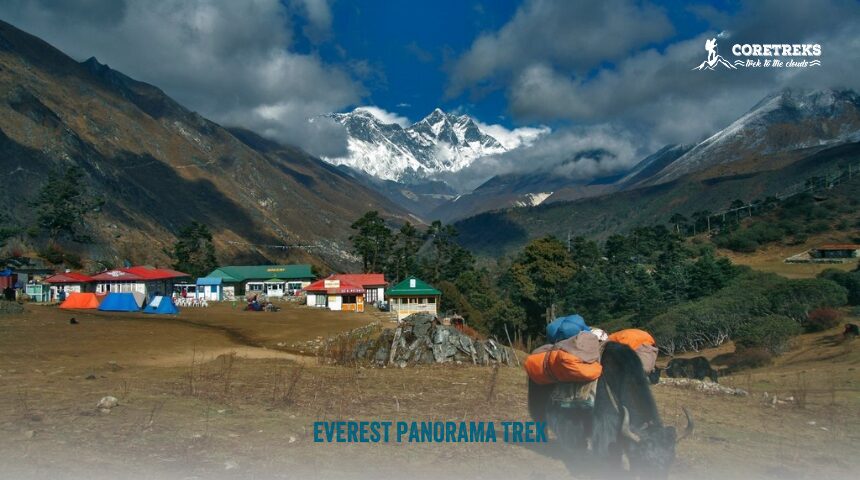
If you are looking for a guide on permits for Everest Base Camp Trek, you have come to the right place. The Everest region is one of Nepal’s most popular trek destinations, but it does not mean it is easily accessible. Those looking to join the beautiful journey to the Everest Base Camp must obtain specific permits.
The Everest Base Camp Trek is the dream trek for enthusiasts worldwide. The chance to reach the base camp of the world’s tallest mountain, Mount Everest, and get an up-close look allure thousands of trekkers to the Everest region (also known as Khumbu region) each year. Moreover, the classic The Everest trail is famous for its different landscapes, beautiful scenery, and stunning mountain views. EBC Trek is also an enriching cultural experience. It is an opportunity to immerse in the rich Sherpa culture, traditions, and lifestyle. The extraordinary journey is a rewarding adventure, making it one of the most sought-after destinations.
Everest Base Camp
To participate in this amazing journey, trekkers must prepare well, including for the Everest Base Camp Trek permit. The permit system for the Khumbu region has changed a little since Nepal underwent decentralization. Let’s get into the complete details about the necessary permits for Everest Base Camp!
Table of Contents
A Transformative Journey
My Everest Base Camp trek with CoreTreks was really special. From the time I booked it to the last day, everything went smooth. The team was kind and knew a lot. Our guide made sure we were safe and helped us enjoy every part of the trail.
The views were amazing. Big snowy mountains, clear glaciers, and small Sherpa villages. The places we stayed and the food were better than I thought. I felt taken care of the whole way. I’m thankful to CoreTreks for a great trip.
My Everest Base Camp trek with CoreTreks was really special. From the time I booked it to the last day, everything went smooth. The team was kind and knew a lot. Our guide made sure we were safe and helped us enjoy every part of the trail.
The views were amazing. Big snowy mountains, clear glaciers, and small Sherpa villages. The places we stayed and the food were better than I thought. I felt taken care of the whole way. I’m thankful to CoreTreks for a great trip.
Matthew Martinez
United Kingdom
Necessary Permits For Everest Base Camp Trek
Local and national park entry are the two required permits for Everest Base Camp Trek. Their details are as follows:
The Everest Base Camp lies in the Pasang Lhamu Rural Municipality in Solukhumbu District. Hence, trekkers will hike through the Pasang Lhamu Rural Municipality to reach the base camp. Trekkers will need to obtain a Khumbu Rural Municipality permit to access all the trekking routes in the Everest region. The local government introduced this permit on October 1, 2018, making it a newly introduced permit for trekking to the Everest Base Camp.
For the first four weeks, the Pasang Lhamu Municipality Entry Permit costs NPR 2000 per person for SAARC and non-SAARC nationals. After four weeks, the permit costs NPR 2500 per person.
Sagarmatha National Park Entry Permit
The Everest Base Camp is within the Sagarmatha National Park. It was the first national park of Nepal to be enlisted in the UNESCO World Heritage Site. The national park holds diverse Himalayan flora, fauna, and ecosystems. It is also the natural habitat of endangered and rare species like the red panda, snow leopard, musk deer, Himalayan Tahr, langur monkeys, and Himalayan Monal. Due to the delicate ecosystem and rare flora and fauna habitat, the Sagarmatha National Park is a protected area. Hence, trekkers are required permits to access the national park.
The Sagarmatha National Park Permit costs NPR 1500 per person for SAARC nationals and NPR 3000 per person for non-SAARC nationals. Children under the age of ten are eligible for free entry.
Permits For Everest Base Camp Trek via Jiri
Flying to Lukla is the most popular way of starting the Everest Base Camp Trek. However, the original route to the base camp was through a roadway via Jiri. The first persons to summit Everest, Sir Edmund Hillary and Tenzing Norgay Sherpa, took the Jiri route as there was no Lukla airport back then. Many trekkers still want to join the authentic adventure and take the traditional roadway from Jiri to Everest Base Camp.
However, trekking to Everest Base Camp via Jiri will require an additional permit, the Gaurishankar Conservation Area Permit. Jiri is around 190 kilometers away from the capital city of Kathmandu. After reaching Jiri, trekkers must pass through the Gaurishankar Conservation Area to enter the Everest region. The cost for Gaurishankar Conservation Area Permit is NPR 3000 per person.
How To Get The Permits For Everest Base Camp Trek?
Now that you know which permits are necessary for the Everest Base Camp Trek, you might wonder how to obtain them. Fret not! Take a look at the ways you can get them:
For Khumbu Pasang Lhamu Rural Municipality Entrance Permit
You can only get the Khumbu Pasang Lhamu Rural Municipality Permit after arriving in Lukla. So, you need to first travel to Lukla to obtain this permit. You will come across the office that issues the permit at Lukla. Those traveling from Jiri can get the permit at Monjo’s Sagarmatha National Park Counter.
For Sagarmatha National Park Entry Permit
You can get this permit from the Nepal Tourism Board (NTB) Office in Kathmandu. You can apply at the Sagarmatha National Park Entry Gate in Monjo to get this permit. Note that there are many trekkers during peak trekking season, and you may have to wait long to get the permit. Thus, getting this permit in Kathmandu is best before your journey.
For Gaurishankar Conservation Area Permit
The Gaurishankar Conservation Area Permit is needed only for those trekking to Everest Base Camp through Jiri. You can get a permit from the Nepal Tourism Board in Kathmandu. Another option is to get it from Shivalaya. However, getting the permit in Kathmandu is best before heading out for the trek journey.
Is TIMS Card Necessary For EBC Trek?
No, the TIMS (Trekkers Information Management System) card is not necessary for EBC Trek. The Khumbu Pasang Rural Municipality Entrance Permit replaced the TIMS card after the government of Nepal established the country’s federal system. The card is not necessary for trekking in the Everest region. However, it is still mandatory for other areas and trek destinations like Annapurna Base Camp Trek, Annapurna Circuit, Langtang Valley Trek, etc. The TIMS card is also not necessary for Restricted Area Trekking in Nepal.
Essential Documents For Obtaining Permits For EBC Trek
To get the permit, you must first apply for them. For this, trekkers must attach a few documents along with the application. Take a look at the essential documents for obtaining permits for Everest Base Camp Trek:
Passport copies
Valid visa copies
Two passport-size photos
Permit fees
Need For Permits To Trek To Everest Base Camp
Without proper permits, you cannot access the Everest Base Camp. Moreover, there are hefty fines if anyone is found breaking the rules. Many trekkers may find obtaining permits for the trek a hassle. However, there are several reasons for making the permits mandatory. Here are a few reasons:
Trekkers’ safety
The first reason for the need for permits to trek to Everest Base Camp is for trekkers’ safety. While applying for the permits, trekkers must provide their details. This allows the government and the Nepal Tourism Board to track their whereabouts. In case of emergencies like injuries and illness, authorities can provide immediate aid to trekkers by tracking them. Similarly, knowing the trekkers’ whereabouts can aid in swift rescue operations during natural disasters and calamities.
Regulation
The permits allow the authorities to track the number of trekkers traveling in the region. This helps them manage the flow of tourists effectively. Similarly, it also prevents the trails from overcrowding and avoids impacting the natural resources. Avoiding the trails from getting crowded reduces the risk of injuries and accidents on steep, narrow paths. This permit also makes sure trekkers follow the rules and help promote eco-friendly tourism.
Environment conservation and protection
Another crucial role of permits is to conserve and protect the natural environment. Most trekking trails access protected areas. The route to Everest Base Camp passes through the Sagarmatha National Park. Rare and endangered species of flora and fauna inhabit the national park. Overcrowding can disrupt their natural habitat and the fragile ecosystem. Hence, the permits help regulate the trekkers and the impact of trekking on the environment. It also aids in the region’s conservation efforts.
Revenue for infrastructure development
Permit fees play a significant role in generating revenue for the region’s infrastructure development. The revenue from the permit funds trail maintenance and new infrastructure projects and supports facilities like waste disposal. The funds also go to local community welfare projects, which help preserve local culture and cultural heritage.
Conclusion
There are various reasons you must obtain permits to trek in Nepal. It is crucial for the safety of the trekkers and environmental conservation efforts. The trek permits are vital, from managing the tourist flow in the region to supporting local communities. Hence, the government of Nepal and the NTB have made it mandatory for trekkers to get different permits for all trekking destinations in the country.
If you are considering taking the trek, obtaining Everest Base Camp Trek permits before your journey is best. Also, for a hassle-free experience, hire a reliable trekking agency like CoreTreks, who will get the permits for you while you focus on enjoying the trek. We hope our guide to the permits for Everest Base Camp Trek was informative and will come in handy for you. For the best trekking and touring experience in Nepal, visit the CoreTreks website or contact us directly!
FAQs For Permits For Everest Base Camp Trek
Can you hike to Everest Base Camp without a permit?
Everest Base Camp falls within the Khumbu municipality and is in the protected area of Sagarmatha National Park, so you need to obtain entry permits. There are various checkpoints along the route where you must show the permit. If you fail, you will have to pay a hefty penalty. So, make sure you obtain the necessary permits before your journey.
Is a passport required for Everest Base Camp Trek?
Yes, a passport with a valid visa to cover your trek and stay in Nepal is necessary for Everest Base Camp Trek. Along with a passport, you will also need passport-size photographs. It is also essential to obtain permits to trek to the Everest Base Camp.
Can I trek to Everest Base Camp on my own?
Yes, you can do Everest Base Camp Trek on your own, but you must obtain the necessary Everest Base Camp permits. However, for a better and safer trekking experience, it is best to hire a licensed and experienced guide from a reliable trekking operator. Although the trails to the base camp are well-designated, guides will help trekkers navigate the terrain. They will also provide deeper insights into the region and its local culture.
Where do you get permits for Everest Base Camp?
You can get the Sagarmatha National Park Entry Permit for Everest Base Camp from the Nepal Tourism Board in Kathmandu and the Sagarmatha National Park Entry Gate in Monjo. Similarly, you can get the Khumbu Pasang Lhamu Rural Municipality Entrance Permit in Lukla. Those traveling from Jiri can get it from the Sagarmatha National Park Entry Gate in Monjo.<!– wp:acf/trip-card-with-inquiry {“name”:”acf/trip-card-with-inquiry”,”data”:{“field_67f3998809635″:””,”field_67f399c6a93b1″:”div”,”field_67f3998809654″:[“18269″,”17727″,”18387″],”field_67f39a408edf1″:”featured-trips\u002d\u002dtwo-col”},”mode”:”edit”} /–>
Kapil is one of the highly experienced guides from CoreTreks. With over 10 years of touring and travelling, he is a humble and highly driven individual. He began climbing mountains at a very early age and has continued to pursue his passion ever since. He is certified by Nepal Mountaineering Association for the completion of advanced mountaineering training.
He has been guiding with us since 2015 and has been active ever since. He is able to lead a trek, being mindful from both the trekker’s and the guide’s perspective. Being highly experienced, he can handle emergency situations and performs well under pressure.
Boudhanath Stupa is one of the most sacred Buddhist sites in the world. It is a religious site and a cultural hub for pilgrims, especially Tibetan Buddhists. Similarly, it is one of Nepal's largest, 36-meter-high, and 100-meter-wide stupas in the capital city of Kathmandu. The stupa is located just 7 km northeast of central Kathmandu,…
The Everest Base Camp Trek in February is a one-of-a-kind experience that trek enthusiasts must take once. Contrary to many trekkers who believe winter months are unsuitable for Himalayan ventures, trekking in February is doable. It is just the time when the cold winter slowly transitions into the warm spring season. Therefore, trekking on the…
Many of you might be curious about the Manaslu Circuit Trek after earthquake in Nepal and whether it is safe for trekking. Fortunately, yes. The trail that was heavily damaged by the 2015 Nepal earthquake has re-opened. So what are the conditions of the trails, accommodation availability, and risks of Manaslu Circuit Trek after the…
This site uses cookies to optimize your user experience. By using this site, you are consenting to our use of these cookies. Check out our Privacy Policy.