Travel through Tibet and see its most famous places. By exploring these landmarks, you will capture the true essence of why Tibet remains a mesmerizing destination for travelers worldwide. As you begin your exploration of Lhasa, the capital city known as the Roof of the World, you will witness the profound aspects of culture, art, architecture, and history that define this spiritual paradise.
Many people visit Mount Kailash in Tibet to follow a spiritual path and seek enlightenment. Each landmark in Tibet offers peace and spiritual meaning to those who visit. Here is a list of the top 10 places to visit in Tibet.
Table of Contents
Potala Palace: A Cultural Treasure of Tibet
The Potala Palace stands as a remarkable landmark in Tibet, its history dating back to the 7th century when it was constructed by King Songtsen Gampo, over 1,300 years ago. Spanning an impressive area of over 360,000 square meters, this castle-like complex in Lhasa served as the center for both political and religious unification in Tibet. Potala Palace is decorated with stone carvings that honor Tibet’s ancient builders and is a cultural treasure of the plateau. Its significance was acknowledged in December 1994 when it was inscribed on the UNESCO World Heritage List, making it a must-visit site for tourists on Tibet tours.
Potala Palace
The Potala Palace has served as the winter residence for the Dalai Lamas since the 7th century and has become a symbol of Tibetan Buddhism. Situated on Red Mountain at the heart of the Lhasa Valley, the palace complex comprises the White and Red Palaces along with their auxiliary buildings. Its grand structures, intricate constructions, and unique ambiance make it an awe-inspiring sight to behold. Within its walls, visitors are captivated by splendid artworks, precious scriptures, murals, jewels, and antique artifacts, further enhancing the palace’s cultural and historical significance.
A Life-Changing Experience
I’ve wanted to visit Tibet for years, and in early December, I finally got the chance to go on a Tibet-Everest Base Camp journey, organized by Tibet Vista. Cindy, their representative, took care of all the planning and made sure every detail was in place, keeping us well-informed throughout the process. We were excited to add an extra day to explore before and after the scheduled tour, making it a more relaxed trip. Cindy also made sure we got our visas and travel permits on time without any hassle.
When we landed at Lhasa airport, our guide greeted us warmly and made the hotel check-in a breeze. We had almost two full days to explore the city before meeting the rest of the group. It was great to meet fellow travelers from all over the world, and we quickly became friends, enjoying dinners together and helping each other get the perfect photos. Sonam, our guide, was always smiling and full of energy, making the experience even better. He knew all the best spots and was a fantastic photographer, capturing moments I’ll treasure forever.
The tour took us to some of Lhasa and Shigatse’s most famous palaces and temples, and we even spent a night at the guesthouse at Everest Base Camp. The bus ride was long and intense, but the views were mind-blowing, and we passed through some incredibly high passes with amazing scenery. Seeing Mount Everest up close was an experience I’ll never forget.
Traveling in winter meant there were very few tourists around, but the cold mornings were made up for by the stunning blue skies we enjoyed each day.
The Tibetan people’s devotion to Buddhism was deeply moving. Watching them perform their rituals, like spinning prayer wheels and counting mantras, was a humbling experience. I was especially touched by the sight of people of all ages, even with children or dogs, who would repeatedly prostrate themselves in front of temples and along the route. Despite the language barrier, we found ways to connect and share laughter with the locals. The joy on their faces when they saw themselves in our photos was priceless.
The altitude was a challenge, and I found myself short of breath even after climbing just a few steps above 4,500 meters. But the experience was worth every bit of it.
This trip made me realize how important it is to preserve Tibet’s rich culture, religious practices, and history. While the scenery was breathtaking, the personal interactions and experiences truly made this journey unforgettable. It’s a memory I’ll carry with me forever.
I’ve wanted to visit Tibet for years, and in early December, I finally got the chance to go on a Tibet-Everest Base Camp journey, organized by Tibet Vista. Cindy, their representative, took care of all the planning and made sure every detail was in place, keeping us well-informed throughout the process. We were excited to add an extra day to explore before and after the scheduled tour, making it a more relaxed trip. Cindy also made sure we got our visas and travel permits on time without any hassle.
When we landed at Lhasa airport, our guide greeted us warmly and made the hotel check-in a breeze. We had almost two full days to explore the city before meeting the rest of the group. It was great to meet fellow travelers from all over the world, and we quickly became friends, enjoying dinners together and helping each other get the perfect photos. Sonam, our guide, was always smiling and full of energy, making the experience even better. He knew all the best spots and was a fantastic photographer, capturing moments I’ll treasure forever.
The tour took us to some of Lhasa and Shigatse’s most famous palaces and temples, and we even spent a night at the guesthouse at Everest Base Camp. The bus ride was long and intense, but the views were mind-blowing, and we passed through some incredibly high passes with amazing scenery. Seeing Mount Everest up close was an experience I’ll never forget.
Traveling in winter meant there were very few tourists around, but the cold mornings were made up for by the stunning blue skies we enjoyed each day.
The Tibetan people’s devotion to Buddhism was deeply moving. Watching them perform their rituals, like spinning prayer wheels and counting mantras, was a humbling experience. I was especially touched by the sight of people of all ages, even with children or dogs, who would repeatedly prostrate themselves in front of temples and along the route. Despite the language barrier, we found ways to connect and share laughter with the locals. The joy on their faces when they saw themselves in our photos was priceless.
The altitude was a challenge, and I found myself short of breath even after climbing just a few steps above 4,500 meters. But the experience was worth every bit of it.
This trip made me realize how important it is to preserve Tibet’s rich culture, religious practices, and history. While the scenery was breathtaking, the personal interactions and experiences truly made this journey unforgettable. It’s a memory I’ll carry with me forever.
Donna
New Zealand
Jokhang Temple: The Sacred Jewel of Tibetan Religion
Jokhang Temple, a renowned landmark in Tibet, stands as an irreplaceable symbol of the Tibetan religion. Situated in the heart of the old city of Lhasa, this majestic temple, surrounded by Barkhor Street, serves as the spiritual core of ancient Lhasa. It holds an esteemed position in Tibetan Buddhism, embodying its essence and teachings.
The Jokhang Temple In Tibet
Dating back to 647, the Jokhang Temple was constructed by King Songtsen Gampo, making it the oldest civil-structure building in Tibet with a remarkable history spanning over 1,300 years. The temple’s architecture is a fusion of Tibetan, Tang Dynasty, Nepalese, and Indian styles, creating a unique and harmonious blend. It introduced a new spatial layout model for Tibetan monasteries, showcasing the rich cultural exchange and influences present in the region.
Jokhang Temple holds significant religious and historical importance, attracting countless visitors as one of the most popular tourist attractions in Lhasa. It is also an integral part of the UNESCO World Heritage Site known as the ‘Historic Ensemble of the Potala Palace,’ further highlighting its significance on a global scale.
Norbulingka Palace: The Serene Summer Residence of the Dalai Lama
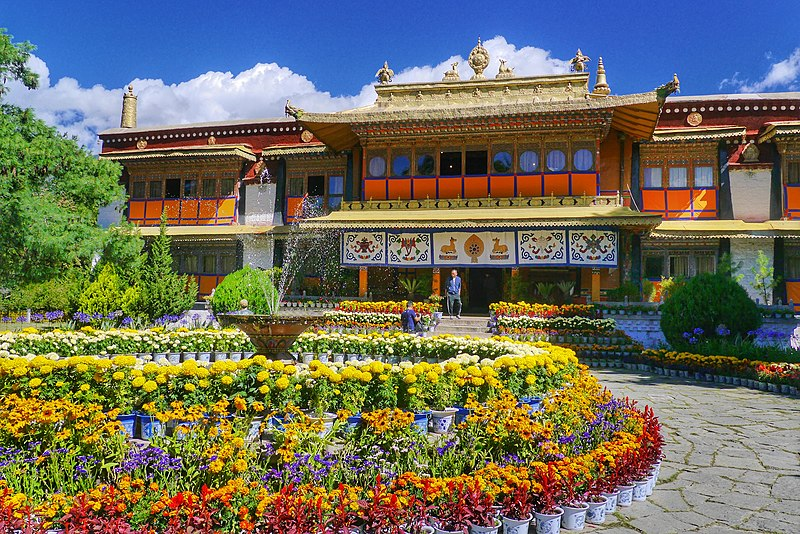
Norbulingka Palace, the summer home of the Dalai Lama, sits inside a quiet garden in the western part of Lhasa. This enchanting palace complex offers visitors a glimpse into its well-preserved murals, exquisite mandalas, and captivating frescoes, making it a destination of unparalleled beauty. One particular mural stands out, portraying the rich history of Tibet and the lineage of the Dalai Lamas.
Norbulingka
During his final days in Tibet, the Dalai Lama resided in the Norbulingka Palace, adding to its significance and historical value. The rooms within the palace have been preserved in the same state as when the Dalai Lama departed in 1959, allowing visitors to experience a tangible connection to the past.
Visiting Norbulingka Palace gives a calm and peaceful experience, with nature and Tibetan art all around. It serves as a testament to the deep spiritual and cultural heritage of Tibet, offering a glimpse into the life and legacy of the Dalai Lama.
Samye Monastery: A Historic Treasure of Tibetan Buddhism
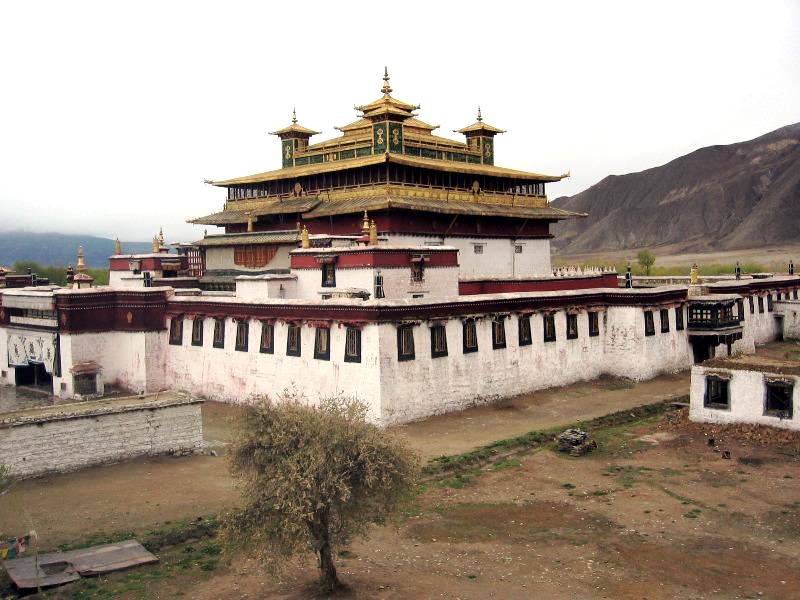
Samye Monastery, the first-ever monastery established in Tibet, holds profound historical and religious significance. Founded by Tibetan King Trisong Detsen, this monastery is associated with the Nyingmapa and Sakyapa sects, adding to its spiritual importance. The design of Samye Monastery mixes Han, Tibetan, and Indian styles, showing the diversity of Tibetan Buddhism.
Samye Monastery
For its existence, Samye Monastery faced destruction by fire, leading to its subsequent reconstruction. Three hundred years later, it served as the residence of the 6th Dalai Lama before being completed by Rating Rimpoche. This journey of destruction and restoration adds layers of history and resilience to the monastery’s story.
To visit Samye Monastery, travelers must take a ferry across the Yarlung Zangpo River, which can be reached from the road leading to Tsetang. The walk to the monastery also gives views of a grand river and beautiful surroundings.
Samye Monastery stands as a historic treasure, drawing visitors from around the world to witness its sacred halls, immerse themselves in the teachings of Tibetan Buddhism, and appreciate its unique architectural fusion.
Drepung Monastery: The Majestic Seat of Tibetan Buddhism
Drepung Monastery, renowned as the largest monastery in Tibet, stands as a testament to the rich history and spiritual heritage of the region. Founded in 1416 by a devoted disciple of Je Tsongkhapa, the esteemed founder of the Gelukpa School, Drepung Monastery played a pivotal role in Tibetan Buddhism.
During the Middle Ages, Drepung Monastery gained recognition as one of the most esteemed educational institutions, nurturing the minds of countless scholars. At its peak in the 1930s, the monastery provided a home to over 10,000 monks from diverse regions of Asia, making it a vibrant center of Buddhist learning and practice.
Drepung Monastery, Tibet
Following the Chinese invasion and subsequent persecution, many of the monks sought refuge in India, where they established a new monastery. Today, only a few hundred monks remain at Drepung, but its storied past and cultural significance continue to attract visitors from all corners of the globe.
Exploring Drepung Monastery allows visitors to immerse themselves in its grandeur and experience the enduring spiritual legacy it represents. Despite the changes over time, the monastery stands as a cherished and revered attraction, honoring the history and teachings of Tibetan Buddhism.
Tashilunpo Monastery: The Majestic Seat of the Panchen Lamas
Tashilunpo Monastery, located in the central area of Shigatse, holds a prominent position among the six major monasteries in Tibet. Established in 1447 by Gendun Drup, the First Dalai Lama, it is the oldest monastery in Shigatse. However, Tashilunpo Monastery is the traditional residence of the successive Panchen Lamas, the second highest-ranking lineage in the Gelukpa tradition, following the Dalai Lama.
A mesmerizing highlight of the monastery is the majestic copper statue of Maitreya Buddha, standing gracefully at an impressive height of 22.4 meters. This statue is considered the tallest in the world and exudes an aura of grace and dignity. Upon entering Tashilunpo, visitors are greeted by the sight of grand buildings with golden roofs and white walls, evoking a sense of awe and reverence.
Tashilhunpo Monastery, Tibet
The monastery has a nine-floor Tangka wall showing images of Buddha. According to the Tibetan Lunar Calendar, this stunning display takes place annually on the 14th, 15th, and 16th of May.
Since the early 1980s, parts of Tashilunpo Monastery have been opened to the public, making it an important and cherished tourist attraction in Tibet today. Exploring the monastery allows visitors to delve into its rich spiritual heritage, witness its architectural splendor, and gain a deeper understanding of Tibetan Buddhism.
Mt. Everest, the world’s highest mountain, stands proudly in the southern part of Tingri County in Tibet. With its summit straddling the international border between China and Nepal, this towering peak reaches an awe-inspiring height of 8,848 meters above sea level. Permanently cloaked in snow, Mt. Everest’s pyramid-like form pierces the heavens, radiating a silver glow year after year. It beckons to the hearts of mountain lovers worldwide, offering the ultimate challenge.
Yamdok Yumtso: A Sacred Oasis
Yamdok Yumtso, one of Tibet’s three largest lakes, lies southwest of Lhasa. Spanning an expansive area of approximately 600 square kilometers, its fathomless depths captivate the senses. Namtso Lake also has small islands that are home to many kinds of birds. Abundant and delectable fish inhabit its waters, adding to its allure.
Mount Kailash and Lake Manasarovar: Sacred Wonders
Mount Kailash, standing at a majestic height of 6,714 meters, captivates all who lay eyes upon its four sheer walls and snow-capped peaks. Considered the holiest of holy places by Hindus, as it is believed to be the abode of Lord Shiva, Mount Kailash holds profound spiritual significance. Geographically, it serves as the origin of four great rivers—the Karnali, Indus, Sutlej, and Brahmaputra—that nourish the vast Tibetan Plateau and flow into India’s Ganges River. For Buddhists, it is also a revered pilgrimage site.
Lake Manasarovar, located approximately 30 kilometers from Mount Kailash, is one of the highest freshwater lakes globally. Revered by both Buddhists and Hindus, the sacred lake is believed to cleanse sins, drawing countless pilgrims seeking spiritual purification to its shores.
Namtso Lake: Reflections of the Sky
Namtso Lake, one of Tibet’s three holy lakes, sits serenely near Dangxiong County. Perched at an altitude of 4,710 meters, it stands as the highest saltwater lake in the world. Namtso Lake lies in the Nyainqêntanglha mountains, with blue waters that reflect the colors of the sky. The locals aptly named it “Nam,” meaning “Sky” in Tibetan. The lake is home to five islands, believed to embody divine spirits, drawing hundreds of thousands of pilgrims each year who come to pay homage to the Holy Spirit it represents.
Tibet is known for its beauty and spiritual peace. Set on a journey that will awaken your senses and touch your soul. Immerse yourself in the awe-inspiring landscapes, ancient monasteries, and vibrant cultural traditions that await you. Don’t miss this once-in-a-lifetime opportunity to experience the magic of Tibet. Book your Tibet Tour today and create memories that will last a lifetime!
Mr. Bhatta started as trekking guide and is now a successful travel operator in Nepal. He is an environmentalist, committed to promote Ecotourism in Nepal. Mr. Bhatta has been engaged in improving the livelihood of residence of The Himalayas through Helping Hands for Himalayan People (HHHP Nepal) a non-profit organization built to improve living standard of the local community.
Boudhanath Stupa is one of the most sacred Buddhist sites in the world. It is a religious site and a cultural hub for pilgrims, especially Tibetan Buddhists. Similarly, it is one of Nepal's largest, 36-meter-high, and 100-meter-wide stupas in the capital city of Kathmandu. The stupa is located just 7 km northeast of central Kathmandu,…
The Everest Base Camp Trek in February is a one-of-a-kind experience that trek enthusiasts must take once. Contrary to many trekkers who believe winter months are unsuitable for Himalayan ventures, trekking in February is doable. It is just the time when the cold winter slowly transitions into the warm spring season. Therefore, trekking on the…
Many of you might be curious about the Manaslu Circuit Trek after earthquake in Nepal and whether it is safe for trekking. Fortunately, yes. The trail that was heavily damaged by the 2015 Nepal earthquake has re-opened. So what are the conditions of the trails, accommodation availability, and risks of Manaslu Circuit Trek after the…
This site uses cookies to optimize your user experience. By using this site, you are consenting to our use of these cookies. Check out our Privacy Policy.