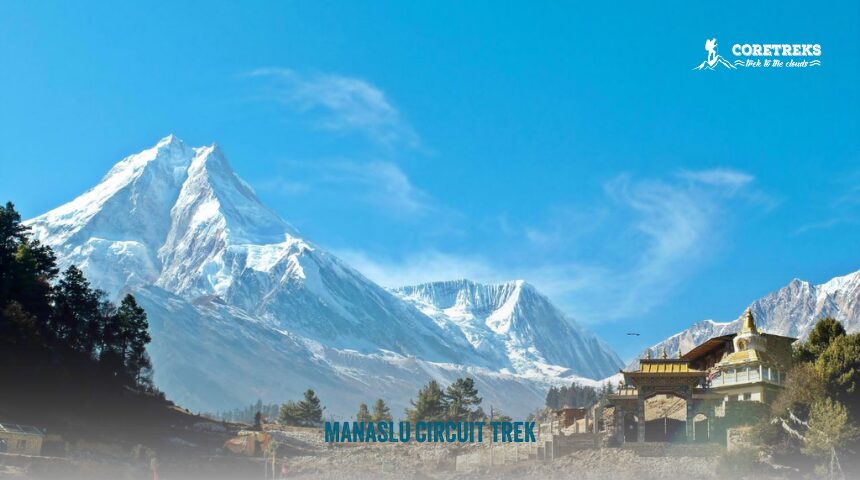
There are fascinating reasons why is Manaslu called the “Killer Mountain“. If you, too, are interested in knowing why the eighth-highest peak in the world, Mount Manaslu (8,163 m), has such a notorious nickname, make sure you stay with us until the end!
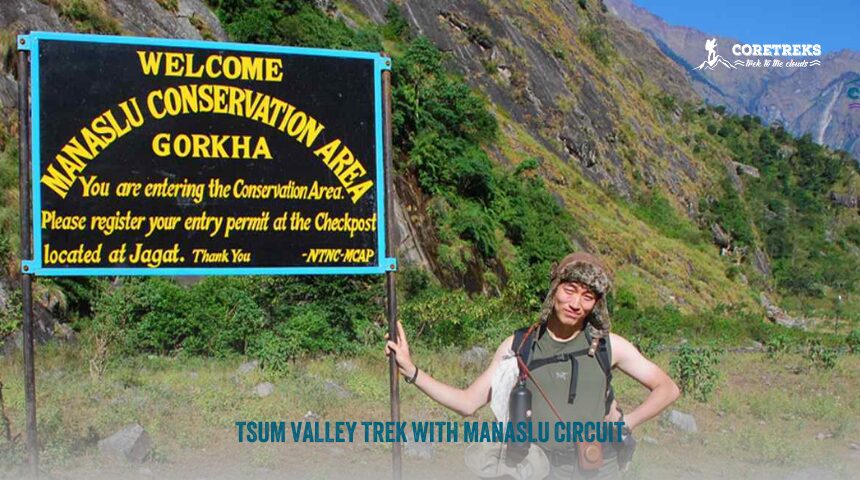
Mount Manaslu is among the giant 8,000-meter peaks that have been captivating mountaineers for centuries. Located in the remote Gorkha District of Nepal, the beautiful mountain is one of the most technically demanding giants. The peak also lies within the Manaslu Conservation Area in the Manaslu region, which is also famous for the Manaslu Circuit Trek In its early climbing history, there was a high number of fatalities. This was partially due to a lack of knowledge about the route, unpredictable Himalayan weather, and primitive climbing gear. Other reasons were Manaslu’s steep faces, rugged terrain (glaciers and crevasses), and high avalanche risks. Hence, the peak came to be known as Killer Mountain in Nepal.
However, Manaslu is not only what its nickname suggests. Despite the high altitude and challenges, the death rate is relatively low. Compared to the high fatality rate of Annapurna I (30% as per NASA’s Earth Observatory), Manaslu’s fatality rate is about 10% (NASA’s old data as of 2012 ). In recent years, summiting the mountain has become safer, and hundreds of climbers undertake the expedition each year. With the help of skilled Sherpas, a well-designed expedition, modern climbing gear, and an accurate weather forecast, the level of safety has significantly increased. Manaslu still holds real challenges. However, its risk has become more manageable. So, reaching the summit of the killer mountain has become more achievable.
Those who undertake Manaslu Expeditions are rewarded with a raw and authentic Himalayan climbing experience. It is surrounded by pristine nature that remains untouched by modern civilization. Climbers will get to witness some of the best alpine scenery, explore remote valleys, and traverse Tibetan Buddhist settlements. In this blog, we will dive more into the details of Manaslu, its history, legends, and more. So, are you ready to redefine “killer” as “conquerable?”
Table of Contents
The History of Manaslu Expeditions
Mount Manaslu is part of the Mansiri Himal range. Its name derives from the Sanskrit word “Manasa,” which means “soul” or “intellect.” Hence, the mountain is also known as the mountain of the spirit. Tibetan Buddhism has a strong influence in the area. So locally, Manaslu is also known as “Kutang.” In the Tibetan language, “tang” means a flat place or plateau. Hence, Kutang refers to “flat place of Ku” or “Ku plateau.” The mountain is sacred to the locals, especially to those in the Nubri Valley.
Manaslu Circuit Trek
Manaslu’s sheer height, beauty, and the air of mystery have been the subject of amusement for climbers. However, the history of the Manaslu Expedition tells a deeper story. It begins even before any climber sets foot on its slopes. Local communities strongly opposed climbing Manaslu for centuries, believing the mountain was home to a protective deity. So, the Manaslu mountain expedition began with controversy and tension. Only a few peaks in Nepal’s mountaineering history have faced intense resistance from locals, such as Manaslu. The villagers of Samagaon feared that climbing the mountain would anger their deity. It will bring calamity to the region.
The 1950 Reconnaissance
The earliest attempt was the 1950 Reconnaissance by a Japanese team. At that time, there was no established route to the summit. There were also no access paths through the villages. The locals were also against it. So, the team did not attempt the climb. But their arrival marked the mountain as “Japan’s chosen mountain.” It paved the way for the future expedition teams. The team studied Manaslu from far-off ridges. They reached about 5,275 m on the east side, but they realized it was an avalanche-prone side.
Failed Attempt in 1953 and the Samagaon Dispute
In 1953, a Japanese expedition team attempted to summit Manaslu. The team had 15 members and was led by Yukio Mita. They tried to climb the northeast face and reached around 7,750 m. However, they had to return due to poor conditions. Although they did not reach the summit, an avalanche destroyed the village’s gompa or monastery. To the villagers, this event was not just a coincidence. It was a sign of their deity’s anger.
They were furious and blamed the climbers for angering their gods. They demanded reparations, and the Japanese team paid compensation. The team recognized the cultural sensitivity and offered financial support, timber, and assistance in rebuilding the gompa. This gesture was surprisingly unusual for expedition teams at that time. Despite the compensation, the villagers banned any further climbs until they performed rituals to appease the deity.
The First Ascent in 1956
It was not until 1956 that Mount Manaslu was successfully climbed. Toshio Imanishi and Gyalzen Norbu Sherpa became the first people to reach the summit. The climb was a historical achievement in mountaineering. It was a major achievement for Japan and a proud moment for Japanese nationals. Additionally, there are a few more interesting facts about the first ascent.
For the Japanese, Mount Manaslu was their chosen peak to conquer even before Mount Everest attracted mountaineers.
The climb to the summit took more than 50 days. It was one of the longest Himalayan summit pushes of its time.
First Women’s Ascent in 1974
A Japanese Women’s expedition team was the first women to successfully ascend Mount Manaslu in 1974. There were no male members in the team above base camp. The team also climbed a variant route rather than using the earlier lines set by the Japanese climbers. Another reason why this climb is historic is that it was the first all-women ascent of an 8,000-meter peak. It paved the way for future generations of women in high-altitude mountaineering.
The Winter Attempt in 1983 and the First Winter Ascent in 1984
A Polish team attempted a winter ascent in 1983. However, the continuous 19 days storms, freezing temperatures, and a record-breaking jet-stream wind spike led to its failure. Although the data and route knowledge from this failed attempt made the winter ascent in 1984 possible.
On 12 January 1984, Maciej Berbeka and Ryszard Gajewski from Poland reached the summit of Poland. Despite the lack of reliable weather forecasting systems at the time, the team reached the top. Moreover, their team faced a near-fatal whiteout at Camp 3. They survived using their compass bearings, memory, and mountaineering instincts. The success of Berbela and Gajewski earned Poland the title of “Winter Himalayan Masters.”
The nickname “Killer Mountain” scares off many climbers. Manaslu still has the image of a mountain that is impossible to climb, or only for seasoned, elite mountaineers. While its hazards should not be underestimated, it is possible to climb the mountain. Additionally, the modern equipment, accurate weather forecasting, fixed-rope systems, and highly trained Sherpa guides have made Manaslu’s summit reachable.
It is also important to note that not all the hazards of climbing Manaslu come from its challenging terrain and unpredictable weather. Most tragic incidents resulted from poor preparation, lack of acclimatization, or disregard for safety protocols. During the climb, even small ignorance can be fatal. The climb becomes safer and manageable when you approach Manaslu with respect, proper preparation, conditions, adequate acclimation, and the help of an experienced guide.
Let us debunk some of the myths of climbing Manaslu with real facts:
Myth
Reality
Manaslu is only for seasoned, elite climbers.
It is achievable for well-prepared climbers. They must follow a structured expedition plan with proper acclimatization. They must also hire experienced Sherpa guides and modern climbing equipment.
Only big commercial expeditions take on the Manaslu climb.
Small alpine-style teams also climb Manaslu. There are multiple ascent lines, and these small teams climb through lesser-used routes.
The mountain itself is deadly, which leads to fatalities.
Statistical analysis shows that most accidents were caused by human error or poor preparation. Manaslu itself is not fatal.
Altitude sickness is unavoidable.
Following the proper altitude rules, altitude sickness is manageable. Climbers must adequately acclimatize, hydrate properly, and follow professional guidance from guides.
The risk of avalanches and bad weather makes the expedition risky.
These risks exist, but they can be mitigated. It requires careful route planning, support of trained Sherpa, and real-time weather forecasts.
There is no rescue support available on Manaslu.
Various rescue operations, such as helicopter evacuations, on-mountain medical support, fixed-line safety protocols, etc., are available at present.
Hard Lessons and Evolution of Safety
There have been some tragic events in the history of Manaslu mountaineering. The 2012 avalanche at Camp 3 was one of the most devastating incidents. This event occurred due to poor planning, weak weather monitoring, and poor team communication. It forced the entire mountaineering community to rethink the safety of climbing Mount Manaslu.
Every victory and mistake has contributed to making the climb more structured and approachable. At present, there are stable campsites and trained rescue teams who accompany climbers during expeditions. Similarly, advances in weather forecasting tools and equipment have also made it safer. Climbers have learned from past errors to refine expedition strategies. All these lessons and changes have made the Killer Mountain a little less scary.
How Past Accidents Have Improved Climbing Safety
As we mentioned before, climbers have learned from past mistakes. From preparation to operation, there have been significant improvements in climbing safety at present. The route to the summit has been marked more precisely. Climbers now know the importance of acclimatization. They strictly follow the principle of “climb high, sleep low.” Likewise, they continuously monitor their health and oxygen saturation. Safety guidelines have also been strengthened. The guides now have to go through intensive training programs and mandatory briefing sessions. The government has also implemented stricter permit regulations to improve climbers’ safety.
Another factor that has improved the safety of Manaslu climbing is technological advancement. During earlier expeditions, there were no advanced weather forecasting tools, GPS, or technical mountaineering gear. As a result, climbers were exposed to various risks. Now you can get modern gear like avalanche beacons, crampons, lightweight ropes, insulated gear, and more. It has helped to reduce human errors. The expedition teams carry satellite phones, GPS devices, and radio communication. In case of emergencies, they can quickly coordinate rescue operations. Thanks to these advancements and lessons learned from past accidents, the Mount Manaslu climbing environment is far safer.
Survivor Stories from Manaslu Tragedy
The deadliest tragedy on Mount Manaslu took place in the early morning of 23 September 2012. At around 4:00 AM, a massive avalanche struck Camp 3. It swept directly over the tents of dozens of sleeping climbers. According to ABC News, 231 climbers and guides were on the mountain, but not all were at the higher camp, which was hit by the avalanche. At least 11 climbers were killed, including a well-known French skier and climber, Rémy Lécluse. More than 20 climbers were injured, and others narrowly escaped the disaster.
Among the survivors were Italian climbers Christian Gobbi and his companion Silvio Mondinelli. Gobbi shared his story with the Associated Press. He and his companion woke up to a powerful wind, and then an avalanche struck their tent. Then, there was more snow and ice, and their tent started to slide down. In a few seconds, they were down more than 200 m, and their tent was damaged and opened. They sat down in the dark without clothes, boots, lamps, or anything. After an hour, the sun slowly rose, and the sunrise lit the mayhem in front of them.
Before them lay the tent’s pieces and some men, and Gobbi recalls seeing the light from Camp 2, which they assume was from Sherpas checking on each other. When the light became clearer, they saw some boots, not theirs, but they still used it to check their friends. He saw many bodies in the snow, and many people were alive. Checking the bodies with their probe, Gobbi and Mondinelli found another Italian climber, Alberto, and his Sherpa. Unfortunately, the avalanche has taken their lives. Climbers and Sherpas from Camp 2 descended to Camp 3 and rushed to help them.
Our Manaslu Circuit trek was a real adventure. Nim, our guide, and the porters helped us every step of the way. We visited small villages and stayed with local families, which gave us a closer look at Nepali culture.
Thakur made sure we felt safe and relaxed throughout the trip. Sai handled our emails and helped us plan everything, even after the trek. The whole team was professional and cared about our experience.
We truly recommend CoreTreks to anyone who wants a cultural and unforgettable journey through the beautiful parts of Nepal.
Our Manaslu Circuit trek was a real adventure. Nim, our guide, and the porters helped us every step of the way. We visited small villages and stayed with local families, which gave us a closer look at Nepali culture.
Thakur made sure we felt safe and relaxed throughout the trip. Sai handled our emails and helped us plan everything, even after the trek. The whole team was professional and cared about our experience.
We truly recommend CoreTreks to anyone who wants a cultural and unforgettable journey through the beautiful parts of Nepal.
Our trip to Tsum Valley was something we’ll always remember. I really enjoyed visiting the monasteries and gompas where the monks live and study. Nepal’s culture is so rich and interesting. I see why so many people come to learn about it.
The views of the Himalayas, like Manaslu, Ganesh Himal, Hiuchuli, and Churke Himal, were just amazing. The trek itself went well. I was a bit nervous crossing the suspension bridge, but it was a cool part of the trip.
Thanks to CoreTreks for helping us every step of the way, even with our late booking. Their team was super helpful and kind.
Our trip to Tsum Valley was something we’ll always remember. I really enjoyed visiting the monasteries and gompas where the monks live and study. Nepal’s culture is so rich and interesting. I see why so many people come to learn about it.
The views of the Himalayas, like Manaslu, Ganesh Himal, Hiuchuli, and Churke Himal, were just amazing. The trek itself went well. I was a bit nervous crossing the suspension bridge, but it was a cool part of the trip.
Thanks to CoreTreks for helping us every step of the way, even with our late booking. Their team was super helpful and kind.
Our trek through Tsum Valley and the Manaslu Circuit was an amazing journey. We had a lot of fun hiking the trails and felt lucky to explore such a remote and peaceful part of the Himalayas.
We also visited old monasteries, chortens, and gompas it added something really special to the trip. As someone who treks often, I didn’t find it too hard, and I enjoyed every bit.
Thanks to CoreTreks for guiding us and sharing details about every place we passed. I definitely recommend booking your Nepal trip with them.
Our trek through Tsum Valley and the Manaslu Circuit was an amazing journey. We had a lot of fun hiking the trails and felt lucky to explore such a remote and peaceful part of the Himalayas.
We also visited old monasteries, chortens, and gompas it added something really special to the trip. As someone who treks often, I didn’t find it too hard, and I enjoyed every bit.
Thanks to CoreTreks for guiding us and sharing details about every place we passed. I definitely recommend booking your Nepal trip with them.
After a great 15-day trek, I can say I’m fully happy with CoreTreks and their team. We explored the Manaslu region, and everything went smoothly, thanks to the team of professionals who cared about our safety and comfort.
One thing I loved most was the change in vegetation in the Manaslu Conservation Area, it really stood out to me. We also reached the base of the world’s eighth-highest peak and were lucky to see snow leopards along the way. That was a big highlight.
Thanks again to CoreTreks for being so patient and focused on our needs. They helped make this trip a special one. I’d recommend them to anyone planning to visit Nepal.
After a great 15-day trek, I can say I’m fully happy with CoreTreks and their team. We explored the Manaslu region, and everything went smoothly, thanks to the team of professionals who cared about our safety and comfort.
One thing I loved most was the change in vegetation in the Manaslu Conservation Area, it really stood out to me. We also reached the base of the world’s eighth-highest peak and were lucky to see snow leopards along the way. That was a big highlight.
Thanks again to CoreTreks for being so patient and focused on our needs. They helped make this trip a special one. I’d recommend them to anyone planning to visit Nepal.
Meeting new friends in Kathmandu and walking the Manaslu Circuit together made the trip feel even more special. The group felt like a small family, and the memories we made have turned into lasting friendships.
Our guide, Gorakh, was amazing. He made the trek safe, fun, and full of learning. His sense of humor and deep knowledge about Manaslu helped us see the area in a whole new way. With him, it wasn’t just a trek it was a full experience of nature, culture, and laughter.
Meeting new friends in Kathmandu and walking the Manaslu Circuit together made the trip feel even more special. The group felt like a small family, and the memories we made have turned into lasting friendships.
Our guide, Gorakh, was amazing. He made the trek safe, fun, and full of learning. His sense of humor and deep knowledge about Manaslu helped us see the area in a whole new way. With him, it wasn’t just a trek it was a full experience of nature, culture, and laughter.
Eva
Australia
Climbing Routes, Challenges & Safety Measures of Manaslu
The standard climbing route to Manaslu’s summit follows the Northeast Face. The route passes through crevasses, glaciers, and steep ice walls. There is also an avalanche corridor between Camp 2 and Camp 3. So climbers have to use a long fixed rope, ladder crossings, crampon skills to overcome exposed ridges, and careful footing. The slopes and terrain are more stable during the post-monsoon (September to October). Meanwhile, the pre-monsoon season brings heavy snowfall, which makes the slopes unstable.
There are four Manaslu Base Camps on the way to Mount Manaslu’s top, i.e., Camp 1 (5,700 m), Camp 2 (6,400 m), Camp 3 (6,800 m), and Camp 4 (7,400 m). These camps serve as acclimatization stops and weather assessment checkpoints. Climbers have to rely heavily on fixed ropes, oxygen systems, radios, GPS tracking, avalanche probes, etc., to overcome technical sections. The Sherpa guides play the most crucial role in assessing the situation, fixing lines, navigating, and moving supplies between the camps.
Essential Gear and Preparation Tips
Summiting Mount Manaslu requires strong physical fitness, conditioning, mental resilience, and the right gear. Expert seasoned climbers highly emphasize strategic pacing, maintaining hydration, and staying warm. As elevation increases, climbers’ appetite naturally decreases. The low oxygen levels make breathing harder and slow digestion. These increase the risk of altitude sickness, muscle weakness, rapid fatigue, and mental strain. Warm fluids, high-energy snacks, and electrolytes help maintain energy levels during the climb.
Here is a list of essential gear for the Manaslu Expedition:
For trekkers:
Comfortable and waterproof trekking boots
Trekking poles
Windproof/ waterproof jacket
Down or outer shell jacket
Thermal base layers (top and bottom)
Sun hat
Gaiter
UV-protection sunglasses
Reusable water bottles
Rain cover
Moisture-wicking socks and liners
Energy bars, dried fruits, nuts, and electrolytes
For climbing:
Double-insulated mountaineering boots
Expedition down suit
Layered thermal clothing
Sleeping bag (rated to -30°C)
Fixed-line compatible gloves
Crampons and an ice axe
Harness, carabiners, ascender, and descender
Helmet
Headlamp with spare batteries
Oxygen system
High-altitude medical kit
Additional tips for Manaslu Climb:
Start training 6 to 8 weeks before the journey. Be consistent and focus on leg and endurance-building exercises.
Practice multi-day hikes with a weighted backpack.
Keep yourself hydrated and eat a nutritious diet.
Use layering techniques to keep yourself warm and regulate your body temperature.
Learn about the challenges and the basic symptoms of altitude sickness.
Practice technical skills and use of mountaineering gear. Test and break in your equipment.
Choose the right expedition team with a strong safety record and experienced high-altitude Sherpas.
How Weather and Timing Affect Your Trek
The weather in the Himalayas is unpredictable, and the season also highly influences the safety during Manaslu climbing. Hence, it is crucial to pick the right season. Spring (March to May) and autumn (September to November) are prime climbing seasons. They offer the most stable weather with clear skies and predictable temperatures. Summer or monsoon (June to August) brings heavy rain and is not safe for climbing. It makes the trail in the lower region wet and slippery. There is also the risk of landslides and floods due to swollen rivers. The visibility is also poor, and heavy clouds obstruct the views. Manaslu climb during winter (December to February) is also extremely risky. Heavy snowfall, icy trails, and shorter daylight hours increase the risk. Similarly, the weather becomes unstable, and there are hazards like avalanches and blizzards.
The best time for the Mount Manaslu expedition is post-monsoon, i.e., autumn. This summit window offers the most stable weather, with minimal avalanche risk. Climbers can best avoid the high-risk avalanche zones between Camp 2 and Camp 3 during this time. Regardless of the season, it is crucial to monitor the weather regularly. The Himalayan weather is notorious for changing rapidly. There can be sudden fog, clouding your visibility, or afternoon storms or sudden snowfalls. It can not only delay the climb but also put climbers’ lives in danger. Therefore, it is important to plan your Manaslu climb around stable weather windows and adjust timing. Understanding seasonal influences helps you better prepare for your summit attempt.
Health and Fitness Essentials for Manaslu Trekkers
We mentioned above the need for strong physical fitness and conditioning for the Manaslu expeditioners. One’s health and fitness hugely determine the success of their climb. They must train their bodies for long hours of walking over rugged terrain, on snowy trails, across crevasses, and up ice walls. It requires good cardiovascular fitness, leg strength, stamina, and endurance. Exercises and training like running, weighted hiking, cycling, swimming, stair climbing, and brisk walking help to build and improve fitness.
Mental preparation is also important as it helps to manage stress during the climb. Climbers can practice patience, meditation, and breathing techniques. Understanding the challenges and setting realistic expectations also helps to build mental resilience. Before you set off on your journey, make sure to do pre-climb medical checkups. You also need to purchase travel insurance that covers high-altitude mountaineering, including helicopter evacuation. Proper physical and mental fitness is key to joining the Manaslu Climbing with greater confidence. You will get to enjoy and appreciate the journey more wholeheartedly.
Face the Challenge and Conquer Manaslu
Now that we have come to the end of our blog, you know why is Manaslu called the Killer Mountain. There is no doubt that Mount Manaslu is one of the world’s intimidating 8,000-meter peaks. From steep ridges to crevasses and avalanche-prone slopes, the mountain will test the fitness, resilience, and courage of every mountaineer. But with proper preparation and guidance, reaching Manaslu’s summit is achievable.
Reaching the summit of the eighth-highest mountain in the world is an extraordinary feat. It is also an emotional journey that offers deep spiritual satisfaction. The challenges will help you grow and boost your confidence. Standing atop it and witnessing the sea of white snow and the mesmerizing views of the surrounding Himalayan vistas is a once-in-a-lifetime experience. Along the way, you will also get an opportunity to connect with the pristine nature and immerse yourself in the local culture. The changing scenery and golden sunrises also make the entire expedition journey memorable. So, face the challenge head-on and conquer the “Killer Mountain” to experience the magic yourself!
Chhiring Sherpa grew up in Okhaldhunga as someone who’s fascinated to explore and learn everything that the Himalayas has to offer. He is a certified and licensed climbing instructor (licensed by Ministry of Culture, Tourism and Civil Aviation, Nepal). Mr. Sherpa has been a professional trekker for the past 12 years and is an integral part of our team since 2015. He has been certified for successfully climbing 8848m high Mt. Everest and several other mountains including Mt. Annapurna I (8091m) and Imja Tse which is 6165m.
Mr. Sherpa is responsible to execute a safe and successful climb using his expertise, which he developed during Advanced Mountaineering Training issued by Nepal Mountaineering Association (NMA). He has also been awarded for his successfully completion of the Rock Climbing Course by Nepal Mountaineering Instructors Association (NMIA). He provides essential equipment, instructions and opening routes to climbers. He is our trusted, well-known trekker and have guided thousands of climbers in his entire professional career.
Related Blogs
Boudhanath Stupa
Boudhanath Stupa is one of the most sacred Buddhist sites in the world. It is a religious site and a cultural hub for pilgrims, especially Tibetan Buddhists. Similarly, it is one of Nepal's largest, 36-meter-high, and 100-meter-wide stupas in the capital city of Kathmandu. The stupa is located just 7 km northeast of central Kathmandu,…
The Everest Base Camp Trek in February is a one-of-a-kind experience that trek enthusiasts must take once. Contrary to many trekkers who believe winter months are unsuitable for Himalayan ventures, trekking in February is doable. It is just the time when the cold winter slowly transitions into the warm spring season. Therefore, trekking on the…
Many of you might be curious about the Manaslu Circuit Trek after earthquake in Nepal and whether it is safe for trekking. Fortunately, yes. The trail that was heavily damaged by the 2015 Nepal earthquake has re-opened. So what are the conditions of the trails, accommodation availability, and risks of Manaslu Circuit Trek after the…
This site uses cookies to optimize your user experience. By using this site, you are consenting to our use of these cookies. Check out our Privacy Policy.