Need financial tips and tricks for your travel in Nepal? You have come to the right place. We will provide you with simple financial tips and tricks that you can use while traveling in Nepal, so it doesn’t break your bank.
Most people shy away from discussing finance. If you are planning the trip by yourself, then it can get frustrating at times. However, it does not have to be so. In this article, we will explore some simple ways to take care of your money during your visit to Nepal.
It’s recommended that you carry a stash of small denominations, as changing money outside major centers or Kathmandu can be hard. They will also come in handy during short destination fares. More information on changing money is mentioned later in this article. So, without further delay, let’s go into the top financial tips and tricks while traveling to Nepal!
Table of Contents
Top 5 Financial Tips and Tricks while Traveling to Nepal
Tip 1: Currency & Exchange
Changing money can be tricky when you are not familiar with the currency. So, here are the financial tips for currency exchange in Nepal:
First, understand the currency. Nepal’s official currency is the Nepalese Rupee (NPR). The NPR comes in denominations of one, two, five, 10, 50, 100, 500, and 1,000 rupees. Up to NPR.10 are available in coins as well. However, from NPR.10 and more, it’s usually the cash.
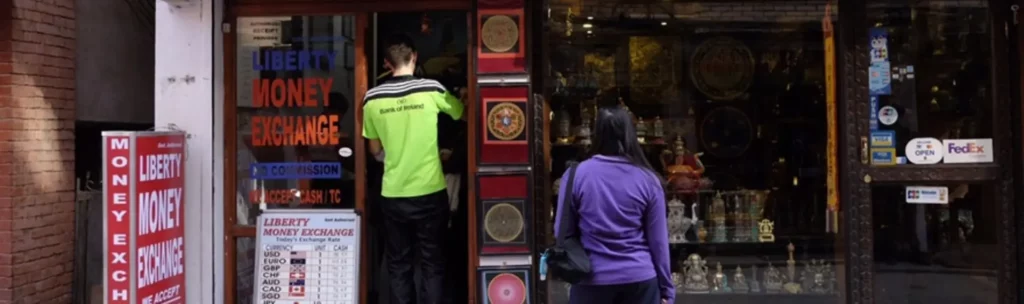
There are exchange counters at the Tribhuvan International Airport for convenience. However, exchange counters offer a lower rate. So, skip the airport.
Banks and legit money exchange centers are your best bet for changing money. The exchange rates may vary, but they are not so far from the official rates.
Carry a mix of cash and cards. If you are traveling in a rural area, carry adequate cash as the shops still only do business in cash. We recommend carrying adequate small-denomination notes, as cashing out can be a challenge in rural areas.
Always have small notes for rickshaws, street food, or local shops.
A Delightful Trip To Nepal
Our trip to Nepal was very special. We had been planning it for almost two years, and we’re so glad we finally went. The journey was inspiring and opened our eyes. It made us realize how people can be truly happy even with very simple things in life.
I’m really glad I picked Nepal for trekking. I’d love to come back again when I have time. The small villages felt peaceful, like a little piece of heaven. The old monasteries and artifacts showed how the culture is still alive. And visiting the Sky Caves was something I’ll never forget.
Our trip to Nepal was very special. We had been planning it for almost two years, and we’re so glad we finally went. The journey was inspiring and opened our eyes. It made us realize how people can be truly happy even with very simple things in life.
I’m really glad I picked Nepal for trekking. I’d love to come back again when I have time. The small villages felt peaceful, like a little piece of heaven. The old monasteries and artifacts showed how the culture is still alive. And visiting the Sky Caves was something I’ll never forget.
Ollie
Tip 2: Budgeting & Cost Planning
Smart budgeting and cost planning help you to travel in Nepal comfortably without straining your finances. Here’s how you can plan your cost and budget:
Set a realistic daily budget that suits you the best. Based on the expenses, you can plan your travel as a budget-friendly, mid-range, or luxury traveler.
Nepal is a budget-friendly country, but it can get expensive. So, plan for unexpected costs such as permits, tips, gear rentals, etc., and budget them accordingly. Sometimes there can be hidden costs, so be careful.
Use a travel budget app, a Google sheet, or a small notebook to track your daily expenses. It helps you to stay within your budget without overspending.
Always book early for better deals on flights, accommodations, and packages. Booking 2 to 3 months beforehand is a good way to secure great deals and avoid last-minute hassle.
For budget travelers, off-season trekking is the best way to travel in Nepal. The flights and accommodations are more affordable. The trekking trails and tourist attractions are also less crowded than during peak seasons.
Tip 3: Card & ATM Tips
Major credit cards are widely accepted at high-end hotels, restaurants, shopping malls, and more. But rural areas lack proper cash and ATM facilities. Here are some financial tips for cards and ATM:
Confirm if your debit/credit card works in Nepal before you travel. Sometimes, there can be issues with foreign transactions due to security issues. Notify your bank of travel dates to avoid card blocks.
Check your card’s withdrawal limits. Typically, ATMs in Nepal have a maximum withdrawal limit of NPR 35,000 per transaction.
Use ATMs associated with major banks to avoid excessive fees. If you want cash against a Visa or MasterCard in Nepali rupees, banks do not charge a commission for it.
If you are exchanging a foreign currency traveler’s cheque, then a 2% commission will be imposed. So, it is better to use a card.
Avoid frequent small withdrawals. Using an ATM in Nepal has high withdrawal fees, and frequent withdrawals can add up the fees.
Do not use ATMs at random places. Always use ATMs that are attached to banks to avoid any problems.
Another smart financial tip and trick while traveling to Nepal is to learn to spend like a local. Here’s how you can do it:
Practice polite bargaining at local markets. Unlike Western countries, it is part of the culture and common in commercial transactions in Nepal, except in fixed-price stores. However, remember that NPR 10 could make quite a difference to the seller when it’s less than USD 0.10 for foreigners.
Choose local restaurants to try authentic Nepalese cuisine rather than fancy tourist eateries. You can enjoy the local delicacies at local and cheaper prices.
Buy local SIM cards with mobile data for budget-friendly navigation and communication. It is more affordable than using international roaming services.
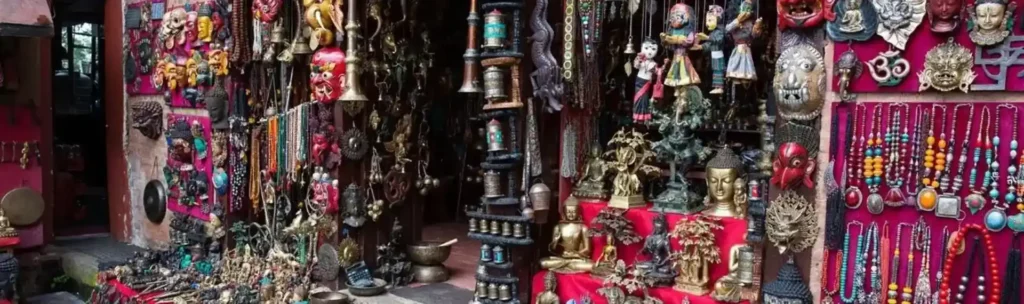
Shop at local shops for handmade goods and products. You can make a polite bargain, but compare the prices before making a purchase.
Tip 5: Saving On Transportation & Activities
Unknowingly, many travelers spend a lot on transportation and activities, but can save a lot of expenses with the right choices. With a bit of knowledge and planning, you can avoid unnecessary costs. So, this is our last, but not least, financial tip for traveling in Nepal. Here is how you can save smartly on transportation & activities:
Skip taking costly taxis or a private car and use public transportation modes or shared rides. They are entirely safe as well as safe. There is a wide range of public transportation, like microbuses, buses, and tempos.
If you want to take taxis, private transportation modes, or local services, negotiate the prices beforehand. Polite bargaining is accepted.
You can also use ride-sharing apps like Pathao (Nepali Uber) for affordable transportation in Kathmandu and Pokhara.
Book your activities directly through the agency for better deals and services. Additionally, it is advisable to opt for local tour companies over international ones. It is more affordable, and you will be supporting the local guides and agencies.
If you are thinking of taking part in adventurous activities like trekking, rafting, and more, get travel insurance. It provides financial safety in times of emergencies and injuries. Ensure that the travel insurance covers medical bills, extreme sports, emergency expenses such as helicopter evacuation, trip delay or cancellation, and baggage loss, theft, or damage.
Conclusion
So, there you have it. That was the 5 of the financial tips and tricks while traveling in Nepal. Reach out to us for any travel and trekking services in Nepal. For further information, email us at info@coretreks.com. Happy traveling. Speak to a CoreTreks travel expert to schedule your culinary expedition! Send us an enquiry, call us +977 9851179975 or WhatsApp us on +977 9851179975 now!
Mr. Bhatta started as trekking guide and is now a successful travel operator in Nepal. He is an environmentalist, committed to promote Ecotourism in Nepal. Mr. Bhatta has been engaged in improving the livelihood of residence of The Himalayas through Helping Hands for Himalayan People (HHHP Nepal) a non-profit organization built to improve living standard of the local community.
Boudhanath Stupa is one of the most sacred Buddhist sites in the world. It is a religious site and a cultural hub for pilgrims, especially Tibetan Buddhists. Similarly, it is one of Nepal's largest, 36-meter-high, and 100-meter-wide stupas in the capital city of Kathmandu. The stupa is located just 7 km northeast of central Kathmandu,…
The Everest Base Camp Trek in February is a one-of-a-kind experience that trek enthusiasts must take once. Contrary to many trekkers who believe winter months are unsuitable for Himalayan ventures, trekking in February is doable. It is just the time when the cold winter slowly transitions into the warm spring season. Therefore, trekking on the…
Many of you might be curious about the Manaslu Circuit Trek after earthquake in Nepal and whether it is safe for trekking. Fortunately, yes. The trail that was heavily damaged by the 2015 Nepal earthquake has re-opened. So what are the conditions of the trails, accommodation availability, and risks of Manaslu Circuit Trek after the…
This site uses cookies to optimize your user experience. By using this site, you are consenting to our use of these cookies. Check out our Privacy Policy.