Annapurna Base Camp Trek may be fun, thrilling, and challenging, but it can get more difficult if you don’t manage your place to stay. Accommodation is where trekkers stay during their ABC trek, so they are essential factor. In this blog, we will discuss Annapurna Base Camp Trek accommodation, the choices you can choose from, their advantages, prices, and more.
ABC trek is one of Nepal’s most popular and commercialized trekking spots. It is equally, if not more, popular than the Everest Base Camp Trek in Nepal. However, the scenic beauty throughout the trek and the trials through different terrains make ABC more remarkable.
During your trek, you will visit several environments, such as grassy fields, forests, glacial moraines, etc. In each of these different places, you will find places to stay, either in hotels, lodges, or teahouses. Let us explore more about the Annapurna Base Camp Trek accommodation!
Table of Contents
Types of Annapurna Base Camp Trek Accommodation
Annapurna Was Mind Blowing
I had heard about the Annapurna Base Camp Trek, but being there was even more amazing. It was cold like we thought, since it’s at the base of the mountains. But the people were so nice and welcoming.
We had local tea that tasted really good I wanted to bring some home but couldn’t. Still, we had a great time. CoreTreks took care of us and our bags the whole way. I really loved Nepal and the mountains. I’ll come back again for sure.
I had heard about the Annapurna Base Camp Trek, but being there was even more amazing. It was cold like we thought, since it’s at the base of the mountains. But the people were so nice and welcoming.
We had local tea that tasted really good I wanted to bring some home but couldn’t. Still, we had a great time. CoreTreks took care of us and our bags the whole way. I really loved Nepal and the mountains. I’ll come back again for sure.
Ranjeet
India
Teahouses
A teahouse is a traditional inn located along trekking trails in Nepal. It is the most common Annapurna Base Camp Trek accommodation. These inns provide food and shelter to trekkers, allowing them to rest and replenish as they navigate challenging terrains. They are standard, especially in the high-altitude remote villages, but they are the food source and accommodation for the trekkers.
Annapurna Base Camp Trek
Features
Most teahouses have an outdoor sitting area, which gives you the comfort of having your meal or breakfast and getting stunning views of the mountains and skies.
When you enter the teahouse in the Annapurna region, you will immediately see the central lounge area with wide tables and lots of tables or sofas around it for comfort.
The feature of the teahouse is that the rooms are small but comprehensive, and every room has separate twin beds. Hence, sharing with other trekkers during peak season would be best.
In the teahouses of Nepal, you will also have your daily meals. From breakfast to dinner, the personnel from the teahouse will serve your meals. Generally, the meals in the teahouses are local Nepali, whereas, in some places, you can also have occasional Western menus.
Pros of teahouses:
Teahouses are easily accessible and affordable accommodation options available along the trekking routes of Nepal.
They are situated in convenient locations or resting stops along the routes.
Locals often run teahouses so that you’ll get a genuine experience of authentic Nepalese hospitality.
You will have the opportunity to savor home-cooked meals and local delicacies.
Teahouses are often gathering places for trekkers to share stories, socialize, and make new friends.
Cons of teahouses:
Rooms are usually shared or dormitory-style. So, there will be very little personal space and privacy.
The facilities are only basic, and the amenities are limited.
There can be limited availability of hot water and electricity in remote and high-altitude regions.
Teahouses can be crowded during peak season, and it can get noisy. You may not be able to enjoy the time.
Lodges
Another means of accommodation in the Annapurna Base Camp Trek is the lodges. You can choose from the luxury lodge or the basic budget-friendly lodge to stay in during your treks. Lodges are more comfortable and have more services than ordinary tea houses.
Features
One prominent feature of Annapurna Base Camp Trek lodges is that rooms are a bit bigger and have features like insulation. Hot shower, WIFI, etc, without paying an extra fee.
The rooms are a bit bigger than the teahouses, but they also have twin beds, which means you have to share a room with other trekkers, as in the small teahouses.
These lodges have a central room with a designated dining area with a central heating system, especially in the colder regions.
One of the best features of luxury lodges is the solar panel, which will enable you to recharge your electronic devices.
Pros of lodges:
Lodges are more comfortable than teahouses with private rooms and facilities.
Trekkers can find private rooms with attached bathrooms, depending on the area.
They have better rooms, food options, and other amenities.
Lodges offer higher-quality services and cleanliness.
The atmosphere is more relaxing, so trekkers can enjoy quiet, personal space.
Cons of lodges:
Lodges cost more than teahouses, so it can be expensive.
They are mostly found in lower-altitude regions. So, they may not be available in higher altitudes or remote areas.
Lodges are often more commercialized, which can make them feel less authentic.
While lodges offer privacy, it also makes it harder to socialize or meet with other fellow trekkers.
Camping
Camping At Annapurna Base Camp
Often, trekkers in the ABC trek will not camp. However, in the ideal seasons like Spring and Autumn, some trekkers and campers want to camp in the vast, barren meadows of the Annapurna region. It is a great alternative for Annapurna Base Camp Trek accomodation. Here are some of the pros and cons of Camping.
Pros of camping:
Camping away from the crowds in solitude will give you peace of mind.
Camping is far more budget-friendly than other accommodations in the ABC trek.
Going for the high-altitude base camp trek and setting up your camp will give you a better sense of accomplishment.
Camping regularly can replace exercising and will not only affect the physical and mental aspects of your body,
Cons of camping:
One major drawback of camping is that you will be in charge of your items and will have to carry them all.
Camping is not allowed in all places of the Annapurna Base Camp Trek.
Annapurna Base Camp Trek doesn’t always have simple, broad meadows, so you won’t get to the proper place to camp.
Tips for camping at Annapurna Base Camp
Here are a few tips for camping at the Annapurna Base Camp Trek
The primary tips for camping in the ABC trek are to increase your physical fitness and raise your stamina level.
Pack the essential gear, equipment, and clothing for the high-altitude trek.
Always choose the right season for ABC camping since the off-season, like monsoon and winter, is risky.
Be careful about altitude sickness and cold weather in high-altitude camping like Annapurna Base Camp.
Always give yourself proper nutrition and keep hydrated to avoid altitude sickness.
You will always stay in many places and stops during your Annapurna Base Camp Trek since you start your drive from Kathmandu to Pokhara until you reach Nayapul, where your trek starts. So let’s check the type of accommodation options in all the places and stops you will be reaching the Annapurna Base Camp.
Nayapul
Nayapul is the first place where your trek to the Annapurna Base Camp Trek starts. It is one of the established places you will find during your trek, so there are many places to stay at Annapurna Base Camp. You will find different types of hotels, teahouses, and lodges in Nayapul.
Some of the more popular accommodation options in Nayapul are Hotel Young’s Stupa, Astam Cottage, Back To Nature, and KB’s Eco Mountain Village Home. There is also the option of luxury three-star hotels, which are more expensive than these lodges and hotels.
Ghorepani
Ghorepani is the entrance to the Annapurna region and is divided into upper and lower Ghorepani. Both areas offer a wide range of accommodation. Still, it is recommended to stay in upper Ghorepani for unobstructed views of the mountains and greenery, despite the higher cost compared to lower Ghorepani.
Ghorepani
At Ghorepani, you can find well-built rooms made of bricks and concrete designed to block out outside noise from construction work. The rooms have amazing mountain views and come with an attached toilet and shower. The rooms have two beds and traditional décor, priced between $10 and USD 250 per night.
Chomrong
After trekking from Ghandruk, you will stop at the stunning accommodation place, Chomrong. The accommodations are decent and basic but not as high a standard as Pokhara or Nayapul. There are basic hotels, lodges, and teahouses with medium-labeled rooms with soft beds, bedsheets, cushions, etc.
The hospitality of these teahouses and lodges is excellent, and combining them with magnificent views of the mountains makes the experience tenfold. Some recommended teahouses and lodges in Chomrong are Chomrong Cottage, Hotel Orchid, and Mountain View Lodges.
Deurali
Deurali is a small village located on the pathway of the Annapurna Base Camp Trek. There aren’t any luxury hotels or lodges in this place, and there are four teahouses in the hotel. Each teahouse has 5 to 6 rooms, and each room has separate twin beds.
As you reach the remote settlement of a village like Deurali, you must share your room, toilet, and sink with other trekkers. In the winter, there is a high chance that the teahouses in Deurali will remain closed due to the high risk of avalanches and snowstorms.
Annapurna Base Camp
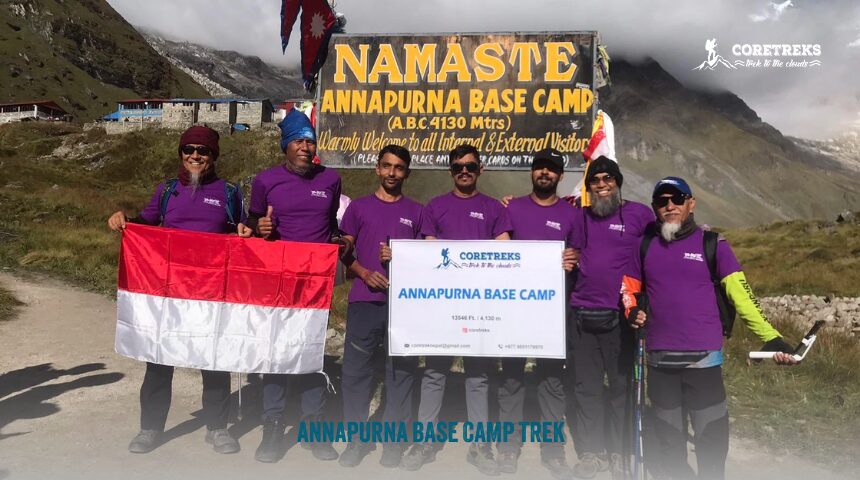
Annapurna Base Camp is the last stop of the ABC trek. Many trekkers are often surprised that few teahouses are near the camp. The government has also announced the plan to extend the teahouses as the number of tourists has increased.
Annapurna Base Camp Trek
At Base Camp, you won’t be able to negotiate room prices, and attempting to do so may result in spending the night outside in the cold. Compared to other options, hotels are pretty expensive in this area. The high chance of snowstorms is one big reason why the cost is higher.
Conclusion
Hence, the Annapurna Base Camp Trek accommodations are quite different and changes based on the altitude at which you are trekking. You can stay in expensive hotels, lodges, or resorts in a lower-altitude city.
However, as you climb altitudes and reach remote settlements, you must stay in the teahouses. In the teahouses, you will get basic accommodation facilities. You can stay comfortably as they will give you blankets, pillows, and mattresses, and you can also bring your sleeping bag with you.
You will get an attached bathroom to share with other trekkers for comfort. Or you can also camp out! When you experience your first ABC trek, we hope you will remember all the stops and places you stayed in.
FAQs
Can you sleep at Annapurna Base Camp?
Yes, you can sleep at the ABC camp because there are small teahouses providing facilities for accommodation and meals. It is not wise to camp outside in the cold, with constant snowstorms.
How many places do you have to stop for accommodation along the Annapurna Base Camp?
It depens on the itinerary of your Annapurna Base Camp Trek. The kind of accommodation will also depend your ABC Trek package.
Which month is best for the Annapurna Base Camp trek?
The best month for the ABC trek is April if you like the Spring season or October if you like the Autumn season. You can also do this trek in November when the weather is cold and keeps changing.
What should I wear to Annapurna Base Camp?
Some essential clothes you can wear during the ABC are hiking pants, hiking shorts, a Fleece Jacket, Hiking boots, a Knitted hat, a Scarf or Neck Gaiter, and others. You must wear adequate clothes according to the weather, climate, and altitude and be comfortable during the trek.
Which permits do you need to trek to Annapurna Base Camp?
For the ABC trek, you must issue the Annapurna Conservation Area Permit (ACAP), as you must pass through the sanctuary first to reach the base camp. You can also issue a TIMS Card, but it is optional and not mandatory.
Mr. Bhatta started as trekking guide and is now a successful travel operator in Nepal. He is an environmentalist, committed to promote Ecotourism in Nepal. Mr. Bhatta has been engaged in improving the livelihood of residence of The Himalayas through Helping Hands for Himalayan People (HHHP Nepal) a non-profit organization built to improve living standard of the local community.
Boudhanath Stupa is one of the most sacred Buddhist sites in the world. It is a religious site and a cultural hub for pilgrims, especially Tibetan Buddhists. Similarly, it is one of Nepal's largest, 36-meter-high, and 100-meter-wide stupas in the capital city of Kathmandu. The stupa is located just 7 km northeast of central Kathmandu,…
The Everest Base Camp Trek in February is a one-of-a-kind experience that trek enthusiasts must take once. Contrary to many trekkers who believe winter months are unsuitable for Himalayan ventures, trekking in February is doable. It is just the time when the cold winter slowly transitions into the warm spring season. Therefore, trekking on the…
Many of you might be curious about the Manaslu Circuit Trek after earthquake in Nepal and whether it is safe for trekking. Fortunately, yes. The trail that was heavily damaged by the 2015 Nepal earthquake has re-opened. So what are the conditions of the trails, accommodation availability, and risks of Manaslu Circuit Trek after the…
This site uses cookies to optimize your user experience. By using this site, you are consenting to our use of these cookies. Check out our Privacy Policy.