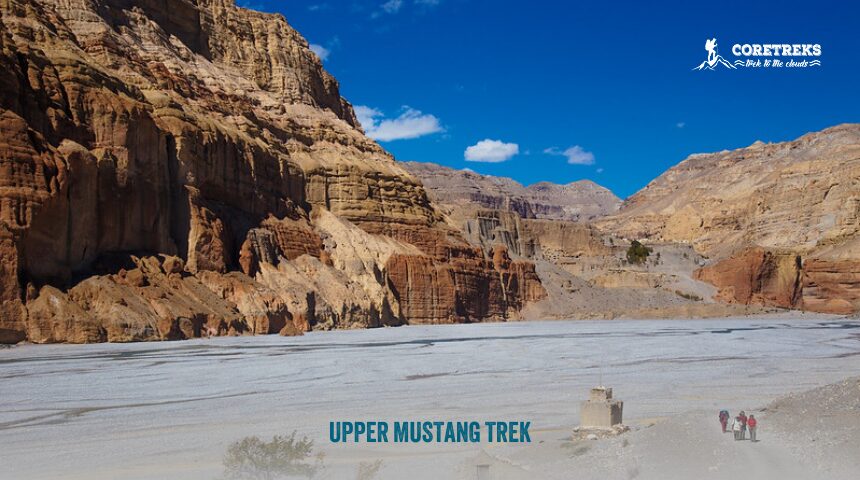
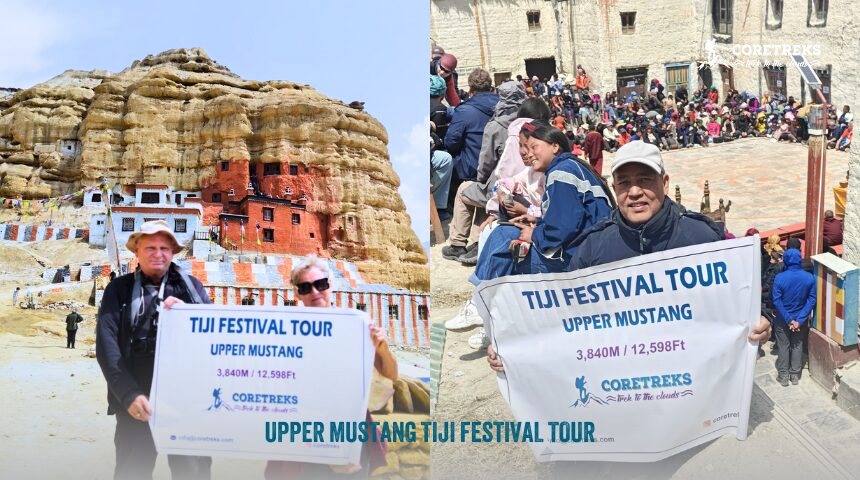
Upper Mustang trek is a fantastic adventure-filled trek in the Himalayas of the Annapurna region. Often, many trekkers wonder what the scale of Upper Mustang Trek Difficulty is, which we will find out in this blog. This challenging trek will take you to the forbidden kingdom of Lo-ManThang.
Upper Mustang is the unexplored settlement at the top of the Annapurna region Treks. North of Annapurna, it is part of the Tibetan plateau. It is at an average altitude of 4,000 meters above sea level and is geologically and culturally significant.
Upper Mustang Trek has been preserved for centuries since it contains the memoirs of ancient traditions, cultures, and civilizations of the people who migrated from Tibet to Nepal. Initially, it was the trading hub between the two countries, and since they were familiar with the location, they started settling in the Upper Mustang area.
To this date, to preserve the culture and civilization, the Upper Mustang is considered a restricted area of Nepal. So, let’s find out what makes the Upper Mustang trek a bit challenging, especially for beginners.
Table of Contents
Highlights
Visit some fantastic places like Jomsom, which is Mustang’s headquarters.
Majestic views of the mountains like Dhaulagiri, Annapurna, Hiunchuli, Nilgiri and others.
Visit the sacred site for Hindus and Buddhists in Muktinath.
Reach the ancient forbidden kingdom in Lo-Manthang.
Meet the local Tibetan people and immerse in their culture.
Visit ancient established temples, monasteries, Ghumbas, and caves for Buddhist monk meditation.
Stroll the nightlife of the beautiful tourist hub in Pokhara.
Upper Mustang Trek Difficulty
Upper Mustang trek difficulty ranges from moderate to challenging level. A few factors raise the difficulty level of any trek, including the Upper Mustang region. Some factors will always remain as the difficulty factor and can’t be influenced by the season, months, or physical and mental exercises.
Amazing Culture and Views in Mustang
CoreTreks gave us a really special trip. The plan was well made, and we got to see the beautiful Upper Mustang and learn a lot about its culture. The places we stayed were cozy and had a nice local feel.
Our guide knew so much about the area and made sure we felt safe and happy the whole time. We heard great stories about Mustang’s past and traditions, which helped us enjoy it even more.
Everything from travel to permits was taken care of smoothly. We also liked how CoreTreks respected nature and helped the local people. It felt good to travel that way.
CoreTreks gave us a really special trip. The plan was well made, and we got to see the beautiful Upper Mustang and learn a lot about its culture. The places we stayed were cozy and had a nice local feel.
Our guide knew so much about the area and made sure we felt safe and happy the whole time. We heard great stories about Mustang’s past and traditions, which helped us enjoy it even more.
Everything from travel to permits was taken care of smoothly. We also liked how CoreTreks respected nature and helped the local people. It felt good to travel that way.
Olivia Taylor
New Zealand
High Altitude
The Upper Mustang trek takes you to an altitude above 3840m, but if you choose a different itinerary, you might have to trek up to Marang La Pass at 4230 meters. Hence, above the altitude of 3000m, the trekkers start feeling the symptoms of altitude sickness.
As you spend more time at such a high altitude, the oxygen level and surroundings will weaken your body. Some of the symptoms of altitude sickness are nausea, vomiting, headache, loss of breath, dizziness, weak bones, and fainting. One way to minimize altitude sickness is by acclimatizing correctly.
Remote Location
The Upper Mustang trek has become more popular, so it’s not as remote as it used to be. However, it still maintains its traditional lifestyle. The facilities for trekkers and travelers have greatly improved since it was opened to foreign trekkers in 1992. Now, you can stay in comfortable rooms in tea houses every day of your trek. Most tea houses offer clean and hygienic rooms for sharing, but you can pay extra for a single room.
You’ll also find places to eat and drink in different villages. You can rely on mobile phones for communication; some areas even have wifi. While you shouldn’t expect luxury lodges and hotels, the tea houses provide essential services such as hot meals, clean beds, toilets, and hot bucket showers. If you’re up for a more challenging trek, camping is also an option instead of staying in tea houses.
Weather conditions
Another significant trek difficulty that can’t be influenced is the weather conditions at high altitudes. To trek the Upper Mustang trek, you can choose the peak seasons, like Spring or Autumn, or the off-seasons, like Monsoon and Winter. The weather might be somewhat stable in the Spring or Autumn season; however, it still changes regularly at high altitudes.
But in the off seasons, the weather is unpredictable and constantly changes. One minute, you are trekking in the sunny weather, and the next minute, you will be welcomed by relentless snow and blistering winds. Since the Mustang is in the rain shadow area, it is not affected by rainfall compared to Nepal’s other trekking regions.
Physical challenges of Upper Mustang trek
Long Distance of Walking
Apart from the natural challenges of the Upper Mustang trek, there are some physical challenges, such as long distances and durations. The trek duration of this trek is, on average, 15 days, and every day, you have to trek for at least five to seven hours to reach the day’s destination.
Trekking in the mountainous trails for seven hours every day for over ten days is bound to take a toll on your body. The trek to Upper Mustang in the appropriate season might be fun due to flowering trails and beautiful surroundings. However, if you are consumed by fatigue, the rest of the trek won’t be entertaining, and you will be more susceptible to illness or even acute mountain sickness.
Rough Trails
Despite comparing to other trekking spots in Nepal, The Upper Mustang trek trails are not as tricky and range on a moderate level. The Upper Mustang trail follows an ancient salt trading route through the trans-Himalayas. You’ll encounter uphill and downhill sections every day, and you won’t be walking along motor roads. Instead, you’ll cross several small passes. Along the way, you’ll pass different settlements with whitewashed houses, mani walls, fields of barley, and stupas with prayer flags.
You’ll also come across pasture lands and herds of animals with their herders. While the terrain is moderately challenging, it’s not like walking on smooth city roads. Specific trek training and physical activities can help make the trails more accessible. If you’re up for an extra challenge, you can ask your guide to take you off the beaten tracks. A professional, licensed guide is essential to ensure you don’t get lost and stay safe.
Mental challenges of Upper Mustang trek
Along with the physical challenges, trekkers need to know and overcome the mental challenges of the Upper Mustang trek. Several difficulties like high altitude, extreme cold, remoteness, lack of comforts, etc, make the trek physically challenging, affecting the trekkers’ mental status.
Moreover, as you climb altitude, it will be hard to breathe, and your body starts weakening, affecting you mentally. So first, you must mentally prepare to be strong and complete your trek without stress. For the mental aspect of your trek, it is wise to practice breathing and engage in yoga, which is a fantastic remedy for breathing in high-altitude trekking.
Tips for preparing and overcoming the challenges of the Upper Mustang trek
Here are some tips for preparing and overcoming the challenges of your Upper Mustang trek.
Physical Fitness Training
One of the tips for preparing for these Upper Mustang treks is to train your physical fitness level even before the start of the trek. The simple way is to hike by carrying a backpack, which you will do during your trek. This exercise will help you raise your stamina and the ability to trek longer and cover long distances in a day. You can also try to improve your core by participating in the cardiovascular exercises.
Altitude Acclimatization
Another way to prepare for the high altitude trek, like the Upper Mustang trek, is by running about altitude acclimatization. Acclimatization during high altitude can minimize and even prevent altitude sickness. Proper acclimatization means trekking high, sleeping low, not rushing towards the height, and gradually climbing the altitude.
Remember to take a break every three to four days at the same altitude if you are 3,000 meters or higher. Furthermore, every trek has a curated itinerary from the trekking agency with adequate days for acclimatization, so it is wise to follow the same itinerary.
Here are some proper gear and equipment that you can pack for Upper Mustang Trek.
Watch
Sunglass with UV protection
Fleece jacket
Down jacket
Winter hat
Water purification
Notebook and pen
Cell phone
Nail clippers
Face/body wipes
Hooded rain jacket
T-Shirt (bring lightweight wool)
Camera
Polypropylene underwear
Lightweight gloves
Deodorant floss
Biodegradable bar soap
Waterproof jacket and pants
Toothbrush
Extra passport photos and photocopies of passport
Headlight with extra batteries
Heavyweight winter gloves
Thermal bottle
Hiking shirts
Backpack or daypack
Lightweight cotton pants
Money
Toothpaste
Small mirror
Sleeping bag (-15 bag is best in high-altitude trekking)
Sweater
Sun hat or scarf
First aid kit
Trekking pole
Long-sleeved shirt
Medium-size drying towel
Binoculars
Sunscreen
Conclusion
Hence, the difficulty of the Upper Mustang trek is relative to the people based on their experience. It might be a moderate trek if you are a trained and experienced trek. But if you are a beginner, this trek might be a bit challenging for you.
There are a few factors that affect and influence the trek. Some you can control, and some you can’t. In the blog, we have listed some factors that increase the trek’s difficulty. Furthermore, we have provided some ways to minimize the challenges of the trek. So, if you are still unsure about the trek, we encourage you to try the Upper Mustang trek once in your life.
FAQs
Which permit do you need for the Upper Mustang trek?
The Upper Mustang trek is unique as it lies in the restricted area of the Annapurna region. So, having a special restricted area permit and the Annapurna Conservation Area Permit would be best.
Why is the Upper Mustang restricted?
The Upper Mustang restricted area to protect the region’s rich and unique culture and border security operations.
What is the highest elevation of the Upper Mustang trek?
The highest elevation of the Upper Mustang trek is 3,800 meters, which is Lo-Manthang.
How many days of acclimatization do you need for the Upper Mustang trek?
Generally, in the Upper Mustang trek, you will have at least one day of acclimatization, which you can take in the Lo-Manthang.
How many days do you need for the Upper Mustang?
The average number of days for the Upper Mustang trek is 15, but you can add the side trek and extend it to 20 days.
Mr. Bhatta started as trekking guide and is now a successful travel operator in Nepal. He is an environmentalist, committed to promote Ecotourism in Nepal. Mr. Bhatta has been engaged in improving the livelihood of residence of The Himalayas through Helping Hands for Himalayan People (HHHP Nepal) a non-profit organization built to improve living standard of the local community.
Boudhanath Stupa is one of the most sacred Buddhist sites in the world. It is a religious site and a cultural hub for pilgrims, especially Tibetan Buddhists. Similarly, it is one of Nepal's largest, 36-meter-high, and 100-meter-wide stupas in the capital city of Kathmandu. The stupa is located just 7 km northeast of central Kathmandu,…
The Everest Base Camp Trek in February is a one-of-a-kind experience that trek enthusiasts must take once. Contrary to many trekkers who believe winter months are unsuitable for Himalayan ventures, trekking in February is doable. It is just the time when the cold winter slowly transitions into the warm spring season. Therefore, trekking on the…
Many of you might be curious about the Manaslu Circuit Trek after earthquake in Nepal and whether it is safe for trekking. Fortunately, yes. The trail that was heavily damaged by the 2015 Nepal earthquake has re-opened. So what are the conditions of the trails, accommodation availability, and risks of Manaslu Circuit Trek after the…
This site uses cookies to optimize your user experience. By using this site, you are consenting to our use of these cookies. Check out our Privacy Policy.