The Everest Base Camp Trek is considered moderately challenging even for avid trekkers. However, if beginners are not prepared, it can become burdensome. Therefore, the Everest Base Camp difficulty is relative and is different for different people. While technical climbing skills are not required, factors like unpredictable weather, long distance, duration, and so on make the trek challenging. Everest Base Camp is one of Nepal’s most popular trekking destinations, and it takes you closer to the highest mountain in the world, Mount Everest. Many trekkers visit Nepal to pursue their dream of trekking to Everest Base Camp. But is trekking to EBC as easy and safe as it sounds?
Everest Base Camp is one of the most commercialized treks in Nepal, along with the Annapurna Base Camp Trek. It has always been the most visited trekking region in Nepal that takes you to many Sherpa villages and settlements like Namche Bazaar, Tengboche, Dingboche, Pherice, Lobuche, Gorakhstep, etc. The EBC trek falls in the range of moderate to challenging levels. For beginners, this trek falls under the problematic category.
Everest
However, if you are a veteran trekker, you might find the EBC trek a bit easy or slightly moderate. Many factors make trekking in the Everest region a bit difficult. In this blog, we will explain those factors that influence the difficulty range of the Everest Base Camp Trek. So let’s get into it.
Table of Contents
Everest Base Camp Difficulty
The Everest Base Camp Difficulty is relative and is different for different people. The trekking region lies in the Khumbu region, which passes through developed places like Lukla, Namche, etc., so the infrastructure level is developed during the trek. Hence, trekkers who have experience in trekking, especially in remote areas, will find it less challenging. However, despite being ideal for beginners, they might find certain aspects of the trek quite challenging.
Everest Base Camp
Everyone must know a few complex factors before considering Everest Base Camp Trek. Such factors are extreme weather, high altitude, and physical and mental challenges, which we will explain below.
A Outstanding Trek
The trek was tough at times, but it was also really rewarding. We got to see amazing views of the Himalayas, including Everest, Lhotse, and Ama Dablam. We also visited small villages and met kind, welcoming people who live in the mountains.
CoreTreks made sure we were well taken care of. The places we stayed were warm and comfortable, and the meals were always fresh and tasty.
I truly recommend doing the Everest Base Camp trek with CoreTreks. Whether you’ve done treks before or it’s your first time, this trip is a great way to see one of the most beautiful places in the world. CoreTreks made it even better.
The trek was tough at times, but it was also really rewarding. We got to see amazing views of the Himalayas, including Everest, Lhotse, and Ama Dablam. We also visited small villages and met kind, welcoming people who live in the mountains.
CoreTreks made sure we were well taken care of. The places we stayed were warm and comfortable, and the meals were always fresh and tasty.
I truly recommend doing the Everest Base Camp trek with CoreTreks. Whether you’ve done treks before or it’s your first time, this trip is a great way to see one of the most beautiful places in the world. CoreTreks made it even better.
Tarja Halonen
Finland
Factors Affecting Everest Base Camp Trek Difficulty
Extreme weather conditions
The highly unpredictable weather conditions are one significant trek difficulty in the Khumbu region. The weather keeps changing even during the peak trekking season, but if you decide to trek in the less appropriate season, the problem of unpredictable weather increases even more. At high altitudes, the weather changes continuously. One minute, you are trekking on calm sunny days; the next moment, you will see black clouds, and within minutes, mild to heavy rainfall starts.
Everest Base Camp
Sometimes, rainfalls, snowfall, and hailstorms are widespread, impacting your trek. In the winter, the chances of snowstorms, blizzards, and avalanches are much higher. The effect of the extreme weather conditions is limited in the ideal trekking seasons like Spring and Autumn. So, if you want to minimize the difficulty of trekking in extreme conditions, then it is wise to choose the appropriate season and also take the proper gear and equipment with you.
Lack of Infrastructure
Another significant difficulty the trekkers face during the EBC trek is the lack of tourist infrastructure. A lack of infrastructure means a lack of facilities that make trekking simple and comfortable. Although the EBC Trek passes through some partially developed villages, towns, and settlements like Lukla, Phakding, and Namche, most other villages are remote and secluded.
Although the path to Namche is still decent for the 4WD Jeep ahead of Namche, due to the lack of roads and transport, the infrastructure of development has not reached the Sherpa villages like Tengboche, Dingboche, Pheriche, and Lobuche. So, in these Sherpa villages, you won’t receive proper medication if you fall ill. There are also no luxury hotels, restaurants, places to sleep, etc., which will impact the health of the trekkers, especially if they are beginners.
Physical challenges
Trekkers face a few physical challenges during their trek to the EBC. Here are some of them.
High Altitude
One of the reasons that makes the EBC trek quite challenging, especially for those without experience, is the High Altitude trek. During the EBC trek, you will reach an elevation of 5644m, and the chance of altitude sickness increases from 3500m. Trekking becomes difficult during high altitudes as the oxygen level keeps depleting. Unable to adjust to the oxygen level will invite Altitude Sickness.
One primary reason for the altitude sickness is my rapidly climbing altitude, which doesn’t allow the body time to adjust to the climate, surroundings, and, most importantly, oxygen levels. When you suffer from altitude sickness, you will start feeling sick as the symptoms are nausea, vomiting, tiredness, fatigue, shortness of breath etc. Altitude sickness also increases if you are dehydrated, so always keep yourself hydrated.
Distance
The total trekking distance for the Everest Base Camp (EBC) trek is about 130 km round trip. Covering such a distance in about 14 days requires immense endurance and physical strength. Of those 14 days, you must exclude 2 days for traveling and 2 days for acclimatization, leaving 10 days.
You must cover at least 13 km a day to complete the trek. And you have to do so with the risk of rugged terrain and altitude sickness, which is challenging.
Duration
As said earlier, you will travel for about 14 days to complete the trek. As a beginner, you might have to add extra days to cover the same distance. And if you witness the symptoms of altitude sickness in your body, completing the trek takes even longer.
Besides, spending two weeks in remote, high-altitude terrain with limited access to modern comforts can drain your mental energy. Overall, the trek takes patience. You have to be mentally strong.
Terrain And Landscape
The terrain encompassing the Everest Base Camp Trek is diverse. It features steep ascents, rocky paths, glacier crossings, deep forests, and suspension bridges. The trail finally leads to the barren, icy landscape near the base camp. Traversing through such a varied landscape can be challenging, especially physically. Injuries like Knee pain, leg sprain, and back pain are common while trekking in such terrain and landscape.
Flight Delays to and from Lukla
Lukla is one of the world’s most dangerous airports because of its position between the cliffs. The pilot needs to be 100 percent sure to land there. They cannot risk the flight with fog, intense rains, winds, and low visibility, which can significantly delay the flight.
Not only that, the flight gets delayed during the peak season. You must travel to Manthali airport in Ramechhap to fly to Lukla instead of Tribhuvan International Airport in Kathmandu. This increases the expenses and adds the hassle of logistics management. With all this extra effort, the flight might still get delayed from Manthali.
Khumbu Cough
Everest Base Camp is a high-altitude trek. It is no brainer that such heights have cold air, dry conditions, and high-altitude dust. When you breathe in such an environment, your respiratory tract gets infected, resulting in a persistent dry cough. This cough is called Khumbu cough. It is common among many trekkers in the Everest Region. It can affect your overall trekking experience and might even lead to breathing problems, resulting in altitude sickness.
Crowded Peak Season
Everest Base Camp is one of the most popular treks worldwide. More than 40,000 international and domestic tourists set foot in Lukla to begin their trek every year. Most of them choose the peak seasons to do so, which are spring (March to May) and autumn (June to August).
Hence, the trails are the most crowded in these months, and the accommodations are also filled with people. Getting a proper tea house or lodge might be challenging if you are not cautious. And, if you prefer solitude, you will find it hard to enjoy the trek in these seasons truly.
Difficult Terrain and Unmanaged During Off-Season
While the off-seasons—winter (December to February) and summer/monsoon (June to August)—are less crowded, the trails during these seasons are also the most dangerous. They are slippery during the monsoon and covered in snow in winter.
Walking on both kinds of terrain involves the risk of an accident. The trails are also less impassable in some sections due to snow or the landscape. If you are trekking during these seasons, the difficulties increase.
Mental challenges
You will face physical and mental challenges during your Everest Base Camp Trek. If you are an experienced trekker traveling all the time, the mental aspect of the challenge might not affect you. Still, for beginners, the mental anxiety of fear of the unknown might be overwhelming. Also, you will be trekking in a region where you won’t be familiar with the language, and the people are very different.
Staying long in these conditions might give you anxiety, loneliness, frustration, and homesickness. These mental challenges can derail your journey in the Khumbu region, so you must always stay positive. Furthermore, trekking with your friends or entire groups so that you don’t feel alone during your trek.
EBC Trek Itinerary
Day
Itinerary
Duration (hrs)
Distance (km)
Highest Elevation (m)
Difficulty
Activity
1
Arrival in Kathmandu
–
–
1,350
Easy
Arrival, briefing, and exploring Thamel
2
Flight to Lukla & trek to Phakding
3
3-4
2,840
Easy
Scenic flight, trek along Dudh Koshi River
3
Phakding to Namche Bazaar
6
10.8
3,410
Moderate
Enter Sagarmatha National Park, ascend to Namche
4
Acclimatization in Namche
3
3-4
3,720
Moderate
Hike to Syangboche, Everest View Hotel
5
Namche Bazaar to Tengboche
5
10
3,860
Moderate
Trek through forests, visit Tengboche Monastery
6
Tengboche to Dingboche
5
11
4,400
Moderate
Cross suspension bridges, enter Sherpa villages
7
Acclimatization in Dingboche
3
3
5,083
Moderate
Hike to Nangkartshang Peak
8
Dingboche to Lobuche
5
6
4,940
Moderate to Difficult
Trek along Khumbu Glacier, memorial sites
9
Lobuche to EBC via Gorakshep & back
7-9
10-11
5,364
Difficult
Trek to Everest Base Camp, return to Gorakshep
10
Gorakshep to Kala Patthar & Pheriche
7
9
5,545
Difficult
Sunrise at Kala Patthar, trek to Pheriche
11
Pheriche to Namche Bazaar
6
12
4,240
Moderate
Descend along Imja River, retrace steps
12
Namche Bazaar to Lukla
6
10-12
3,440
Moderate
Trek downhill to Lukla
13
Flight to Kathmandu
–
–
2,860
Easy
Return flight, explore Kathmandu, farewell dinner
14
Departure
–
–
1,350
Easy
Transfer to the airport
Tips On a Successful EBC Trek
Here are some tips to help you reduce the Everest Base Camp Difficulty.
Acclimatize properly by taking rest days at Namche Bazaar and Dingboche to let your body adjust to the lower oxygen. It is crucial in reducing the risk of Acute Mountain Sickness (AMS), which is also called altitude sickness.
The other way of mitigating altitude sickness is maintaining body temperature, which requires staying hydrated. So, drink at least 3 to 4 litres of water daily.
Training at least a month before your trek starts is crucial for the EBC Trek. Focus on building your heart and leg strength through cardio and leg exercises. Regular hiking practice also helps build endurance and prepare your body for long trekking hours.
Maintain a regular pace while trekking. Going fast can increase your heart rate, and you might find yourself stopping multiple times to adjust your breathing. Walk solely and steadily to conserve energy and avoid overexertion.
Eat high-energy foods like carbohydrates and proteins to fuel your body. And, avoid alcohol and smoking, as they can worsen altitude sickness.
Carry layered clothing to adjust to unpredictable weather and protect against extreme cold, especially in higher altitudes like Lobuche and Gorakshep.
Carry essential medicines such as Diamox for altitude sickness, pain relievers, and rehydration salts to tackle any health issues on the trail.
Acclimatization for EBC Trek
Acclimatization is crucial during any high-altitude trek, including the Everest Base Camp Trek. It helps reduce the risk of altitude sickness. Acclimatization helps your body adapt to the lower oxygen level of high-altitude regions like Kala Patthar and EBC. While you allow your body to rest, it gradually increases the production of red blood cells, improving the oxygen intake.
During your EBC Trek, at least separate 2 days for acclimatisation. Trekkers typically take rest days in Namche Bazaar and Dingboche. Despite these breaks, the symptoms of altitude sickness, like headache, dizziness, nausea, and fatigue, can occur. So, you have to be observant. That said, here are some activities you can do while acclimatizing:
While acclimatizing, hike to a higher altitude and return to follow the “climb high, sleep low” principle. This helps the body gradually adjust to reduced oxygen levels. For example, you can hike to Syangboche, Everest View Hotel, and return to Namche while acclimatizing at Namche.
As mentioned above, dehydration worsens altitude sickness. So, even while resting, drink plenty of water.
Sleeping is as crucial as hydration. While acclimatizing, maintain a sound sleep, allowing your body to heal naturally.
During the remaining days, you can explore the nearby villages to learn about the lifestyles and cultures of the Sherpas.
Solo Vs Guided Trek
Solo trekking requires you to manage everything independently, increasing the difficulties tenfold. But how does it affect the difficulties? The table below compares different aspects of the difficulty factor for both solo and guided treks.
Difficulty Factor
Solo Trek
Guided Trek
Navigation
It requires good map-reading skills, GPS, or prior trekking experience. There is a risk of getting lost, especially in bad weather.
Guides know the route well, ensuring you stay on track and avoid dangerous areas.
Altitude Sickness
There is no one to monitor your health, and recognizing symptoms can be difficult. There is also a risk of pushing too hard without proper acclimatization.
Guides monitor for symptoms, suggest pace adjustments, and provide first aid or emergency assistance.
Physical Strain
You carry your backpack (10-15 kg), increasing fatigue.
Porters carry most of your load, reducing physical exhaustion.
Weather Challenges
Need to plan and prepare for unpredictable weather, snow, and cold.
Guides check forecasts and help you prepare for weather changes.
Logistics & Permits
You must arrange flights, accommodation, food, and permits yourself.
Guides/companies handle all logistics, including permits, lodging, and food.
Mental Toughness
Requires high self-motivation, decision-making, and confidence. Loneliness can be a factor.
Guides and group members provide support, motivation, and companionship.
Food & Water
You must find teahouses with good food, manage hydration, and ensure water is purified.
Guides recommend safe food options and ensure clean drinking water.
Emergency Response
You must handle altitude sickness, injuries, or bad weather alone. Evacuation can be complicated.
Guides help with first aid, oxygen, and helicopter rescue coordination if needed.
Note: As of April 2023, you cannot trek without a licensed guide. Hence, even if you are not associated with the trekking agency, you need a trekking guide.
Proper Prior Training For Everest Base Camp Trek
While preparation might not eliminate every Everest Base Camp Trek difficulty, proper prior training can mitigate them. Preparation includes budgeting, planning your gear and essentials, and choosing your trekking agency, which will handle your logistical needs. This leaves behind two significant preparations that agencies cannot help you with. They are as follows:
Physical Preparation
You need to be physically fit.o walk about 10-13 Km a day for 10-12 days in the rugged terrain with steep ascents and descents. You will find yourself stopping many times to manage your breathing. Hence, your cardiovascular system should be optimally able to complete this trek. Overcoming these difficulties is only possible through physical preparation. Here is what you need to do:
Cardiovascular Training (running, cycling, swimming, stair climbing)
Similarly, the EBC trek demands mental strength. Being in such remote terrain with low facilities, walking for days and days, facing unpredictable weather challenges, and being ready for unforeseen circumstances is stressful. You need to be able to manage the stress. Here is what you need to do to train your mind before starting the trek:
Goal Setting & Visualization (prepare itineraries based on your pace)
Stress Management Techniques (meditation, deep breathing)
Mental Endurance Training (long hikes, pushing limits)
Positive Mindset & Self-Motivation Strategies (trust your guide and trust yourself)
How to Choose the Best Service For your EBC Trek
A trekking agency is crucial in determining the overall Everest Base Camp difficulty. You need to choose the best services to have an enjoyable trek. Here is what you have to look for:
Check the trekking agency’s reputation and experience through reviews and testimonials to ensure reliability and quality service.
Compare pricing and inclusions to avoid hidden costs and ensure value for money.
Ensure guides are experienced with proper licenses and first-aid training for a safe trek.
Verify safety measures, including emergency protocols, evacuation plans, and insurance coverage.
Assess group size and customization options to choose a trek that matches your comfort and preferences.
Other Easy Alternative to Explore EBC
If you are still worried about overcoming these difficulties and are hesitant to take on the EBC Trek, then don’t worry, there are easy alternatives to explore the EBC Trek. Those two alternatives are as follows:
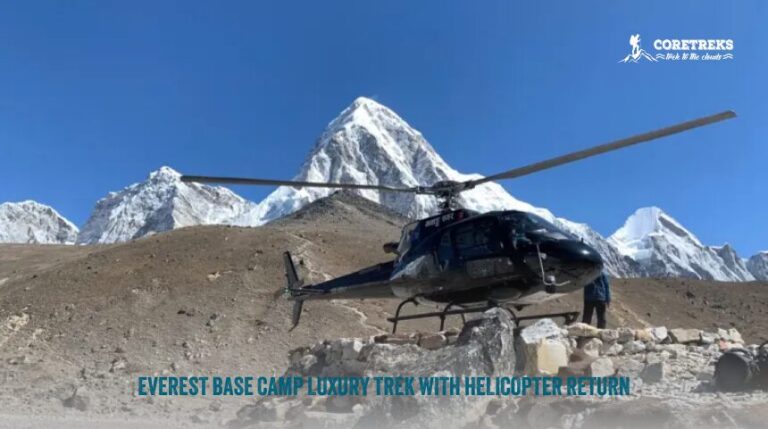
Everest Base Camp Helicopter Return Trek includes trekking to the EBC through the same path. But it includes returning to Lukla via helicopter. This way, you can enjoy both trekking experiences, save your days, and not have to go through a long descent from EBC to Lukla.
Everest Base Camp Helicopter Tour
While it is not precisely the trek, you can still explore Everest Base Camp without going through all the above-mentioned difficulties. Not only that, but through the Everest Base Camp Helicopter Tour, you will also be able to witness the aerial view of the Everest Region and complete the long, strenuous journey in no time.
Preparation for the Trek
Since you have to face a few physical and mental challenges during the EBC trek, it is wise to prepare for the trek. You have to prepare for the trek before booking and during the trek. So here are some tips for preparing for your EBC trek.
Prepare for your physical stamina and improve your mental state by remaining positive.
Learn about the proper acclimatization process and gradual ascent during the trek.
Increase your physical stamina by strengthening your core, so participate in cardiovascular exercises.
You should also pack only the necessary items and rent the required items and equipment.
It is wise to book your trek beforehand if you are trekking in the ideal seasons.
If you want to make your EBC trek more fun and less challenging, hire guides and porters.
Packing and Gear
While trekking for the Everest Base Camp Trek, the difficulty level starts when you are at a high altitude. In high altitudes, the chance of altitude sickness is high, and there is a lack of shops, so it is essential to carry all the necessary clothing, gear, and equipment.
Packing And Gear
It is also worth noting that renting the equipment is wiser than holding it from your country. So here are some of the essential items that you might want to pack during your trek.
Clothing
Base Layers: Merino wool or synthetic long underwear (top and bottom)
Insulation Layers: Fleece jacket, down jacket
Outer Layers: Waterproof and windproof jacket and pants
Trekking Pants: Convertible or zip-off pants
Trekking Shirts: Quick-dry, breathable shirts
Shorts: For warmer days
Socks: Warm hiking socks, liner socks
Gloves: Waterproof and insulated gloves, liner gloves
Hat: Warm beanie, sun hat
Neck Gaiter: For wind and cold protection
Footwear
Hiking Boots: Waterproof and sturdy, broken in before the trek
Trekking Shoes or Sandals: For camp use
Gaiters: To keep snow and debris out of boots
Accessories
Sunglasses: With UV protection
Headlamp: With extra batteries
Sunscreen: SPF 50+
Lip Balm: With SPF
Water Bottles: Or a hydration pack
Water Purification Tablets or Filters: Essential
Trekking Poles: Can be rented
Sleeping Bag: Rated to -18°C or colder
Sleeping Pad: For comfort and insulation
Travel Towel: Quick-dry
Personal Toiletries: Toothbrush, toothpaste, etc.
Wet Wipes: For personal hygiene
Hand Sanitizer: Important for hygiene
Medications: Personal prescriptions, altitude sickness medication (consult your doctor)
First Aid Kit: Basic supplies
Passport and Visa: Essential documents
Money: Local currency, credit card (limited use)
Camera and Accessories: If desired
Bags
Duffel Bag: For checked luggage
Daypack: For carrying essentials during the day
Optional Items
Books or e-reader: For entertainment
Journal and Pen: To record your experiences
Camera Accessories: Extra batteries, memory cards
Headphones: For music or audiobooks
Best Time For Trekking
Trekking the Khumbu region in Nepal is challenging but also fun. However, if you trek it in the least ideal trekking, your fun might be minimized, and the trek difficulty might increase. So it is perfect to trek the region when it’s the best time. Nepal has two of the best trekking times: the Spring and Autumn seasons.
Spring Season
Spring season is one of the best times for trekking in the EBC region. This season begins in March and ends in May. One of the most extraordinary things about hiking in the spring season is the majestic weather, mild temperatures, and sunny days.
The Spring season starts after the winter season, so the initial days of March will be a bit colder. However, as the days pass and April arrives, the temperatures become mild, and the trails start looking beautiful due to the flowers of rhododendrons and magnolias.
As you keep climbing the altitude, the temperature starts getting colder, but the days are still sunny, and during the night, it reaches close to the freezing point. The chance of rainfall and snowfall is less, and the weather is much more stable than in other seasons. So, if you want a comfortable trekking experience, trekking in Spring is ideal.
Autumn Season
Like the Spring season, the Autumn season is ideal for trekking to EBC. The Autumn Season lasts from September to November. Although you won’t find the flowering trails or rhododendron forests in the autumn season, you will be trekking through the trails and experiencing the autumn foilage.
During the Autumn season, the leaves of the trees and plants turn green and brown, and during the sunrise and sunset, the color makes the surroundings look golden. The stunning views of the mountains, skies, and valleys are the main attractions of trekking during the Autumn season. The Autumn season is also less crowded than the Spring season, but they are still congested, so be sure to book it beforehand.
Conclusion
Hence, the difficulty of the Everest Base Camp Trek differs for different people. Various factors affect the increase and decrease of the difficulty level of the trek. The trekking route is challenging; the higher altitude invites acute mountain sickness, and the terrain differs as you pass through the high altitude.
So, if you are a beginner, you might have to pay more attention to high altitudes. You have to carry all the documents and permits, so it is wise to book your trek with a trekking agency and hire guides and porters for easy navigation, safety, and security. Although the EBC trek can be daunting, it is not impossible. So, if you haven’t experienced the EBC trek, we hope 2024 is the year for you.
FAQs for Everest Base Camp Trek Difficulty
FAQs
1. What are the accommodation facilities during Everest Base Camp Trek?
During your EBC trek, you will first live in the luxury hotels, but as you climb the altitude, you will live in the teahouses. The teahouses are small rooms with twin beds and attached bathrooms.
2. What is the highest point of the Everest Base Camp Trek?
The highest point of the EBC trek is Kala Patthar. During your EBC trek, you will reach Kala Patthar from Gorakshep after visiting the Everest Base Camp Trek.
3. How many hours does it need to land in Lukla Airport from Kathmandu?
Your Everest Base Camp Trek starts via a flight from Kathmandu to Lukla, which takes about 40 to 45 minutes. You will land at the airport at Lukla, where the trek to EBC begins.
4. How many acclimatization days do you need for the Everest Base Camp Trek?
The average days you need for the acclimatization days are two or three. During your trek, you will generally acclimatize at Namche Bazaar and Dingboche. If the trekkers are beginners, you can also request additional days for acclimatization, which the trekking company can accept.
5. Do you need porters during your Everest Base Camp Trek?
Although porters are not mandatory on your trek, they are accommodating, especially if the trekker’s physical endurance is not high. The trek will be decently arduous, so if you hire the porters, they will carry your heavy loads, making it somewhat easy.
How difficult is the Everest Base Camp trek?
EBC Trek is considered moderately challenging. High altitude, long trekking hours, and unpredictable weather make it demanding, but it’s achievable with proper preparation.
Do I need prior trekking experience for EBC?
While you don’t need prior trekking experience, you must be physically fit and mentally strong to do the EBC Trek.
How can I prepare for the trek?
To prepare for the EBC Trek, focus on cardiovascular and leg strengthening exercises. You must also mentally prepare yourself for the unpredictability and stressful environment.
Can beginners complete the Everest Base Camp trek?
Yes, beginners can complete the trek with proper training, a steady pace, and good acclimatization. A guided trek helps ensure safety and support throughout the journey.
What is the most challenging part of the trek?
The biggest challenges include high altitude, steep ascents and descents, cold temperatures, and prolonged walking hours.
Is altitude sickness a significant concern?
Yes, altitude sickness is common above 3,000 m. Acclimatization, staying hydrated, and maintaining a steady pace help reduce the risk.
Is an emergency evacuation available for the EBC Trek?
Yes, there are emergency evacuations available for the EBC Trek. Depending on your situation, you or your guide can call for it.
Kapil is one of the highly experienced guides from CoreTreks. With over 10 years of touring and travelling, he is a humble and highly driven individual. He began climbing mountains at a very early age and has continued to pursue his passion ever since. He is certified by Nepal Mountaineering Association for the completion of advanced mountaineering training.
He has been guiding with us since 2015 and has been active ever since. He is able to lead a trek, being mindful from both the trekker’s and the guide’s perspective. Being highly experienced, he can handle emergency situations and performs well under pressure.
Boudhanath Stupa is one of the most sacred Buddhist sites in the world. It is a religious site and a cultural hub for pilgrims, especially Tibetan Buddhists. Similarly, it is one of Nepal's largest, 36-meter-high, and 100-meter-wide stupas in the capital city of Kathmandu. The stupa is located just 7 km northeast of central Kathmandu,…
The Everest Base Camp Trek in February is a one-of-a-kind experience that trek enthusiasts must take once. Contrary to many trekkers who believe winter months are unsuitable for Himalayan ventures, trekking in February is doable. It is just the time when the cold winter slowly transitions into the warm spring season. Therefore, trekking on the…
Many of you might be curious about the Manaslu Circuit Trek after earthquake in Nepal and whether it is safe for trekking. Fortunately, yes. The trail that was heavily damaged by the 2015 Nepal earthquake has re-opened. So what are the conditions of the trails, accommodation availability, and risks of Manaslu Circuit Trek after the…
This site uses cookies to optimize your user experience. By using this site, you are consenting to our use of these cookies. Check out our Privacy Policy.