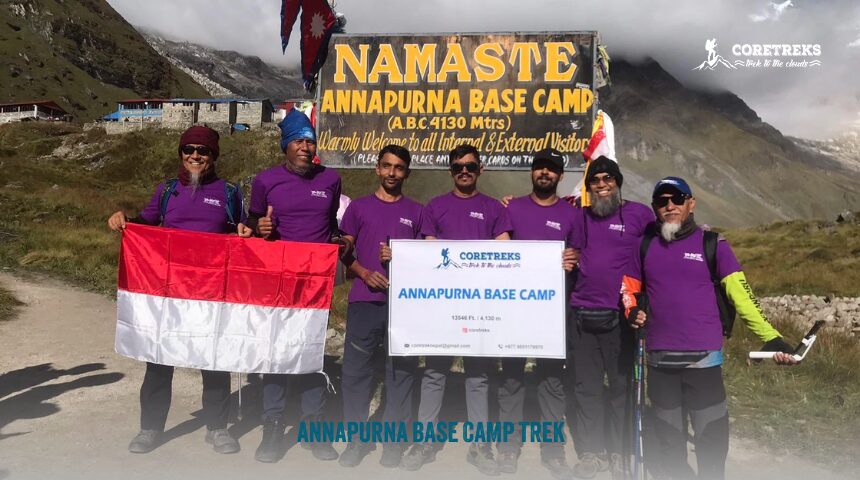
Mardi Himal and Annapurna Base Camp are two spectacular treks in the Annapurna region. It is often a delightful confusion for trekkers looking to explore Annapurna. So, which one suits you best? We will explore both the treks in detail, so make sure you read until the end!
Mardi Himal is a relatively new trek and a hidden gem. Its off-the-beaten-path trails are less crowded, less traveled, and quiet. The scenic trail winds through the forested ridges and alpine meadows to the Mardi Himal Base Camp. Meanwhile, Annapurna Base Camp (ABC) is a classic Himalayan trek. It is one of the most popular and highly sought-after treks of Nepal. The classic trail takes you to the natural amphitheater within the Annapurna Sanctuary, where the Annapurna Base Camp sits. Each trek offers adventure and unforgettable scenery that are distinctly different experiences.
Aside from the trekking experience, there are significant differences in distance, duration, and overall itinerary between the Mardi Himal vs Annapurna Base Camp Trek routes. Similarly, the highest altitude between the two trekkers differs. Understanding the differences helps trekkers to choose the adventure that best matches their time, level, and preferences. What truly sets these treks apart is their atmosphere.
Whether you are seeking a short, serene escape on offbeat trails or a challenging trek with iconic mountain views and accessibility, this blog will help you decide. Let us begin!
Table of Contents
Discovering Mardi Himal Trek as a hidden Himalayan treasure
Mardi Himal Trek is a true hidden Himalayan trail that remains untouched by mass tourism. It is ideal for trekkers who love solitude, raw adventure, and connection with nature. The trekking route covers approximately 40-50 km, depending on the route. It takes only 5 to 7 days to complete the journey. The maximum elevation of the journey is Mardi Himal Base Camp at 4,500 meters. You will usually start the trek from Khade or Phedi. These trailheads are a 1 to 2-hour drive from Pokhara. They are easily accessible via roadway.
The Mardi Himal Trekking trail goes through dense forests of rhododendron, oak, fir, and birch. You will trek through moss-covered woodlands to coniferous forests. As you continue gaining elevation, the landscape changes to alpine meadows and high-alpine ridges. The changing scenery allows you to enjoy the raw beauty of the Annapurna region. There are far fewer trekkers on this trail than at Annapurna Base Camp. So, the journey feels more personal and immersive. You can enjoy the serene atmosphere while taking on the surrounding beauty.
Starting the journey from Khade, you will traverse charming and traditional villages like Pitam Deurali, Forest Camp, Low Camp, and High Camp. Then, you will ascend to Mardi Base Camp, the highest point of the journey. From the base camp, you can enjoy spectacular views of Mount Machhapuchhre (6,993 m), Annapurna South (7,219 m), Hiunchuli (6,441 m), Mardi Himal (5,587 m), and a partial view of Annapurna I (8,091 m). The descending route once again passes by Low Camp. You will then descend through villages like Siding, Lwang, and Phide. During the Mardi Himal Trek, you will also come across lesser-known or hidden viewpoints. They offer spectacular views of the mountains, sunrises, sunsets, and landscapes. Mardi Himal is a perfect blend of adventure with exclusivity.
Exploring Annapurna Base Camp Trek for a timeless adventure
The Annappurna Base Camp Trek takes you into the heart of the Annapurna region. It is one of the most legendary trails of Nepal with iconic mountain views. Compared with the Mardi Himal Trek, the ABC Trek takes 7 to 12 days, depending on the route. Its trail also covers approximately 70 to 110 km. The most common starting point for the ABC Trek is Nayapul, a 1.5- to 2-hour drive from Pokhara. There are additional trailheads, including Birethanti, Ghandruk, Phedi, Kande, and Landruk. You can easily access any of these trailheads via roadway.
The Annapurna Base Camp Trek is for those seeking a classic Himalayan trekking experience, balanced adventure, comfort, and diversity. The trail begins through the subtropical lowlands, where you can see terrace farms and villages. It then transitions to lush forests of rhododendron, oak, fir, and birch. As the ABC Trekking trail ascends, the landscape changes to alpine meadows and to high-alpine terrain. You will also traverse glacial valleys, cross glacial rivers, and moraines. Unlike Mardi Himal’s off-beat trails, the ABC trail is well-maintained and clearly marked. There is also a good network of comfortable teahouses that makes the trek accessible to trekkers with different fitness levels.
The trek starts in Nayapul, and the ABC Trek route passes through several traditional Gurung and Magar villages. It takes you past villages like Ulleri, Ghorepani, Tadapani, Chhomrong, and Himalaya. From Himalaya, you will ascend to Annapurna Base Camp (4,130 m) via Machhapuchhre Base Camp (MBC). The Annapurna Base Camp is also the highest point of the trek. You will witness the legendary peaks from Annapurna I (8,091 m) to Machhapuchhre (6,993 m), Annapurna South (7,219 m), and Hiunchuli (6,441 m). Additionally, you can see magical alpenglow during early morning and late afternoon, which makes the mountains glow in different hues of red, pink, or orange. Then, you will descend, passing by Bamboo and Jhinu Danda. The thrilling adventure and unbeatable views make ABC a timeless trek.
Trail comparisons between Mardi Himal vs Annapurna Base Camp
Although the Mardi Himal and Annapurna Base Camp Treks both lie within the Annapurna Conservation Area, their trails differ significantly. As a result, there are differences in the trekking difficulty, scenery, and overall experience.
Mardi Himal
As we mentioned before, the Mardi Himal Trekking trail is off-the-beaten-path. Its secluded trail gradually ascends to Mardi Himal Base Camp, passing by small traditional villages. Because the trekking route is quiet, trekkers can feel more connected to the natural surroundings. You will begin the trek on gentle forest trails and village paths. The trail is generally narrow but well-defined. As you ascend to an area above Low Camp and High Camp, the terrain also changes. You will start climbing uphill on a narrow alpine ridgeline. The trail becomes more exposed and rugged. You will trek along jagged ridges, grassy slopes, and rocky sections with steep drop-offs on either side. The trail is not technically challenging but is physically demanding. Teahouses and infrastructure are more basic and fewer in number on the Mardi Himal Trekking route.
Annapurna Base Camp
The Annapurna Base Camp Trekking trail is well-established with clear signage and reliable maintenance. Like Mardi Himal, you will gradually begin your descent. The trail starts on wide village paths and stone-paved trails, passing through a terrace of rice fields, river valleys, and traditional settlements. The section around Ulleri and Chhomrong requires climbing long stone staircases. Then, you will trek on the dirt paths and cross occasional wooden bridges over rushing streams. The lower ABC Trekking trail follows the Modi Khola Valley, and as you climb higher, the landscape changes into a high alpine zone. The lush vegetation is replaced with rock terrain and glacial moraines. You will also cross open glacial basins and riverbeds as you head to the iconic Annapurna Base Camp. The ABC route is lined with frequent teahouses and comfortable lodges. However, the trail is crowded and busy with fellow trekkers, especially during peak seasons.
Here is a day-to-day comparison of the Mardi Himal vs Annapurna Base Camp Trek itinerary based on our packages:
Day
Mardi Himal Trek
Annapurna Base Camp (ABC) Trek
1
Arrival in Kathmandu (1,350 m)
Arrival in Kathmandu (1,350 m)
2
Kathmandu (1,350 m) to Pokhara (822 m)
Kathmandu (1,350 m) to Pokhara (822 m)
3
Drive to Khade (1,770 m) & trek to Pitam Deurali (2,100 m)
Drive to Nayapul (1,070 m) & trek to Ulleri (2,020 m)
4
Trek from Pitam Deurali (2,100 m) to Forest Camp (3,050 m)
Trek from Ulleri (2,020 m) to Ghorepani (2,860 m)
5
Trek from Forest Camp (3,050 m) to Low Camp (3,350 m)
Trek from Ghorepani (2,860 m) to Poon Hill (3,120 m) to Tadapani (2,630 m)
6
Trek from Low Camp (3,350 m) to High Camp (3,900 m)
Trek from Tadapani (2,630 m) to Chhomrong (2,170 m)
7
Trek from High Camp (3,900 m) to Mardi Himal Base Camp (4,500 m) to Low Camp (3,350 m)
Trek from Chhomrong (2,170 m) to Himalaya (2,950 m)
8
Trek from Low Camp (3,350 m) to Lwang (3,260 m)
Trek from Himalaya (2,950 m) to Annapurna Base Camp (4,130 m) via Machhapuchhre Base Camp (3,700 m)
9
Trek from Lwang (3,260 m) to Phide (1,460 m) to Pokhara (822 m)
Trek from Annapurna Base Camp (4,130 m) to Bamboo (2,310 m)
10
Pokhara (822 m) to Kathmandu (1,350 m)
Trek from Bamboo (2,310 m) to Jhinu Danda (1,780 m)
11
Departure
Jhinu Danda (1,780 m) to Pokhara (822 m)
12
–
Drive back to Kathmandu (1,350 m)
13
–
Departure
Difficulty levels that trek match your spirit
When it comes to the difficulty level of the Mardi Himal and Annapurna Base Camp Trek, both are moderate-grade adventures. However, differences in trek duration, trail conditions, highest altitude, and infrastructure mean the challenges vary. Let us explore them in depth.
The Mardi Himal Trekking trail features steep sections, especially between Low Camp and the high alpine ridges. It has steeper, more continuous uphill sections with rugged terrain. Similarly, the offbeat paths are narrower and less developed than the ABC route. The highest elevation is Mardi Himal Base Camp at 4,500 meters, which is higher than Annapurna Base Camp. Trekkers, especially beginners, need good acclimatization to adapt to the high altitude. Mardi Himal Trekking requires a reasonable level of fitness and a steady pace. You will trek for 4 to 7 hours across varied terrain, including forest trails and rocky ridges. Teahouses are basic, with limited amenities, so you should be prepared. While some trekkers may find the solitude comfortable, some may feel disconnected from the outside world. The journey may be both psychologically challenging and physically demanding.
The Annapurna Base Camp Trekking trail also features steep sections, but they are not continuous, unlike those on the Mardi Himal route. You will need to traverse steep sections of trail between Sinuwa and Deurali and between MBC and ABC. These sections alternate with flatter sections and stone steps. However, the trekking duration is longer, with average daily trekking time ranging from 4 to 7 hours. You will gradually ascend to the Annapurna Base Camp at 4,130 meters, the highest point of the trek. The relatively low elevation reduces the risk of altitude-related sickness. The well-established teahouse network along the route makes logistics easier. You can also find rest stops more easily. As with Mardi Himal, you will need to trek over varied terrain. In addition to physical fitness, mental resilience is also important for the ABC Trek.
Take a look at the difficulty comparison between the Mardi Himal vs Annapurna Base Camp Trek:
Feature
Mardi Himal Trek
Annapurna Base Camp (ABC) Trek
Difficulty
Moderate
Moderate
Trail type
Offbeat, forest trails, less-developed route, and steep ridgelines
Gradual ascents, well-established and maintained trails
Highest altitude
Mardi Himal Base Camp (4,500 m)
Annapurna Base Camp (4,130 m)
Daily trekking hours
4-7 hours
4-7 hours
Crowd level
Low, isolated, and quiet
High and busy
Infrastructure
Basic teahouses with limited amenities
Numerous cozy and comfortable teahouses and lodges with reliable amenities
Physical fitness
Moderate to high with good stamina
Moderate with average fitness
Mental fitness
Slightly higher due to the isolation
Moderate, as there is reliable support available
Myths vs. Reality about Trek Difficulties
There are many myths about the difficulties of the Mardi Himal and Annapurna Base Camp Trek. However, the realities can be completely different. So, let us debunk a few of them.
One common myth is that the ABC Trek is very challenging because of its longer duration. While Annapurna Base Camp is indeed longer, it is only moderately difficult. Its well-maintained trail and numerous teahouses along the route make it suitable for even first-time trekkers. Similarly, its easy accessibility and gradually ascending trail. In reality, the real physical challenge comes from long hours of treks. There are steep sections, but none are extreme and do not require technical skills. With proper packing and acclimatization, ABC Trek is ideal for any moderately fit trekkers.
Another myth about the Mardi Himal Trek is that it is shorter and easier. Most people underestimate its difficulty because of its short duration. However, in reality, Mardi Himal is a physically and mentally demanding journey. Its trails are steeper, rougher, and the infrastructure is limited. Its less-traveled paths and high alpine ridges require reasonable fitness. To cope with the isolated route and demanding trail, one needs mental resilience and preparation.
We also need to debunk the altitude-related myth of these two treks. Regardless of the fitness level, altitude sickness can affect anyone. Both the Mardi Himal and Annapurna Base Camp Treks take you to elevations above 4,000 meters. The symptoms can also vary from person to person. All trekkers must acclimatize properly, ascend gradually, and stay hydrated during both treks.
Do not rely solely on myths about trek difficulties when choosing an adventure for yourself. Make your decision based on facts, your fitness, preferences, and time constraints. You also need to understand that each trek offers a rewarding Himalayan experience with different challenges.
Cultural experiences along both trekking routes
Mardi Himal and Annapurna Base Camp Treks are more than adventurous trails, landscapes, and towering mountains. These are also a journey into the living Himalayan culture of Gurung and Magar ethnic communities. Along the trekking route of both treks, you will pass by several traditional villages where these communities reside harmoniously. They are indigenous ethnic groups in Nepal with their own distinct languages, cultures, attire, and traditions. The Magar community mostly resides in the lower areas of the Annapurna region. Meanwhile, Gurung villages are often located in higher elevations.
While traversing these charming villages, you can see houses with traditional architecture and witness the locals’ way of life. Similarly, colorful prayer flags and stone cairns line the route of the Mardi Himal Annapurna Base Camp Trek. Depending on the season, you may also witness local festivals such as Losar. Despite the similarities, the cultural atmosphere between the two treks is different. They both offer rewarding and immersive cultural experiences. It is an opportunity to gain insight into the locals’ culture and a glimpse at their lifestyle. The cultural aspect of the Mardi Himal and Annapurna Base Camp (ABC) Trek transforms the physical journey into a meaningful human connection.
Mardi Himal hidden villages and authentic experiences
The Mardi Himal Trekking route passes through small, lesser-known, and hidden villages like Forest Camp, Low Camp, High Camp, Sidhing, and Lwang. Traversing these villages, you can see traditional stone houses with terrace farms. Untouched by mass tourism, the experience feels more authentic. Staying at rustic, family-run teahouses, you will enjoy authentic Himalayan hospitality. The menus are limited, but the ingredients are fresh, organic, and locally-sourced. You can enjoy simple, home-cooked meals and local cuisine. As you move to higher-altitude areas, the terrain becomes more remote. So, you cannot find modern infrastructure or facilities.
Despite the basic facilities, the less commercialized trekking trail of Mardi offers richer cultural immersion. Cultural exchange during the Mardi Himal Trek happens naturally. Since the trail is relatively quieter, the cultural experience feels personal and unrushed. The local life remains unchanged and revolves around farming and herding. So, you may see locals performing evening prayers, tending livestock, or preparing meals. Interacting with locals, you can hear stories about the local lifestyle and legends. You will be close to nature and the mountain, and away from the bustling city life. The cultural experience of Mardi Himal feels more discovered than delivered.
Annapurna Base Camp’s iconic villages and trekker-friendly hospitality
The trekking trail of Annapurna Base Camp passes through the well-established villages. You will traverse iconic villages like Chhomrong, Bamboo, and Ghorepani, among others. Due to the relatively reliable trekking infrastructure along the ABC trail, one can experience more trekker-friendly hospitality. These villages and teahouses have long hosted visitors from around the world. It has aided in the development of comfortable teahouses, hot meals, and more friendly hospitality.
The accommodations also offer better facilities like internet, charging stations, and hot showers, compared to the Mardi Himal route. Despite the modern services, the ABC trail still maintains its adventurous Himalayan character. The cultural experience is also more organized and accessible. In teahouses in lower villages, cultural dance performances are organized during peak seasons. Overall, the iconic villages along the Annapurna Base Camp trail offer an ideal balance of comfort, authenticity, and cultural experience. It makes the trek suitable for those who want rich Himalayan culture with convenience and support.
Cost breakdown of both the treks
Taking the reference from our package, the 11 Days Mardi Himal Trek is USD 1,025 per person, and the 13 Days Annapurna Base Camp Trek cost is USD 850 per person. While many trekkers may think the Mardi Himal Trek is shorter and cheaper, the opposite is true. The Annapurna Base Camp Trek has well-established infrastructure and accessibility, so costs are lower. Since Mardi Himal is more remote, logistics and guide costs are higher. Fewer options also increase accommodation prices. Accommodation options along the ABC trail are more abundant, so there is greater competition and prices are relatively low.
Both the cost of the Mardi Himal and Annapurna Base Camp Trek are influenced by various factors. Trek duration, season, group size, and services are key factors. A standard package typically includes all necessary services, such as transportation, accommodations, meals (breakfast, lunch, and dinner), permits, and fees for guides and porters. Meanwhile, the package cost does not include international airfare, insurance, gear purchases or rentals, and other personal expenses.
If you are on a budget and want to save money without compromising safety, both the Mardi Himal and Annapurna Base Camp (ABC) Trek offer cost-effective options. Opting for group treks, sharing guides or porters, choosing local meals, and traveling by public transport are some ways to join the trek without breaking your bank. Here is a complete breakdown of the Mardi Himal vs Annapurna Base Camp Trek:
Cost component
Mardi Himal Trek (USD)
ABC Trek (USD)
Trek Permit/ Entry Fees (ACAP)
30-35
30-25
Guide/ Porter charges
300-350
250-300
Accommodation
150-200
130-180
Food & Drinks
220-270
200-250
Transportation
70-120
60-100
Equipment Rental
60-90
50-80
Miscellaneous / Tips
60-80
50-70
Total Estimated Cost
1,025
850
Best time to trek, seasons that spark magic
There are four seasons in Nepal, and each season brings a unique atmosphere and scenery. Among them, the best times to visit Mardi Himal and Annapurna Base Camp are spring (March to May) and autumn (September to November). Summer (June to August) in Nepal is rainy due to the monsoon effect. Meanwhile, winter (December to February) is cold, and the higher regions receive heavy snowfall.
Spring and autumn are the most magical times to explore the Annapurna region of the Himalayas. The spring season comes before the monsoon, so the weather is favorable and clear. It is also the most colorful time of the year. Both the Mardi Himal and Annapurna Base Camp trails lie within the Annapurna Conservation Area.It is home to one of the world’s largest rhododendron forests, which are in full bloom in spring. The moderate temperatures at lower elevations also make trekking more enjoyable. Similarly, autumn offers some of the most favorable and stable weather conditions for trekking in the Annapurna region. It falls in the post-monsoon season, and the rain from the previous season cleanses the entire landscape. The forests and vegetation look more lush and vibrant. Autumn weather is mild and cool, offering comfortable trekking conditions.
When comparing the Mardi Himal vs Annapurna Base Camp Trek seasonal difference, one thing that stands out is the crowded trails of ABC. Especially in autumn, the ABC trail is busier due to its popularity. Meanwhile, the Mardi Himal trekking trail is still peaceful even during peak seasons. Seasonal conditions and crowds hugely influence the trekking experience. Choose the best season based on your preference.
I recently had the amazing chance to do the Mardi Himal Trek with CoreTreks, and it was beyond my expectations. From start to finish, the experience was incredible and gave me memories I will never forget. CoreTreks paid attention to every little detail, ensuring customer satisfaction right from the start. The arrangements for permits, accommodations, and transportation were handled smoothly, which allowed me to fully focus on the trek ahead.
The trek itself was an absolute pleasure. The Mardi Himal trail offers stunning views, rich wildlife, and landscapes that take your breath away. Even in the more remote areas, the facilities were clean and comfortable, creating a perfect spot to relax after a day of hiking.
CoreTreks also showed a strong commitment to responsible tourism and sustainability throughout the trek. They emphasized Leave No Trace principles and supported local communities and conservation efforts. It was inspiring to see their dedication to preserving the beauty of the Mardi Himal region.
I’m truly thankful to CoreTreks for making this journey so special and for allowing me to experience the untouched beauty of the Himalayas.
I recently had the amazing chance to do the Mardi Himal Trek with CoreTreks, and it was beyond my expectations. From start to finish, the experience was incredible and gave me memories I will never forget. CoreTreks paid attention to every little detail, ensuring customer satisfaction right from the start. The arrangements for permits, accommodations, and transportation were handled smoothly, which allowed me to fully focus on the trek ahead.
The trek itself was an absolute pleasure. The Mardi Himal trail offers stunning views, rich wildlife, and landscapes that take your breath away. Even in the more remote areas, the facilities were clean and comfortable, creating a perfect spot to relax after a day of hiking.
CoreTreks also showed a strong commitment to responsible tourism and sustainability throughout the trek. They emphasized Leave No Trace principles and supported local communities and conservation efforts. It was inspiring to see their dedication to preserving the beauty of the Mardi Himal region.
I’m truly thankful to CoreTreks for making this journey so special and for allowing me to experience the untouched beauty of the Himalayas.
I recently had the amazing opportunity to join the Three Peaks Climbing trip with CoreTreks in Nepal, and it exceeded every expectation I had. The itinerary was perfectly planned, allowing me to conquer three incredible peaks while soaking in the stunning landscapes and rich culture of Nepal.
From the moment I arrived in Kathmandu, it was clear that CoreTreks was committed to providing an exceptional experience. The hotel transfer was smooth, and I was welcomed with warm hospitality. The day before the trip began, CoreTreks went over every detail: safety, the itinerary, and what we’d need for the climb. Their expertise gave me complete confidence.
The adventure started with a thrilling flight to Lukla, followed by a trek to Phakding, where we slowly gained altitude. The trekking routes were well-planned, offering jaw-dropping views at every turn. As we reached Namche Bazaar, I got a real feel for Sherpa culture and the lively local markets.
The acclimatization days at Namche Bazaar and Dingboche were crucial to our success. CoreTreks’ experienced guides kept a close eye on our health, helping us adjust to the high altitude and ensuring we were safe. Their attention to safety gave me peace of mind throughout the journey.
Reaching Everest Base Camp was a major highlight. Standing at the foot of the world’s highest peak was awe-inspiring, and having CoreTreks’ expert guidance made it even more memorable. We also trekked up to Kala Patthar, where the sunrise over Everest and the surrounding peaks was truly unforgettable.
The climbing part of the trip was where CoreTreks really stood out. Tackling Lobuche East Peak, Island Peak, and Mera Peak was exhilarating. Their guides were incredibly supportive and provided expert advice and instruction. Their technical knowledge, focus on safety, and attention to detail allowed me to push my limits and achieve things I had only dreamed of.
CoreTreks’ thoughtful inclusion of contingency days showed their dedication to our success and safety. These extra days allowed for flexibility in case of bad weather, giving us the best chance to summit each peak. This kind of care and adaptability really set them apart.
The logistics throughout the trip were flawless. From comfortable accommodations to delicious meals prepared by their team, everything was taken care of. The staff was always friendly and supportive, making me feel valued and cared for throughout the adventure.
In conclusion, my Three Peaks Climbing trip with CoreTreks was an extraordinary adventure that I’ll never forget. Their expertly planned itinerary, knowledgeable guides, and focus on safety made it a journey of a lifetime. I highly recommend CoreTreks to anyone looking for a challenging, unforgettable mountaineering experience in Nepal.
I recently had the amazing opportunity to join the Three Peaks Climbing trip with CoreTreks in Nepal, and it exceeded every expectation I had. The itinerary was perfectly planned, allowing me to conquer three incredible peaks while soaking in the stunning landscapes and rich culture of Nepal.
From the moment I arrived in Kathmandu, it was clear that CoreTreks was committed to providing an exceptional experience. The hotel transfer was smooth, and I was welcomed with warm hospitality. The day before the trip began, CoreTreks went over every detail: safety, the itinerary, and what we’d need for the climb. Their expertise gave me complete confidence.
The adventure started with a thrilling flight to Lukla, followed by a trek to Phakding, where we slowly gained altitude. The trekking routes were well-planned, offering jaw-dropping views at every turn. As we reached Namche Bazaar, I got a real feel for Sherpa culture and the lively local markets.
The acclimatization days at Namche Bazaar and Dingboche were crucial to our success. CoreTreks’ experienced guides kept a close eye on our health, helping us adjust to the high altitude and ensuring we were safe. Their attention to safety gave me peace of mind throughout the journey.
Reaching Everest Base Camp was a major highlight. Standing at the foot of the world’s highest peak was awe-inspiring, and having CoreTreks’ expert guidance made it even more memorable. We also trekked up to Kala Patthar, where the sunrise over Everest and the surrounding peaks was truly unforgettable.
The climbing part of the trip was where CoreTreks really stood out. Tackling Lobuche East Peak, Island Peak, and Mera Peak was exhilarating. Their guides were incredibly supportive and provided expert advice and instruction. Their technical knowledge, focus on safety, and attention to detail allowed me to push my limits and achieve things I had only dreamed of.
CoreTreks’ thoughtful inclusion of contingency days showed their dedication to our success and safety. These extra days allowed for flexibility in case of bad weather, giving us the best chance to summit each peak. This kind of care and adaptability really set them apart.
The logistics throughout the trip were flawless. From comfortable accommodations to delicious meals prepared by their team, everything was taken care of. The staff was always friendly and supportive, making me feel valued and cared for throughout the adventure.
In conclusion, my Three Peaks Climbing trip with CoreTreks was an extraordinary adventure that I’ll never forget. Their expertly planned itinerary, knowledgeable guides, and focus on safety made it a journey of a lifetime. I highly recommend CoreTreks to anyone looking for a challenging, unforgettable mountaineering experience in Nepal.
I didn’t expect such good services in a small country like Nepal, but they really care about tourism. Everywhere we went, people were kind and welcoming. I never felt unsafe at any point.
Our trek started from Pokhara, which is a great place to visit. The food was delicious and the city had a fun vibe. We didn’t stay long because we were focused on reaching Mardi Himal.
If I could change one thing, I’d spend more time in Pokhara. There’s so much to do there. CoreTreks gave us the best support. Their guiding team made the trek easier and taught us a lot about Nepal that we wouldn’t have known on our own.
I didn’t expect such good services in a small country like Nepal, but they really care about tourism. Everywhere we went, people were kind and welcoming. I never felt unsafe at any point.
Our trek started from Pokhara, which is a great place to visit. The food was delicious and the city had a fun vibe. We didn’t stay long because we were focused on reaching Mardi Himal.
If I could change one thing, I’d spend more time in Pokhara. There’s so much to do there. CoreTreks gave us the best support. Their guiding team made the trek easier and taught us a lot about Nepal that we wouldn’t have known on our own.
I had heard about the Annapurna Base Camp Trek, but being there was even more amazing. It was cold like we thought, since it’s at the base of the mountains. But the people were so nice and welcoming.
We had local tea that tasted really good I wanted to bring some home but couldn’t. Still, we had a great time. CoreTreks took care of us and our bags the whole way. I really loved Nepal and the mountains. I’ll come back again for sure.
I had heard about the Annapurna Base Camp Trek, but being there was even more amazing. It was cold like we thought, since it’s at the base of the mountains. But the people were so nice and welcoming.
We had local tea that tasted really good I wanted to bring some home but couldn’t. Still, we had a great time. CoreTreks took care of us and our bags the whole way. I really loved Nepal and the mountains. I’ll come back again for sure.
Trekking to Mardi Himal took time and effort, but I’m glad we made it to the end. Our stay in Pokhara was amazing. I honestly didn’t expect such a nice hotel, but it was a great surprise.
The food during the trip was really tasty. I liked the Nepali dishes, which were spicy and well prepared. At the end of the trip, CoreTreks even arranged a farewell party for us, which was a special moment I won’t forget.
The CoreTreks team worked hard and stayed with us every step of the way. Their guides were professional and made the trek fun and easy to enjoy. I truly recommend them if you’re planning a trip to Nepal.
Trekking to Mardi Himal took time and effort, but I’m glad we made it to the end. Our stay in Pokhara was amazing. I honestly didn’t expect such a nice hotel, but it was a great surprise.
The food during the trip was really tasty. I liked the Nepali dishes, which were spicy and well prepared. At the end of the trip, CoreTreks even arranged a farewell party for us, which was a special moment I won’t forget.
The CoreTreks team worked hard and stayed with us every step of the way. Their guides were professional and made the trek fun and easy to enjoy. I truly recommend them if you’re planning a trip to Nepal.
I don’t usually complain, but the bus ride from Kathmandu to Pokhara wasn’t very comfortable. If I could do it again, I’d take the flight instead.
But the trek to Annapurna Base Camp was really good. The guides helped me a lot and cleared up all the things I was unsure about. Thank you for being so patient with my questions. I definitely recommend booking with CoreTreks they did a great job.
I don’t usually complain, but the bus ride from Kathmandu to Pokhara wasn’t very comfortable. If I could do it again, I’d take the flight instead.
But the trek to Annapurna Base Camp was really good. The guides helped me a lot and cleared up all the things I was unsure about. Thank you for being so patient with my questions. I definitely recommend booking with CoreTreks they did a great job.
Nimasha
India
Top Highlights and unforgettable moments on both treks
Mardi Himal Trek Highlights:
Trek through the dense forests of rhododendrons to alpine meadows and quiet ridgelines where the mountains feel within arm’s reach.
Experience peaceful evenings at Forest Camp and Low Camp, sitting in the communal halls of the teahouses, and sharing stories.
Stand at the viewpoint of Mardi Himal Base Camp (4,500 m) and enjoy sweeping views of Annapurna South, Machhapuchhre, and Hiunchuli.
Capture gorgeous photographs of the snow-covered peaks, the winding trails, the sea of clouds, and the ever-changing alpine scenery.
Enjoy the peaceful atmosphere and connect with nature and yourself while trekking on a less-traveled Annapurna trek route.
Annapurna Base Camp Trek Highlights:
Walk through the classic trail, passing by the forests of rhododendrons, alpine meadows, and glacial valleys.
Traverse beautiful villages and enter the Annapurna Sanctuary, a dramatic natural amphitheater.
Ascend to iconic Annapurna Base Camp and watch a magical sunrise while being surrounded by Mount Annapurna I, Annapurna South, Machhapuchhre, and more.
Interact with the friendly locals while staying at the comfortable teahouses and immerse yourself in their culture.
Feel the true sense of achievement and pride, standing in front of some of the world’s highest mountains.
Choose the trek of your life
The choice ultimately comes down to the kind of adventure you want. In the Mardi Himal vs Annapurna Base Camp Trek, there is a clear difference in the trails, scenery, difficulty, culture, and cost. Mardi Himal is for trekkers who want a serene adventure along remote, less-traveled paths, stone stairs, and ridgelines. Annapurna Base Camp is a classic trek that leads to a natural amphitheater. Each trek offers a unique trekking experience and spectacular views of some of the tallest mountains in the world.
Whichever trek you choose, brace yourself for an unforgettable journey in the Himalayas. Expect to see a golden sunrise over the Annapurna Range and to witness the region’s diversity. The deep sense of achievement and the mesmerizing views will stay with you lifelong. You can even share either journey with your friends and family for an exciting bonding adventure. Ultimately, the choice is yours. Follow the trail that matches your sense of thrill and spirit. If you need help arranging either of the two treks in Nepal, CoreTreks is here to help. Contact us directly for further queries!
Sailendra Bhatta, the head of sales operations, is the leader of entire sales operations and oversees all activities regarding to sales. He is responsible for proper sales training initiatives, planning and management for roles in the sales department.
Mr. Bhatta with his team has been driving sales in CoreTreks since 2015. He is known for his productivity and excellent marketing strategies. He has an excellent communication skill through which he influences the team for maximum results.
Related Blogs
Boudhanath Stupa
Boudhanath Stupa is one of the most sacred Buddhist sites in the world. It is a religious site and a cultural hub for pilgrims, especially Tibetan Buddhists. Similarly, it is one of Nepal's largest, 36-meter-high, and 100-meter-wide stupas in the capital city of Kathmandu. The stupa is located just 7 km northeast of central Kathmandu,…
The Everest Base Camp Trek in February is a one-of-a-kind experience that trek enthusiasts must take once. Contrary to many trekkers who believe winter months are unsuitable for Himalayan ventures, trekking in February is doable. It is just the time when the cold winter slowly transitions into the warm spring season. Therefore, trekking on the…
Many of you might be curious about the Manaslu Circuit Trek after earthquake in Nepal and whether it is safe for trekking. Fortunately, yes. The trail that was heavily damaged by the 2015 Nepal earthquake has re-opened. So what are the conditions of the trails, accommodation availability, and risks of Manaslu Circuit Trek after the…
This site uses cookies to optimize your user experience. By using this site, you are consenting to our use of these cookies. Check out our Privacy Policy.